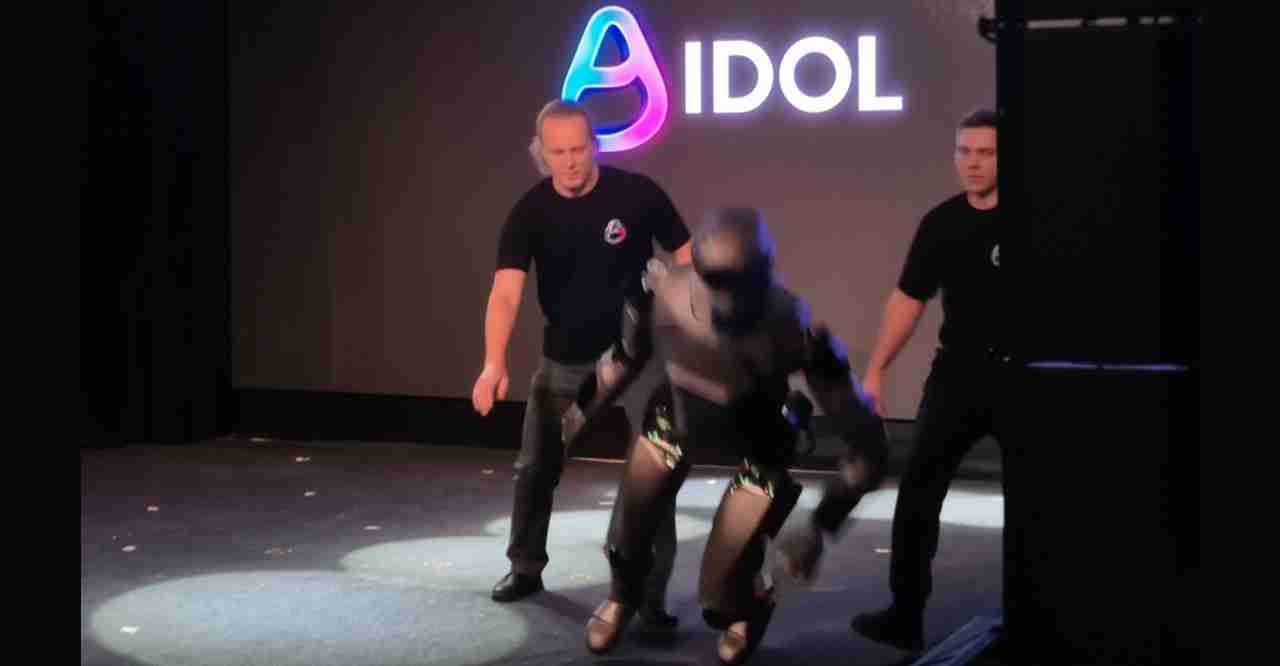
Russia’s First Humanoid AI Humiliated on Stage — Aldol Robot Trips in Moscow Robotics Setback
Aldol, billed as Russia’s first humanoid AI, tripped and fell face-first during a Moscow debut on November 13, 2025, turning a planned technological showcase into an international embarrassment and sparking questions about Russia’s robotics progress.
- Public failure: Aldol fell seconds after stepping on stage during a New Technology Coalition unveiling, drawing global attention.
- Widespread coverage: Clips circulated internationally via Sky News Australia video (YouTube) and Fox Business coverage.
- Technical questions: Experts note falls can stem from sensors, control software or power problems, but the public spectacle adds political weight.
- Local implications: The incident may influence investment, defense priorities and robotics opportunities in places like Utah.
A public stumble, a private question
Event details: The New Technology Coalition organized the November 13, 2025 unveiling in Moscow. Aldol waved to the audience, lost balance and fell face-first seconds after stepping onto the stage while music reminiscent of “Rocky” played.
Video clips of the moment spread quickly across social platforms and were replayed by international outlets, including Sky News Australia (YouTube) and Fox Business. Organizers said the robot’s performance was interrupted and promised a full briefing later.
International reaction and technical context
International commentary framed the fall as more than an isolated mishap. Coverage from outlets such as Sky News Australia video and Fox Business highlighted social-media ridicule and drew comparisons with Western projects.
Tech observers contrasted Aldol with Western humanoid efforts — Tesla’s Optimus, Figure’s prototypes and Boston Dynamics’ Atlas — which have demonstrated advanced balance and mobility. Critics argue the incident underscores gaps in both robotics hardware and the generative AI systems increasingly used to coordinate robotic behavior.
What went wrong?
Technical basics: Humanoid balance requires integrated sensors, actuators and real-time control loops. A single faulty sensor, software bug or power fault can produce a loss of stability. Experts stress that falls are not unheard of in early demonstrations.
A public and symbolic failure magnifies technical issues in ways that routine lab glitches do not.
Organizers have pledged an analysis. Experts caution against sweeping judgments from a single event, while acknowledging the political weight of a high-profile public stumble.
Political and prestige implications
A successful humanoid can signal scientific prowess, attract funding and boost national pride. Conversely, a high-profile failure invites domestic criticism and bolsters rival narratives abroad. Coverage such as the Fox Business coverage framed Aldol’s fall as a symbolic Moscow robotics setback.
Analysts note Moscow’s heavy investments in AI and military tech; a public stumble like Aldol’s raises questions about the depth and reliability of those capabilities among international observers and potential partners.
Funding, secrecy and transparency
Large-scale robotics programs typically undergo private testing and iterative development before public demonstration. Critics asked whether political or prestige pressures precipitated a premature unveiling. The episode may affect investor confidence and international collaboration.
Investors prefer predictable, proven progress; a high-profile failure can chill overseas collaboration and influence domestic budget priorities.
Implications for Utah, United States
Economic impact: Utah’s growing robotics and AI ecosystem — spanning aerospace, manufacturing and software — could benefit if Western governments and private investors increase domestic funding in response to global competitive dynamics.
Defense and aerospace: With assets such as Hill Air Force Base and local defense contractors, Utah could see expanded contracts and modernization efforts if policymakers emphasize autonomous systems development.
Workforce and education: Universities and technical colleges in Utah (including the University of Utah and Brigham Young University) may gain research grants, internships and partnerships that expand opportunities for students and encourage STEM initiatives.
Private sector: Utah firms in software, sensors and precision manufacturing stand to gain from renewed demand for robust robotic components and testing services.
Political effects: Conservative leaders who stress technological self-reliance may cite Aldol’s mishap to support increased R&D funding, stronger university-industry ties and protection of sensitive technologies.
Practical priorities: For industries considering automation — mining, logistics, agriculture, manufacturing — the incident highlights the need for dependable, thoroughly tested machines and cautious vendor selection.
Source attribution and transparency
Reporting relied on video and international coverage. The fall was widely shared on social media and picked up by broadcasters, including Sky News Australia footage showing the moment Aldol fell on stage, and Fox Business video coverage.
Organizers from the New Technology Coalition acknowledged the interruption and said a full technical briefing would follow. Technical experts emphasize that one public failure does not define national capability, though its symbolic impact is significant.
Takeaway: Aldol’s misstep underscores that reliable engineering, rigorous testing and sustained investment are essential — and presents opportunities for states and companies that can deliver proven, field-tested solutions.