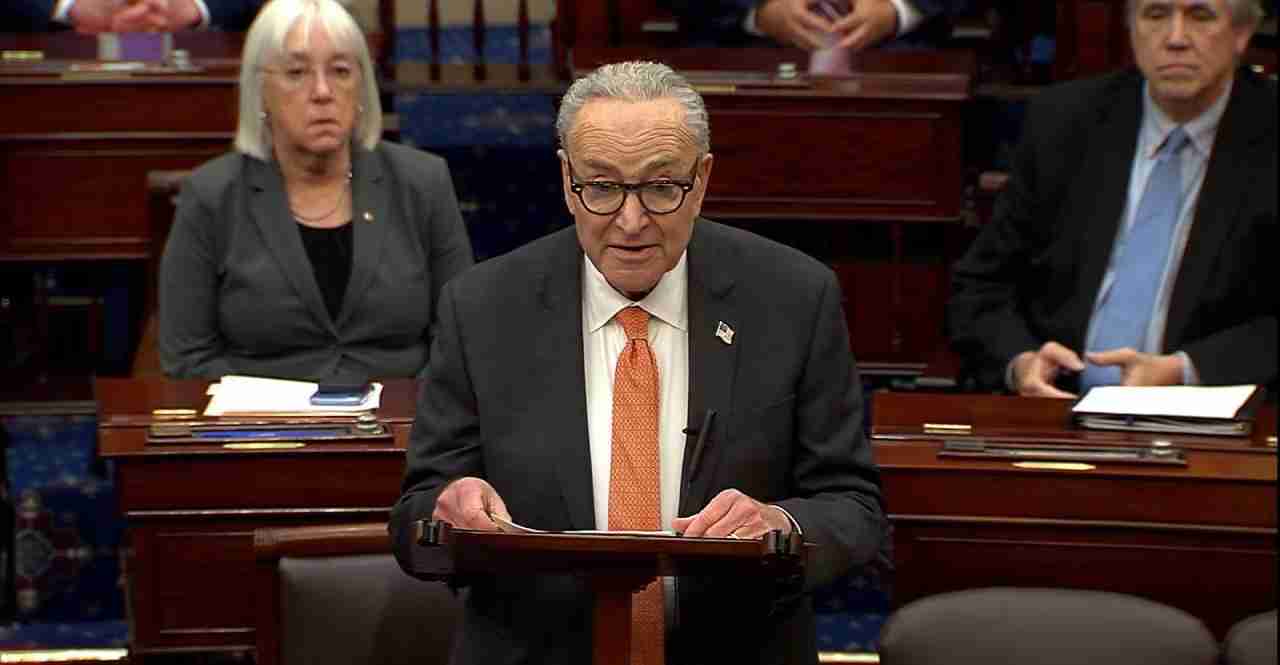
Senate Democrats offer one-year Obamacare subsidies extension to avert shutdown, Schumer urges GOP to “just say yes”
Senate Majority Leader Chuck Schumer and Senate Democrats proposed a one‑year extension of enhanced Obamacare subsidies inside a stopgap spending bill Monday to prevent a government shutdown and avert sharp premium increases for millions of marketplace enrollees.
- Proposal: A one-year extension of enhanced ACA subsidies tied to a clean continuing resolution to avoid a government shutdown; Schumer urged Republicans to “just say yes.”
- Stakes: Without the extension, average annual premiums for subsidized enrollees could rise from about $888 to roughly $1,904 by 2026, more than doubling costs for many families.
- Political divide: Democrats frame it as urgent protection for working families; many Republicans oppose a straight extension without offsets or reforms.
- Coverage limits: The offer does not change rules barring undocumented immigrants from marketplace subsidies; their federal access remains limited.
What Democrats are proposing
Senate Democrats rolled out an alternative to GOP funding plans that pairs a clean continuing resolution — a short-term spending measure to keep the government open — with a one-year extension of the enhanced Affordable Care Act (ACA) marketplace subsidies that were expanded during the pandemic. Democrats describe the move as a narrowly targeted fix to prevent sudden premium hikes and preserve affordable access while longer-term policy talks continue.
“The Democrats’ plan is meant to prevent chaos in the insurance markets and keep coverage affordable for millions who rely on marketplace help,” a senior Democratic aide said, and Schumer publicly pressed Republicans to accept the extension and move on to other priorities.
What Republicans say
Republican leaders signaled broad resistance to a no-strings extension. Many GOP lawmakers argue the enhanced subsidies increase federal spending and distort markets; several said any extension should be paired with spending offsets or reforms to the ACA to reduce long-term liabilities.
“Republicans want responsible solutions that protect taxpayers while addressing policy flaws,” a Senate Republican spokesman said. GOP negotiators have favored budget-minded approaches and often resist extensions that increase federal outlays without offsets.
Financial impact if subsidies lapse
Policy analysts and budget offices warned of steep consequences if enhanced subsidies expire. Projections cited by health-policy researchers indicate average annual premiums for subsidized enrollees could more than double — from roughly $888 today to an estimated $1,904 by 2026 — if the extra federal assistance is not extended. That jump would push many middle-income families out of the insurance market and increase the number of uninsured Americans.
The impact would vary by state. States with higher baseline premiums, or those without state-level supplemental subsidies, would see the largest consumer cost increases. Experts say a lapse could also ripple into employer markets and state budgets, increasing pressure on safety-net services.
Undocumented immigrants and health care access
Schumer’s proposal focuses narrowly on marketplace subsidies and does not alter federal rules that bar undocumented immigrants from receiving marketplace subsidies. Under current law, undocumented immigrants are ineligible for marketplace subsidies and generally rely on emergency Medicaid, community clinics, and state or local safety-net programs for care.
Progressive advocates continue to press for broader access, but those changes face steep political resistance and were not part of the shutdown-funding talks.
How negotiations could play out
Lawmakers face several options: pass a short-term continuing resolution that includes the subsidy extension; pass a narrower funding bill without the subsidy action (risking premium spikes); or face a partial government shutdown if no agreement is reached. Democrats frame the one-year extension as a short bridge to buy time for broader health-policy discussions, while Republicans press for fiscal constraints and policy offsets.
Analysts cautioned that even a one-year extension would leave unresolved debates about long-term affordability and program design. Some Republicans said a temporary extension could be followed by future negotiations that include the reforms they prefer.
Implications for Utah
Economic impact: Utahns who buy coverage on the ACA marketplace or rely on state-federal programs would feel immediate effects if enhanced subsidies lapse. Tens of thousands of Utah residents receive premium tax credits that lower monthly payments. A sharp rise in premiums would squeeze household budgets and could increase the uninsured in both urban and rural parts of the state.
Utah uses the federal HealthCare.gov marketplace platform and has implemented Medicaid expansion, which lowered the state’s uninsured rate compared with pre-expansion years. Still, many Utah families depend on marketplace subsidies; a doubling of average out-of-pocket premiums would particularly strain middle-income households and self-employed workers without employer coverage.
Political consequences
Utah’s political leaders — including Republican lawmakers emphasizing fiscal discipline — will face pressure from constituents if premiums spike. Lawmakers from both parties could see voter backlash from residents who suddenly face higher health costs or lose coverage. For Utah’s delegation, the debate requires balancing conservative spending priorities with practical concerns about coverage affordability in their districts.
Social and healthcare system effects
Higher premiums could increase demand on Utah’s safety-net providers, rural clinics, and hospital emergency departments if formerly insured residents forgo coverage. Rural counties already face provider shortages; increases in the uninsured would stretch limited resources and could worsen access to care.
Cultural relevance and practical impact
Utah communities often emphasize self-reliance and fiscal responsibility, shaping local attitudes toward federal spending. Yet many families value predictable, affordable access to health care. For many residents the practical question is whether they can afford coverage next year — the proposed extension seeks to hold down premiums and protect continuity of care.
Sources and further reading
- Congressional Budget Office (CBO)
- Kaiser Family Foundation (KFF)
- The New York Times
- The Washington Post
- Politico
- Reuters
- Senate Democrats press releases
- KFF brief on immigrants and health care
Reporting compiled from Times Media Service review of public budget projections, health policy analysis, and media reporting from major outlets and policy groups.