Social Security Announces 2.8% Benefit Increase for 2026, Lifting Payments for Nearly 71 Million Americans
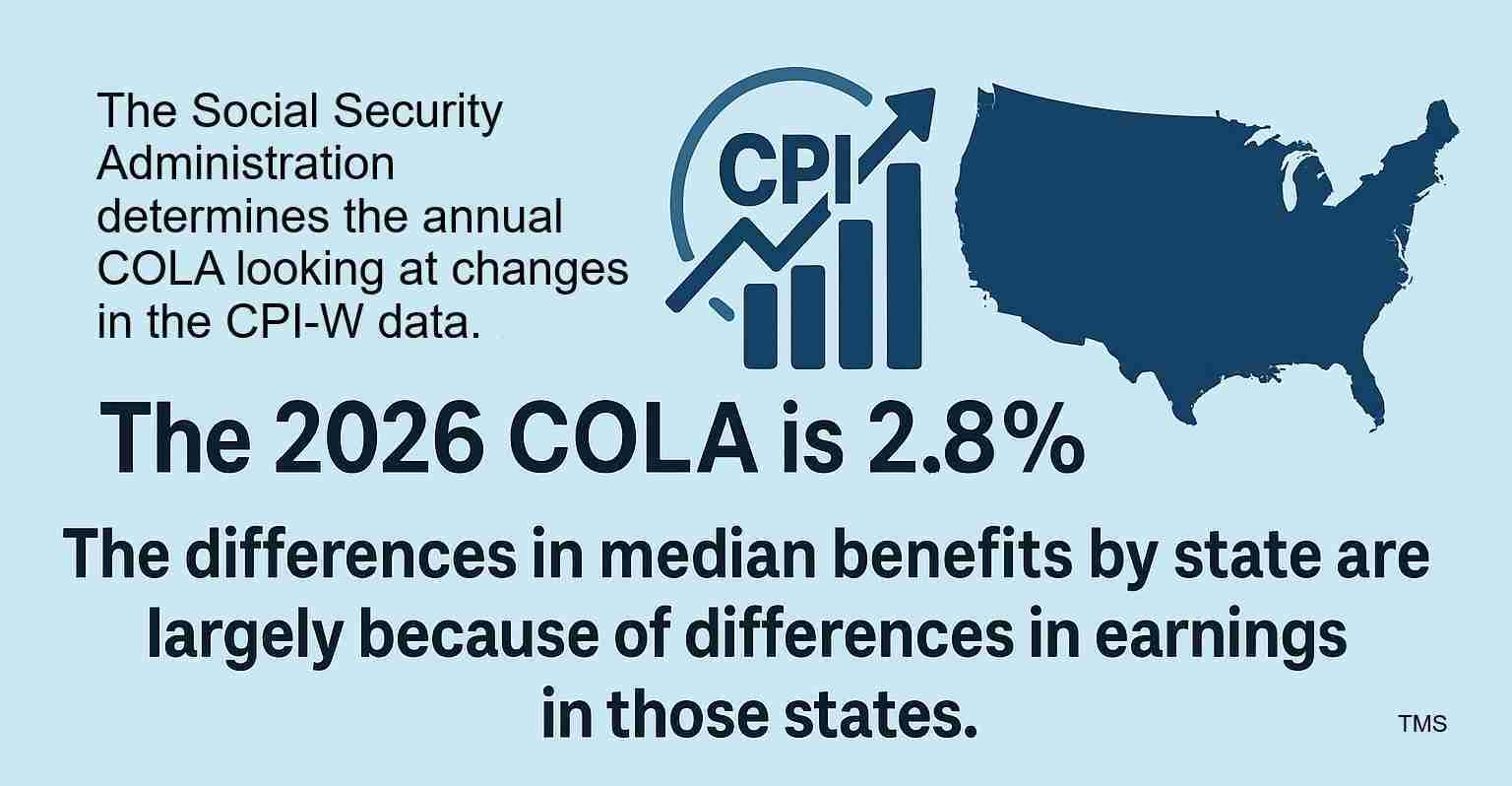
The Social Security Administration announced a 2.8% cost-of-living adjustment for 2026, raising benefits for nearly 71 million Americans and SSI recipients — an average increase of about $56 per month for retirees, effective January 2026 for most beneficiaries.
- COLA: 2.8% increase to Social Security and SSI for 2026, affecting nearly 71 million beneficiaries.
- Average gain: Roughly $56 per month for retirees (Senior Citizens League estimates ~ $54).
- Earnings & tax changes: New earnings limits ($24,480 and $65,160) and a higher taxable maximum of $184,500; payroll tax rates unchanged.
- Calculation & context: COLA set by CPI-W Q3 change; 2026 rise ranks about 29th among 51 COLAs since 1975.
Key information
COLA for 2026: 2.8 percent applied to Social Security and Supplemental Security Income (SSI).
Sources: Social Security Administration press release, SSA blog, SSA COLA page.
Who is affected and timing
Nearly 71 million people receiving Social Security retirement, survivors or disability benefits will see the 2.8% increase reflected in their January 2026 checks. Supplemental Security Income (SSI) recipients will receive higher payments beginning Dec. 31, 2025.
Average monthly retirement payments are estimated to rise by about $56; the Senior Citizens League calculated a similar increase of roughly $54, moving an average benefit from $2,008 to $2,062.
How the COLA was calculated and historical comparison
The COLA is set by comparing the Consumer Price Index for Urban Wage Earners and Clerical Workers (CPI-W) for the third quarter of consecutive years. SSA used the change from Q3 2024 to Q3 2025 to determine the 2.8% adjustment for 2026 (SSA COLA page).
This increase is a modest rise from the 2025 COLA of 2.5% but remains slightly below the 10-year average (~3.1%). Among the 51 COLAs since 1975, the 2026 increase ranks roughly 29th, placing it near the historical middle (Senior Citizens League).
SSA Commissioner Frank J. Bisignano: “The COLA is a vital part of how Social Security delivers on its mission,” emphasizing adjustments help benefits reflect current economic conditions (SSA press release).
Earnings limits, taxable maximum and tax rates for 2026
Key changes for 2026:
- Under full retirement age (FRA): Annual earnings limit $24,480; SSA deducts $1 for every $2 earned above the limit until FRA (SSA COLA page).
- Reaching FRA in 2026: Limit $65,160; SSA deducts $1 for every $3 earned above that limit until the month FRA is reached.
- Taxable maximum: Wages subject to Social Security tax rise to $184,500 in 2026 (up $8,400 from $176,100 in 2025) (American Action Forum analysis, SSA blog).
- Payroll tax rates: Unchanged: 7.65% for employees and 15.3% for the self-employed (SSA COLA factsheet (2026)).
For higher earners and those working past FRA, the raised taxable maximum means a larger share of earnings will be subject to Social Security payroll tax in 2026, while tax rates themselves remain the same.
Economic and policy context
The 2.8% COLA comes amid cautious inflation trends and renewed attention to Social Security’s long-term finances. Early 2025 projections were lower, but inflation rose late in the year, pushing forecasts up (Senior Citizens League).
The modest boost is likely to produce small but measurable increases in consumer spending among retirees and disabled beneficiaries, supporting local economies. However, the COLA mechanism itself does not resolve structural funding questions that policymakers continue to debate (American Action Forum).
Implications for Utah
Economic impact
Utah seniors and disabled residents who rely on Social Security will receive modest direct gains. An extra $54–$56 per month can help cover part of a prescription, groceries or utility bills, and small increases in beneficiary spending may benefit local businesses, especially in communities with larger shares of older residents (SSA press release).
Political consequences
In a state that emphasizes fiscal responsibility, the COLA may intensify discussion on long-term program funding. Utah lawmakers and voters may probe policy options such as retirement-age adjustments, benefit formula changes, or tax measures to strengthen solvency.
Social effects
SSI recipients in Utah — many of whom are low-income seniors and people with disabilities — receive higher payments starting Dec. 31, 2025, which can ease immediate financial pressure and reduce reliance on local safety-net services (SSA press release).
Cultural relevance
Utah communities’ focus on family support and self-reliance may mean the COLA eases burdens for families supporting older relatives and spurs demand for financial education and retirement planning targeted at younger adults.
Practical next steps for Utah residents
- Check statements: Retirees should check mailed statements and their mySocialSecurity online accounts in January 2026 to confirm adjusted payments (SSA COLA page).
- Track earnings: Working beneficiaries must monitor earnings relative to the new $24,480 limit to avoid unexpected deductions (SSA COLA page).
- Prepare for taxes: Higher-income Utah workers earning above $184,500 should expect more wages subject to Social Security tax in 2026 (American Action Forum).
Policy questions for local leaders
State and local leaders may consider expanding outreach on retirement planning, coordinating support for SSI recipients, and engaging constituents on long-term Social Security policy options to protect benefit purchasing power while addressing sustainability concerns (SSA press release).