Supreme Court Blocks Trump Illinois Guard Deployment, Reinforcing State Sovereignty and Limits on Presidential Power
In a significant emergency-docket ruling today, the Supreme Court blocked the Trump administration from deploying federalized National Guard troops to Illinois, affirming lower-court injunctions, reinforcing state sovereignty, and narrowing presidential authority over domestic military deployments.
- The Court denied the government’s emergency request to federalize and send roughly 300 Illinois Guard members (and some Texas Guard troops) into Illinois, leaving lower-court injunctions in place.
- Legal limit: The decision signals that 10 U.S.C. § 12406(3) alone did not justify the deployment where the record did not show regular federal forces were unable to execute federal law.
- State sovereignty: Civil-rights groups and Illinois officials hailed the ruling as a protection of governors’ authority over their Guard forces.
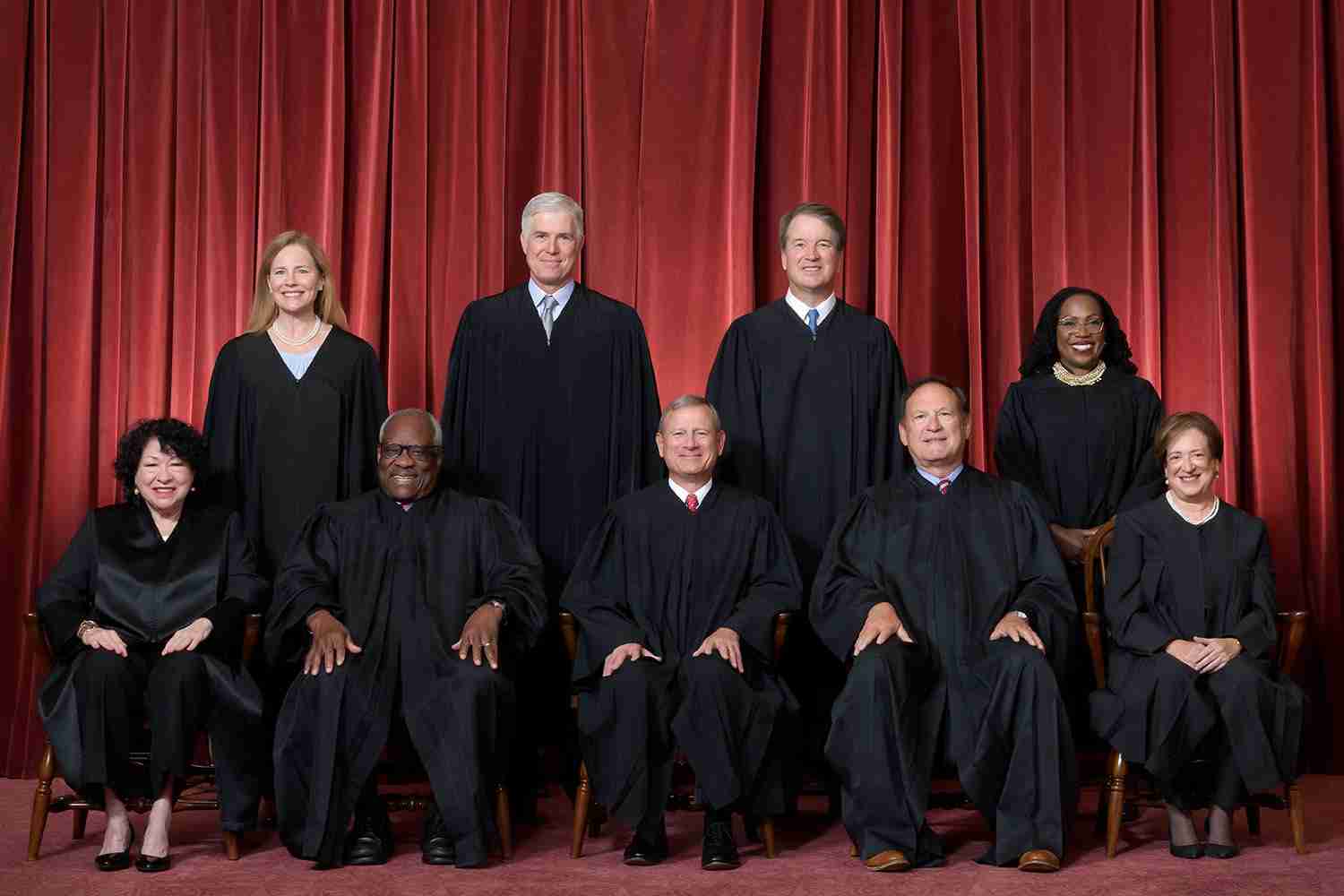
- Split vote: The 6–3 emergency-docket denial featured dissents from Justices Alito, Thomas and Gorsuch.
What the case was about
On Oct. 4, 2025, the president federalized roughly 300 members of the Illinois National Guard, asserting the troops were needed to protect federal personnel and property in Illinois, particularly in Chicago. The next day, members of the Texas National Guard were also federalized and sent to Illinois. The administration pointed to 10 U.S.C. § 12406(3) — a statute permitting the president to call Guard members into federal service when he is “unable with the regular forces to execute the laws of the United States.” The administration argued a federal role was required; opponents called that a pretext.
Lower-court rulings
The U.S. District Court for the Northern District of Illinois, presided over by Judge April Perry, entered a temporary restraining order that barred both the federalization and the deployment of the Illinois Guard in Illinois and prevented Texas Guard troops from operating there. The district court concluded the government had not shown that 10 U.S.C. § 12406 authorized the deployment on the record presented. The Seventh Circuit reviewed the matter and refused in relevant part to stay the district court’s order, leaving the injunctions in place while the government sought emergency relief at the Supreme Court.
Supreme Court action and the shadow-docket decision
After the Seventh Circuit denied a full stay, the Justice Department filed an emergency application with the Supreme Court. The Court waited more than two months and on Dec. 23, 2025, in Trump v. Illinois, No. 25A443, denied the government’s application for a stay, leaving the lower-court rulings intact. The short order reflects an emergency-docket, or “shadow docket,” denial rather than a full merits opinion. The primary court document is the Supreme Court order in Trump v. Illinois, No. 25A443.
The dissent
Three justices — Samuel Alito, Clarence Thomas and Neil Gorsuch — publicly dissented from the denial of the stay. Their accompanying dissent criticized the Court’s refusal to permit the deployment while the lower courts resolved the matter; the full text appears with the Court’s brief order documents available in the case materials.
Legal significance: Presidential power, Guard law and state sovereignty
The practical holding from the emergency order and the district-court opinion is that the government could not rely on 10 U.S.C. § 12406 alone to federalize Guard troops and send them into a state that objected where the record did not show regular federal forces were unable to enforce federal law. Courts emphasized that using the military for domestic law enforcement is an exceptional measure. The order thus underscores long-standing limits on military involvement in domestic policing and affirms that governors retain substantial authority over their National Guard absent a clear and narrow federal legal basis. See the Supreme Court order and statements from civil-rights groups.
Political and practical impact
Observers characterized the outcome as a rare Supreme Court setback for President Trump on the emergency docket; the denial breaks a streak of emergency-docket wins by the administration and highlights the judiciary’s capacity to limit executive action even in urgent contexts. Illinois Governor J.B. Pritzker called the decision “an important victory for the rule of law and state sovereignty,” and civil-rights organizations hailed the ruling as a check on what they described as a manufactured rationale for federalization. See the statement from Governor Pritzker and the ACLU of Illinois press release.
Questions about next steps
The emergency denial does not resolve the underlying merits of the statute or foreclose all federal avenues. It does set a clear bar: federal leaders must demonstrate a specific legal basis and concrete need before federalizing and sending Guard troops into a state over that state’s objections. How the administration responds — whether by pursuing full merits review, developing additional factual showings, or seeking alternative legal authorities — remains an open question.
Implications for Utah
- State sovereignty and governor authority: The ruling strengthens governors’ control over their state National Guard unless a clear federal legal basis exists to federalize them; Utah officials can cite the decision as judicial support for state control. (Supreme Court order)
- Presidential power and Guard policy: For Utahns prioritizing limited federal reach, the decision checks broad claims of presidential authority to use the Guard for domestic law enforcement without showing regular federal forces were insufficient. (ACLU national press release)
- Practical readiness and cooperation: Utah’s Guard and state leaders may re-examine intergovernmental coordination to ensure legal and operational clarity before any future federal-state missions. (Supreme Court materials)
- Political consequences: The decision will likely resonate with conservative Utah voters who emphasize state authority; elected officials favoring state control can point to the ruling as evidence courts will uphold state sovereignty against overbroad federal claims. (ACLU of Illinois statement)
- Public safety and perception: Courts do not bar lawful federal support when truly needed; the ruling asks for a clear legal showing before federal forces enter a state against its wishes, allowing Utah leaders to balance safety needs with constitutional control over their Guard.
Sources
Primary documents and statements referenced in this article:
- Supreme Court order, Trump v. Illinois, No. 25A443
- ACLU of Illinois press release
- ACLU national press release
- Statement from Illinois Governor J.B. Pritzker
Reporting by Times Media Service