Tesla to End Model S and Model X Production by Q2 2026 as Fremont Factory Shifts to Optimus Robot Manufacturing
Tesla confirmed it will end production of the luxury Model S and Model X by Q2 2026, freeing Fremont to prioritize mass manufacture of Optimus humanoid robots and other autonomy projects, CEO Elon Musk said on the Jan. 28 earnings call.
Key takeaways
- Model S and X production will end by Q2 2026, per Elon Musk on Tesla’s Q4 2025 earnings call (Fox Business, Electrek).
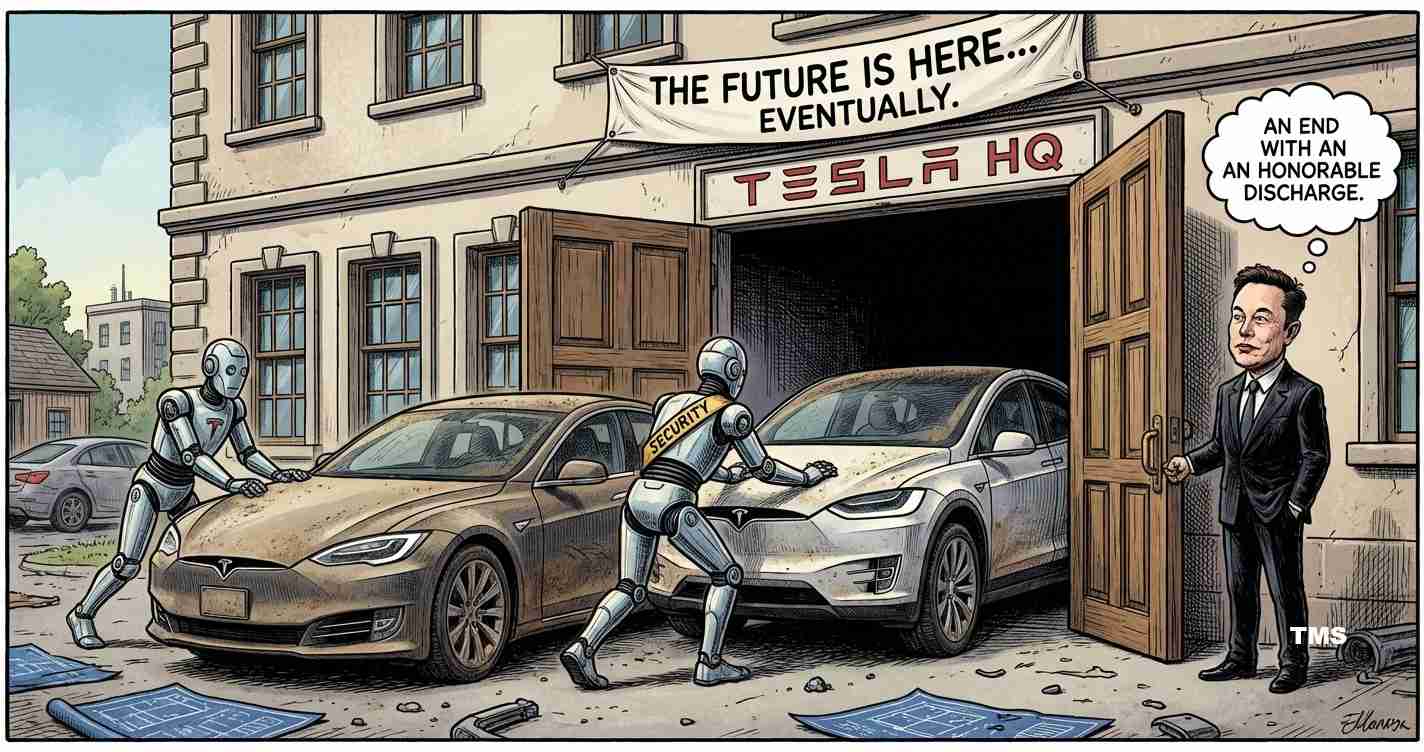
- Fremont will be repurposed for Optimus humanoid robot production and other autonomy-related lines; Musk called the phase-out an “honorable discharge” (Drive, Fox Business).
- Financial context: Tesla’s Q4 2025 revenue fell 3% to $24.9 billion, underscoring the company’s pivot toward autonomy and robotics (Fox Business).
What Musk said and what it means
On Jan. 28, Musk framed ending Model S and Model X production as a strategic step to move Tesla “from a car company toward a company based on autonomy and robotics.” He urged prospective buyers to order now and described the phase-out as an “honorable discharge.” Reporting on the call appeared in Fox Business and Drive.
Company plans and Fremont retooling
Executives told investors Fremont space will be repurposed for Optimus robot production and new autonomy-related lines. Tesla plans to reveal an Optimus Gen 3 mass-production design soon and has discussed investing in multiple new production lines in 2026 for vehicles, robots, energy storage and batteries (Electrek, Fox Business).
Scale, sales and capacity: why the move is possible
Model S and X sales have declined relative to Tesla’s broader lineup; analysts estimate those lines made up less than 3% of 2025 deliveries (roughly 30,000 cars globally). Fremont has long had unused capacity relative to original design, making repurposing feasible if Tesla prioritizes robotics and autonomy (Electrek, Edmunds).
Financial backdrop
Tesla reported a 3% drop in Q4 2025 revenue to $24.9 billion. The company has emphasized lower-cost, higher-volume models (Model 3 and Model Y), the upcoming Cybertruck, and strategic price adjustments, while executives pitch autonomy and robotics as a longer-term growth strategy (Fox Business).
Production timeline and support for owners
Musk said production will begin winding down next quarter and stop by the end of Q2 2026. Tesla has indicated it will continue to service and support existing vehicles while shifting new production to higher-volume models and robots. After the S/X phase-out, the Model 3, Model Y and Cybertruck will remain the only consumer models with steering wheels and pedals in Tesla’s lineup (Drive, Edmunds).
Industry reaction and questions
Observers and owner communities reacted with surprise and concern. The Model S and X were once Tesla’s flagship vehicles, and analysts say the decision reflects both market realities (competition in luxury EVs) and a bet that Tesla can convert manufacturing scale into a robotics business. Skeptics question whether Optimus can reach the volumes Musk describes and whether a mass-market robotics business is realistic soon (Electrek, Drive, Edmunds, Tesla Motors Club).
Operational details and capacity claims
Tesla has suggested Optimus production at Fremont could scale to very large annual output, but public details on retooling steps, hiring, retraining or an exact timeline remain thin. Company statements mention potential investments in up to six new production lines for 2026, but a step-by-step blueprint has not been released (Fox Business).
Where the numbers come from
Estimates of S/X deliveries vary. Some outlets cite cumulative global deliveries in the hundreds of thousands since launch; industry trackers and owner forums add context but show uncertainty about exact counts and regional distribution. Tesla has not provided a detailed breakdown tied to the earnings call (Drive, Electrek, CarBuzz, Edmunds, Tesla Motors Club).
Implications for Utah
This national shift has local implications for Utah’s economy, workforce and political debate. Below are key local impacts and practical guidance.
Economic impact
– Jobs and suppliers: Utah firms that supply parts, battery or electronics components to West Coast plants could see changing demand. A reallocation toward robotics components may create opportunities for some vendors and reduce volume for others (Electrek, Fox Business).
– Service and sales: Continued support for existing S/X vehicles is likely, but fewer new units could modestly reduce parts sales over time for specialty shops and local service centers.
Political consequences
– State policymakers may emphasize attracting diversified manufacturing and technology investment. Utah leaders could pursue robotics, battery or EV component plants to capture replacement economic activity.
– Tax and incentive debates: The pivot will amplify discussions over targeted, performance-based incentives that prioritize measurable job creation rather than broad subsidies.
Social effects
– Consumers: Short-term effects on Utah drivers buying mass-market models should be limited, but buyers seeking new luxury S/X models face a narrowing window and may turn to used markets or competitors.
– Workforce transition: Workers tied to traditional vehicle assembly may need retraining in robotics, advanced electronics and battery technologies; state workforce programs could play a role.
Practical applications for Utah residents
– Buying decisions: Interested buyers of Model S or X should act quickly if they want factory-new units; otherwise the market will shift toward used vehicles and competitors (Fox Business).
– Service planning: Owners should verify long-term service plans with Tesla service centers and consider extended warranties or parts stock where appropriate (Drive, Edmunds).
– Local monitoring: Utah officials and businesses should monitor supplier shifts and pursue prospects in robotics, battery or EV component manufacturing to capture new investment and higher-skill jobs.
Reporting notes and sources
This report is based on Tesla’s Q4 2025 earnings call (Jan. 28, 2026) and reporting from business and auto outlets, industry data and owner forums. Sources include: Fox Business, Electrek, Drive, CarBuzz, Edmunds, and Tesla Motors Club.