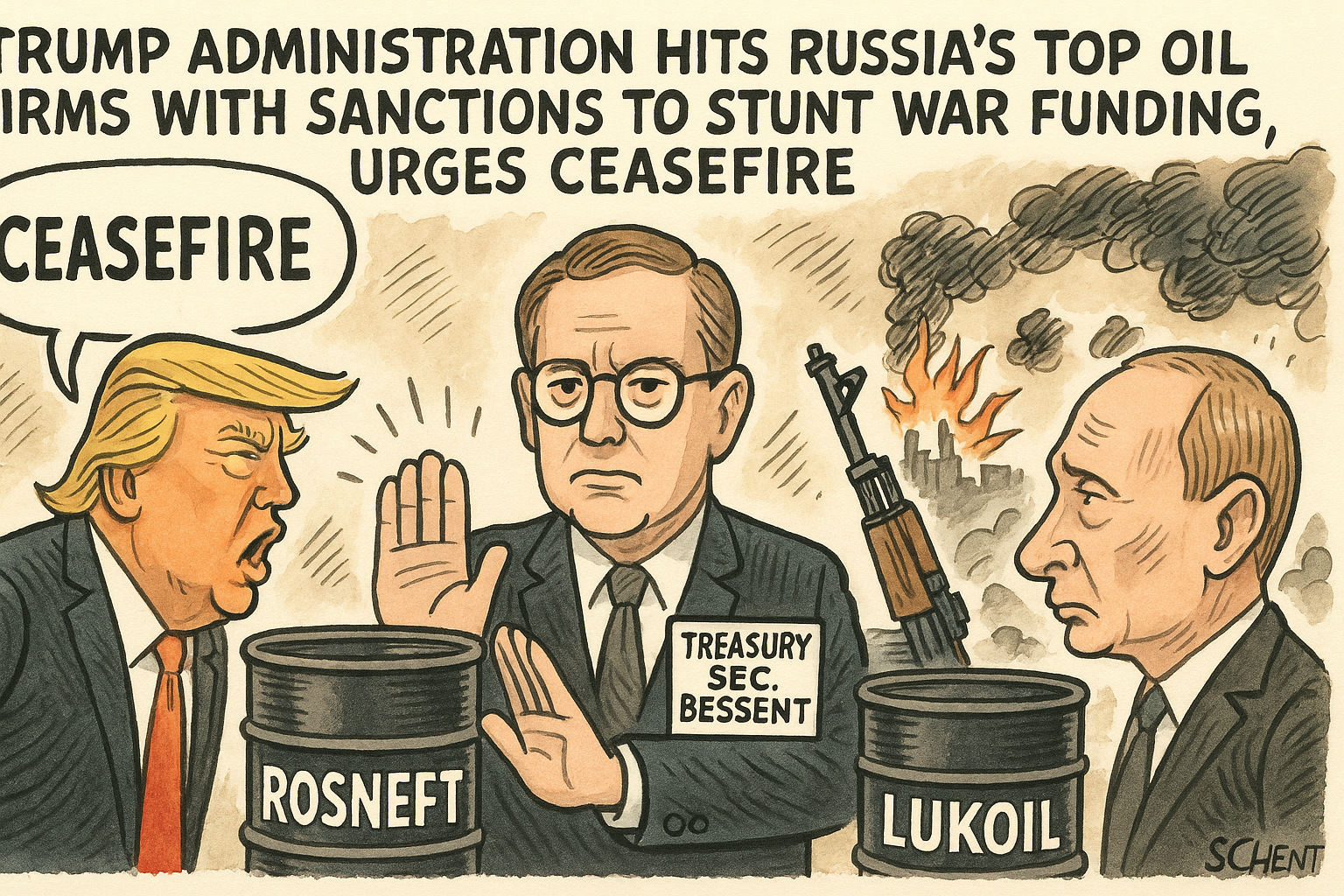
Trump team readies tough new oil sanctions on Russia, freezes assets of Rosneft and Lukoil to boost Ukraine ceasefire pressure
The incoming Trump administration is finalizing a sanctions package targeting major Russian oil firms, including Rosneft and Lukoil, aiming to pressure Moscow into a Ukraine ceasefire while weighing tighter penalties versus conditional relief tied to diplomatic progress.
Key takeaways
- Two policy paths: tighten sanctions or offer limited relief as bargaining chips for a ceasefire.
- Immediate action: outgoing Treasury and the UK blocked assets of Rosneft and Lukoil.
- Market risk: Brent crude spiked nearly $5 a barrel after asset blocks, highlighting tradeoffs between leverage and higher fuel costs.
Main content
What the plan would do
Reporting describes two broad policy options under debate. One path would tighten restrictions — adding secondary sanctions on foreign shippers and buyers, and restrictions on tanker movements through strategic chokepoints — to choke Russia’s main revenue streams and raise pressure for a Ukraine ceasefire (sources: Charter97, Rigzone, Euromaidan Press).
Sanctions as bargaining chips
The alternative would treat sanctions as conditional incentives: preserving some trade lines, extending or reissuing general licenses, or raising the Russian oil price cap to reward verifiable steps toward a ceasefire. That approach is designed to create diplomatic leverage tied to measurable actions (sources: Rigzone, TTNews).
Recent asset blocks and international coordination
In the transition’s final days, the outgoing Biden Treasury moved to block U.S. assets of Rosneft and Lukoil, with the UK taking similar steps. Those moves targeted core nodes of Russia’s oil system and already altered market expectations (source: TTNews).
Officials also added procedural constraints requiring Treasury to notify Congress before lifting key oil sanctions, increasing oversight on potential relief measures (TTNews).
Who’s in the room
Senior nominees, advisers, former officials and conservative policy experts are shaping options. Scott Bessent is named as overseeing asset blocks; Marco Rubio has framed sanctions as key bargaining tools. The team’s choice will determine whether measures remain punitive or become conditional incentives (sources: Rigzone, TTNews).
Market reactions and supply risks
Markets responded swiftly: Brent crude rose nearly $5 a barrel after the asset blocks, underscoring how supply-side sanctions can translate to immediate price spikes. Advisors weigh the political gains of squeezing Russia against the domestic economic pain of higher fuel, heating and freight costs (sources: Rigzone, Euromaidan Press, TTNews).
Broader geopolitical aims
Officials say the plan could extend beyond Russia: policies might squeeze exports from Iran and Venezuela by limiting routes and buyers. The stated aim is restoring U.S. leverage over major suppliers and using that leverage in wider regional security diplomacy (sources: Rigzone, Charter97, TTNews).
Technical timelines and legal tools
A key general license that allows certain buyers to wind down Russian oil purchases is set to expire in mid-March. Letting it lapse would tighten the squeeze; extending or replacing it would signal flexibility. New congressional oversight rules add legal checks on rapid reversals (TTNews).
Implications for Utah
Economic impact
Utah households and businesses could face higher gasoline and heating costs if sanctions tighten and global crude prices rise. Mountain West fuel prices typically track national crude trends, meaning more expensive commuting, farm operations, construction and freight for Utahns (sources: Rigzone, TTNews).
Energy and jobs
Utah’s energy sector, while smaller than some states’, depends on stable fuel markets. Refiners, transport and logistics firms could see demand shifts. Calls to boost domestic production and ease regulatory burdens may intensify if policymakers fear supply disruptions (sources: Rigzone, TTNews).
Political consequences
Utah’s largely Republican congressional delegation will likely press for measures that protect consumers and the energy industry, including waivers, strategic reserve releases, or targeted relief. The new congressional oversight on sanction relief may appeal to Utah conservatives who favor checks on the executive branch (TTNews).
Social effects and practical concerns
Higher fuel prices would raise household and school transportation costs, increase heating bills in winter, and pressure Utah’s tourism sector by making travel more expensive. Conservative voters and local leaders will weigh the goal of forcing a ceasefire against immediate impacts on family budgets and businesses (sources: Rigzone, Euromaidan Press, TTNews).
Cultural relevance
Utah values energy independence, limited government and stable local economies. Many conservative Utahns will evaluate sanctions through that lens, balancing the desire to pressure Moscow for a ceasefire against the immediate cost to consumers and regional businesses (Charter97, Rigzone, TTNews).
What Utah residents should watch
- Whether the mid-March general license is extended or allowed to lapse — a near-term indication of policy direction (TTNews).
- Administration statements on conditioning sanctions relief on verifiable steps toward a Ukraine ceasefire (Rigzone, Euromaidan Press).
- Congressional moves to authorize emergency releases from strategic reserves or other interventions to blunt price shocks (TTNews).
Bottom line: Authorities and analysts say the administration’s next steps will shape both the course of the war in Ukraine and the price Americans pay at the pump. Utahns — especially conservative voters and local leaders — will watch for policies that balance pressure on Moscow with practical protections for U.S. energy security (sources compiled: Rigzone, Euromaidan Press, Charter97, TTNews).