House votes down kill switch amendment, keeping Biden-era vehicle mandate; 57 Republicans join Democrats and draw conservative fire
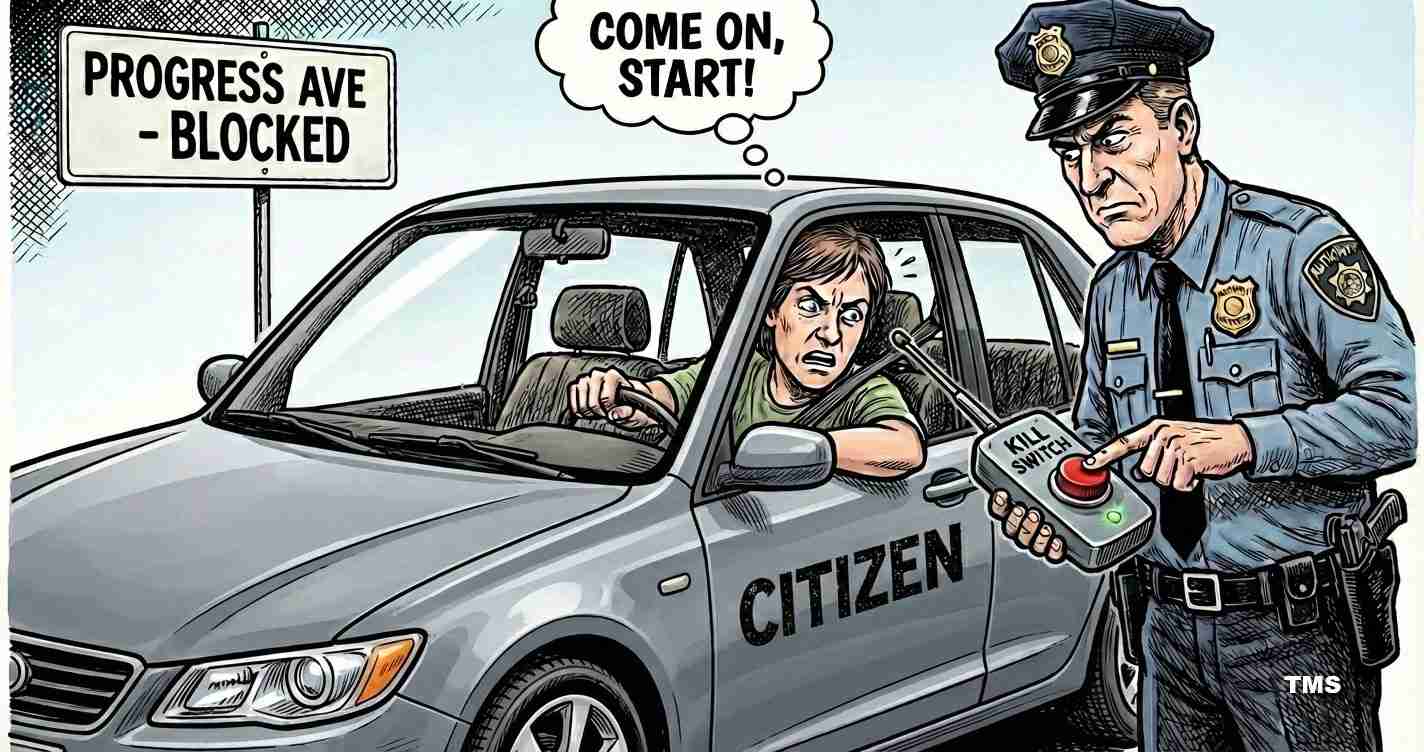
WASHINGTON (Times Media Service) — On Jan. 22, 2026 the U.S. House rejected Rep. Thomas Massie’s amendment 268–164 to defund a Biden-era vehicle “kill switch” requirement, with 57 Republicans joining Democrats and prompting sharp conservative criticism.
Key takeaways
- Vote outcome: The House defeated Massie’s amendment 268–164; 57 Republicans crossed with Democrats to oppose the rollback (Fox News report).
- Target: The amendment sought to block funding for Section 24220 of the 2021 IIJA, which directs NHTSA to develop impaired-driving prevention standards (Congress.gov amendment listing).
- Broader package: Defeat of the amendment let the Consolidated Appropriations Act minibus advance; that $1.2 trillion package passed the House 341–88 (Politico live coverage).
- Political fallout: Conservatives called the vote a privacy and liberty threat and signaled further legislative and state-level efforts (Competitive Enterprise Institute statement).
What happened
On Jan. 22, 2026, the House floor considered Amendment 1 to H.R. 7148 — a measure offered by Rep. Thomas Massie (R‑Ky.) that would have prohibited federal spending to develop, execute or enforce the so‑called vehicle “kill switch” authorities embedded in Section 24220 of the IIJA. Massie’s amendment was cosponsored by Reps. Scott Perry (R‑Pa.) and Chip Roy (R‑Tex.) and was defeated 268–164, keeping the IIJA‑directed NHTSA process intact and allowing the minibus to move forward (Congress.gov amendment listing).
Mandate background: what Section 24220 would do
Section 24220 of the 2021 Infrastructure Investment and Jobs Act directs the National Highway Traffic Safety Administration to develop performance‑based standards for advanced impaired driving prevention technologies. The law envisions passive monitoring systems that analyze steering, lane position, eye movement or other inputs and that could prevent or limit vehicle operation when impairment from substances, fatigue or severe distraction is detected. NHTSA has conducted studies and prototype work but, as of the vote, no final mandatory rule had been issued due to technical challenges and ongoing rulemaking.
The Massie amendment: scope and intent
Massie’s amendment would have barred federal funding that enables NHTSA or other agencies to develop, execute or enforce the IIJA’s “kill switch” authorities under H.R. 7148. Supporters argued the change was necessary to protect motorists from government‑mandated remote control of personal vehicles and to prevent funding for systems they view as untested and intrusive (Roy FM coverage).
Massie: “This is bad science fiction,” he said on the floor, framing the amendment as a defense of liberty and arguing that state tools like ignition interlocks already address drunk driving.
Floor debate and vote dynamics
The Rules Committee granted the amendment a floor vote while leaders advanced the larger funding package. Massie warned of false positives and engineering shortcomings — e.g., a system that might disable a vehicle after an evasive maneuver to avoid a pothole or on icy roads. Rep. Scott Perry and other supporters raised concerns about centralized control over movement.
Despite those arguments, a bipartisan majority rejected the amendment. The result highlighted GOP divisions: 57 Republicans sided with Democrats to oppose the rollback, an outcome that drew immediate condemnation from conservative leaders and advocacy groups (Fox News report).
Technical limits and safety questions
NHTSA has acknowledged challenges in reliably distinguishing types of impairment and in avoiding false alarms. While proponents emphasize the life‑saving potential of passive monitoring to prevent impaired driving, critics say the science is unsettled and point to risks from unreliable shutdowns, emergency situations, and potential misuse of remote‑control capabilities. The debate centers on weighing public safety gains against privacy, civil liberties and reliability concerns (CEI analysis).
Conservative backlash and political fallout
Prominent conservatives reacted swiftly. Florida Gov. Ron DeSantis posted on X calling a federal requirement for a government‑controlled “kill switch” “something you’d expect in Orwell’s 1984” and labeled it totalitarian. Rep. Keith Self (R‑Tex.) said it was “unbelievably disturbing” that 57 Republicans joined almost all Democrats to preserve the mandate, warning the system could allow the government to shut off cars “whenever it wants.” Conservative organizations backed Massie’s effort and pledged further action (Fox News report; CEI statement).
Implications for Utah
Economic impact: Utah’s growing tech and manufacturing sectors and its large driving population mean a federal mandate could affect vehicle prices, maintenance costs, and the aftermarket. Dealers and repair shops may face training and equipment costs; insurers could see offsetting effects if crashes decline but may also price in new risks tied to system failures or hacking.
Political consequences: Utah’s conservative electorate is likely to press GOP leaders for clarity and possible state countermeasures. Lawmakers in Utah could pursue state restrictions, transparency rules or appeal protections if they oppose federal standards — or defend federal action if framed primarily as a safety measure.
Social and cultural effects: Rural driving, mountain passes and winter conditions fuel skepticism about false positives. Concerns about mobility for work, worship and recreation could amplify state‑level political responses and grassroots activism.
Practical note for residents: No nationwide forced shutdown system has yet been imposed — NHTSA is still working on standards and no final rule has been adopted. Residents worried about privacy or control can contact representatives and monitor state legislative activity.
What’s next
With the amendment defeated, NHTSA retains the statutory directive to continue studies and rulemaking under the IIJA unless Congress acts again. Conservative lawmakers and groups have signaled plans for additional oversight, standalone repeal efforts, or state legislation to limit perceived federal overreach. Public reporting confirms vote totals but has not published a definitive public roll‑call list identifying the 57 GOP members who voted against Massie’s amendment, a gap fueling calls for transparency (Congress.gov bill actions).
For more information
- Fox News reporting on the vote and conservative reaction
- Competitive Enterprise Institute statement
- Roy FM coverage of the Massie amendment and debate
- Full amendment listing on Congress.gov and bill actions
- Politico live coverage of the minibus votes
Reporting based on public statements, roll‑call tallies and reporting from outlets and organizations cited above.