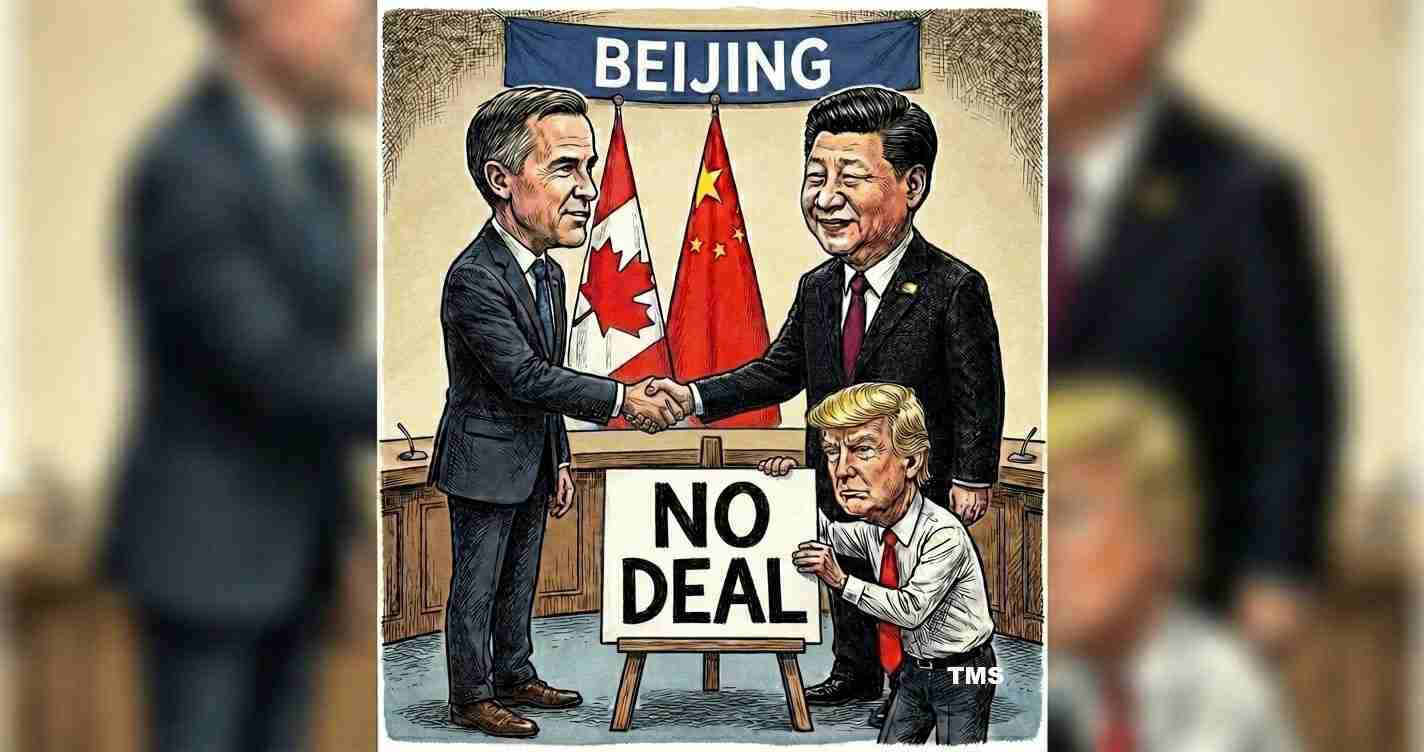
Trump warns Canada tariffs — threatens 100% tariff if Ottawa becomes a “drop off port” for China
President Donald Trump on Saturday threatened a 100% tariff on Canadian imports if Ottawa strikes deals that let Chinese goods enter U.S. markets via Canadian ports, calling such a shift a national-security and economic threat to American workers and supply chains.
Key takeaways
- Trump threatened a 100% tariff on all Canadian goods if Canada signs deals that make Canadian ports a “drop off port” for Chinese products (ABC News).
- He attacked Prime Minister Mark Carney on Truth Social and warned China would “eat Canada alive” if Ottawa becomes a staging ground for exports (ABC News).
- Ottawa says the EV tariff cut is narrow and denies pursuing a full free-trade agreement with China (ABC News; NBC Montana).
- Because Canada is the U.S.’s second-largest trading partner, a tariff escalation could ripple through supply chains and affect consumers and industries, including EV supply chains and Utah businesses (YouTube).
Background: what prompted the warning
Last Friday, Canada and China reached a limited swap: Canada agreed to lower its 100% tariffs on certain Chinese electric vehicles (EVs) while China agreed to cut tariffs on some Canadian agricultural products. This narrow EV tariff exchange prompted attention in Washington and on President Trump’s social feeds. Reporters trace the president’s posts to that Canada–China EV deal and growing Ottawa–Beijing ties (ABC News; YouTube).
Trump’s message: direct quotes and context
Using Truth Social, Trump wrote:
“If Governor Carney thinks he is going to make Canada a ‘Drop Off Port’ for China to send goods and products into the United States, he is sorely mistaken. China will eat Canada alive, completely devour it, including the destruction of their businesses, social fabric, and general way of life.”
He added:
“If Canada makes a deal with China, it will immediately be hit with a 100% tariff against all Canadian goods and products coming into the U.S.A.”
Context: Trump’s language echoes earlier provocative references to Canadian leaders as “governor,” suggestions about annexation during campaign remarks, and altered maps blending Canada into U.S. territory — part of a broader pattern of rhetorical pressure toward Ottawa (ABC News; NBC Montana).
Canadian reaction
Ottawa pushed back immediately. Dominic LeBlanc, the minister responsible for Canada–U.S. trade, said there is “no pursuit of a free trade agreement with China” and stressed the “remarkable partnership” between Canada and the United States. Prime Minister Mark Carney said Canada and the U.S. have “built a remarkable partnership” and added that Canada “thrives because we are Canadian,” not because of the U.S. Carney warned at the World Economic Forum in Davos that weaponizing economic tools like tariffs risks a dangerous “rupture” in the world order (ABC News; NBC Montana).
Canadian ministers say the EV tariff cut is narrow and intended to boost competition and lower prices for consumers, not to turn Canada into a conduit for Chinese exports into the United States. Ottawa emphasizes continued cooperation with Washington on trade and security (ABC News).
Past context: tariffs, Greenland and rhetoric
Analysts note the move fits a pattern: Trump has used the threat of tariffs as leverage in prior disputes, including rhetoric around Greenland and threats aimed at allies, sometimes followed by partial reversals. Observers say invoking a “drop off port” taps into conservative concerns about supply chains, national security, and China’s economic reach (ABC News).
Trade stakes: why this matters to the U.S.
Canada is the United States’ second-largest trading partner. A tariff of the scale threatened would ripple through North American supply chains, raising costs for consumers, disrupting manufacturing inputs, and risking retaliation that could hit U.S. farmers and businesses. The president framed the move as protecting U.S. markets from China and safeguarding American jobs (YouTube; ABC News).
The Canada–China EV arrangement — and how EVs and parts move through North America — is central. EV supply chains cross borders for materials, parts and assembly; changes to tariffs or port access can affect prices, factory plans and investment decisions (ABC News).
Implications for Utah
Economic impact:
- Utah firms trading with Canada could face higher costs if tariffs are imposed; manufacturers relying on Canadian parts would feel supply- and price-pressure.
- Utah’s role in EV and battery supply chains — including critical minerals like lithium — means any disruption could slow investment and increase costs for local EV-related industries.
Agriculture and exports:
- Utah agricultural producers exporting to Canada or relying on Canadian inputs could see new barriers; potential Canadian retaliation could target U.S. farm goods.
Prices and consumers:
- A 100% tariff on Canadian goods would likely raise consumer prices across many categories in Utah, from food to industrial parts.
Political and security consequences:
- For conservative voters in Utah, the threat signals a tough stance on China; local leaders, however, may face pressure to seek exemptions to protect critical industries.
Supply-chain and practical effects:
- Logistics could shift if trade flows move through different ports, raising costs and timelines for Utah construction, manufacturing and retail.
- EV prices in Utah could change if manufacturers adjust sourcing to avoid tariff exposure.
What Utah officials can watch for
- Clear guidance from U.S. trade authorities about which goods would be covered and how enforcement would work.
- Any retaliatory Canadian measures that could target goods important to Utah’s economy.
- Moves from manufacturers to relocate or reconfigure supply chains, which could bring investment to Utah or divert it elsewhere.
Reporting sources
This report draws on coverage from ABC News, regional reporting from NBC Montana, and recorded remarks and coverage available on YouTube and YouTube.