Passenger Removed After Playing Loud Cell Phone Video on Miami-to-Tampa Flight Sparks Expletive-Filled Confrontation; Airline Tightens Rules
A recent American Airlines flight from Miami to Tampa saw a passenger forcibly removed after repeatedly playing a cell-phone video loudly on speaker and refusing crew warnings, an incident captured on a viral TikTok that sparked an expletive-filled confrontation.
Key takeaways
- Removal after loud audio: A passenger was escorted off an American Airlines Miami–Tampa flight for playing a phone video loudly and not complying with crew warnings (AOL).
- Viral confrontation: The episode, captured on TikTok, shows profanity, a belligerent passenger, and police escorting her off the plane (AOL).
- Policy update: American Airlines clarified on Feb. 27, 2026, that loud audio on speakers can be grounds for removal, reflecting wider industry enforcement (AOL).
What happened
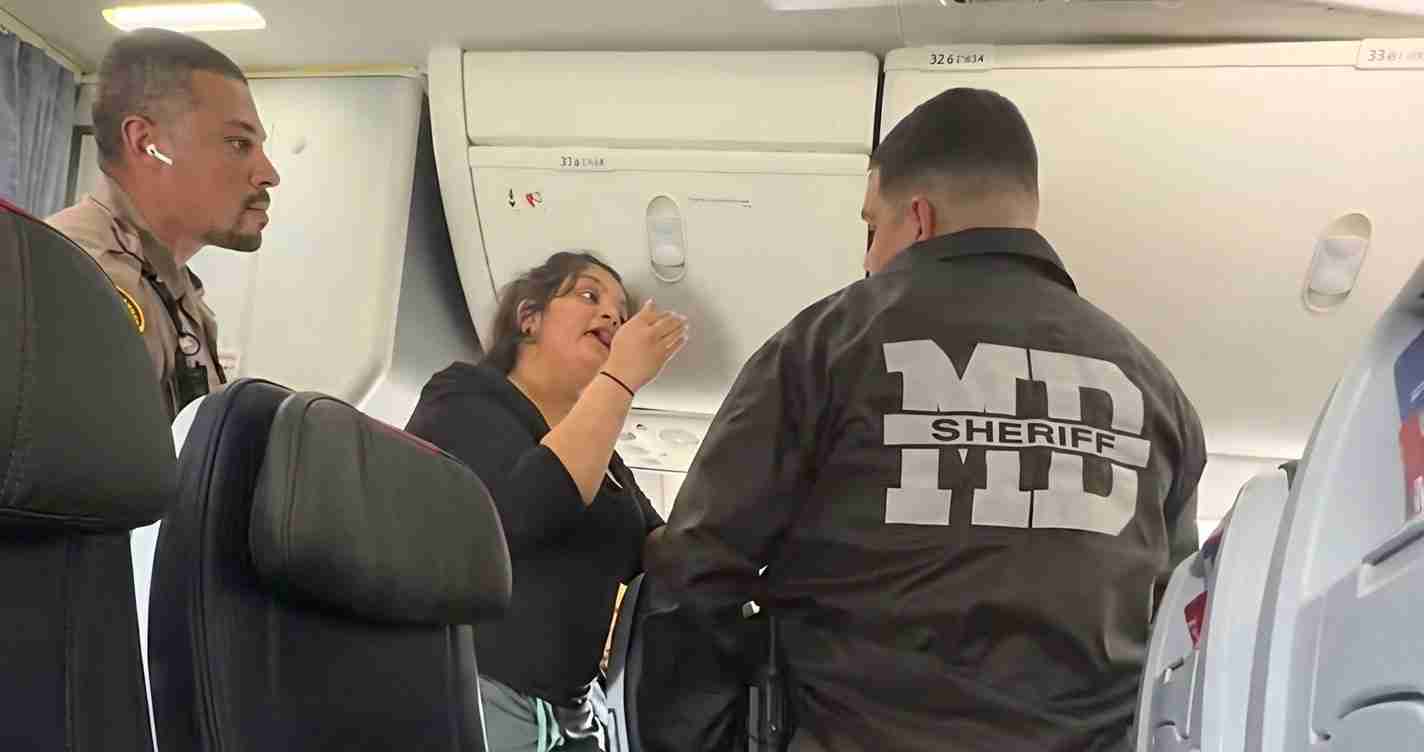
On an American Airlines flight from Miami bound for Tampa, a passenger played a cell phone video aloud on speaker and—after at least two warnings from crew—refused to comply. Flight attendants called police; two officers met the plane and escorted the passenger off following a profanity-filled exchange. Onlookers recorded the event and later applauded the crew as the situation concluded. Reporting on the episode appeared in coverage compiled by Times Media Service and AOL.
What the video shows and what passengers said
The viral clip shows a woman arguing with flight attendants and later with police while still seated. She repeatedly uses profanity and challenges crew members to call law enforcement. Witnesses described her as belligerent and possibly intoxicated before pushback. According to on-camera remarks reproduced in reporting, she said:
“I played a video for 30 f**king seconds at 50% sound, and that’s the f**king reason you’re kicking me off?”
She also asked, “What the actual f**k?” and later framed the dispute as a free-speech issue: “Is this not a free speech America or are we being a–holes to literally everybody?” She asked police, “Can I not express my feelings?” An officer replied, “You can express your feelings over there,” gesturing toward the exit. As officers led her off, she sarcastically clapped and waved while other passengers applauded the crew (AOL).
Why airlines and crews act
Airlines and cabin crews have a duty to keep flights safe, timely and comfortable for all passengers. Loud audio in a confined cabin can disturb children, interfere with safety announcements, and spark confrontations that risk delays or escalation. In recent years U.S. carriers have reported an increase in disruptive incidents, and the Feb. 27, 2026 American Airlines update explicitly lists playing loud music or videos on loudspeakers as conduct that can merit removal, mirroring broader industry moves toward stricter enforcement (AOL).
Legal and free-speech claims
Passengers sometimes cite free speech when disciplined aboard commercial flights, but legal protections differ: the U.S. Constitution restricts government action, not private airline policies. Private carriers and their crews may enforce rules meant to protect safety and comfort. Refusal to follow crew instructions can result in removal and potential criminal charges—such as disorderly conduct or trespass—depending on local law and police involvement. The Miami incident illustrates that a free-speech claim did not prevent officers from escorting the passenger when the crew judged removal necessary (AOL).
Airline silence and policy change
American Airlines did not publicly comment about this specific removal, a common practice when incidents involve local law enforcement or internal review. Separately, the carrier announced a policy update on Feb. 27, 2026 clarifying that playing loud audio — including on loudspeakers — can be grounds for removal. The update gives crews clearer authority to act before incidents escalate or cause delays (AOL).
Operational consequences and costs
Disruptive passengers generate costs beyond the immediate confrontation: offloading individuals, re-seating, filing reports and involving police all take time and money. Such incidents can delay flights and ripple through regional networks, affecting businesses and families. Industry officials say early enforcement of conduct rules is often cheaper and safer than allowing tensions to escalate midflight.
Questions still open
- Identity and charges: Reporting does not identify the passenger or confirm whether charges were filed; local authorities sometimes decline to press charges after on-the-spot removals (AOL).
- Timeline and details: Exact flight number and precise timing were not released publicly; coverage focuses on the TikTok video and the passenger’s on-camera statements (AOL).
- Enforcement consistency: How uniformly crews apply the updated policy across routes remains to be seen; outcomes may vary by crew training, airport, and local law enforcement response (AOL).
Practical takeaways for travelers
The episode offers plain advice:
- Use headphones. Even modest speaker volume carries in a cabin.
- Follow crew instructions promptly. Arguing or refusing can lead to removal.
- Moderate alcohol. Intoxication often worsens disputes and can lead to removal or charges.
- Recordings don’t prevent removal. Video may document events but does not stop crews from enforcing rules.
Implications for Utah
Economic impact
Utah travelers use Salt Lake City International Airport as a regional hub. If carriers enforce stricter noise rules, Utah passengers may experience fewer delays caused by in-flight incidents, reducing costs for local businesses and missed meetings. However, occasional removals could still produce short-term disruptions while crews manage incidents.
Political and legal consequences
Conservative-leaning Utah voters who value law and order may welcome clear enforcement. Still, some residents and officials will monitor for perceived overreach by private companies limiting expression. The legal distinction is straightforward: private airlines set conduct rules and may remove passengers who violate them; elected officials could request more transparency on application and due-process steps.
Social effects
Utah families, especially those traveling with children or elderly relatives, are likely to appreciate firmer enforcement of noise rules. Business travelers also benefit from fewer disruptions. But repeated viral incidents may increase traveler caution and prompt calls for clearer passenger protections.
Cultural relevance
Utah’s culture prizes both free speech and personal responsibility. This incident underscores the balance: expression is protected in public life, but on private planes passengers must abide by rules that protect shared spaces. Many readers will view the crew’s action as enforcing order and protecting fellow travelers’ rights to a peaceful flight.
Practical impact on daily life for Utah travelers
- Keep phone sound low or use headphones when flying through Salt Lake City or elsewhere.
- Avoid public displays of anger; Utah communities generally prefer calm, respectful public behavior.
- If removed, request written reasons and an incident report number to aid any later dispute.
Reporting and sources
This report is based on a viral TikTok clip and reporting compiled by Times Media Service and AOL. The primary public account of the incident and details of American Airlines’ policy update appear in the AOL article linked above.
Note: All facts, quotes and the source URL have been preserved from original reporting (AOL).