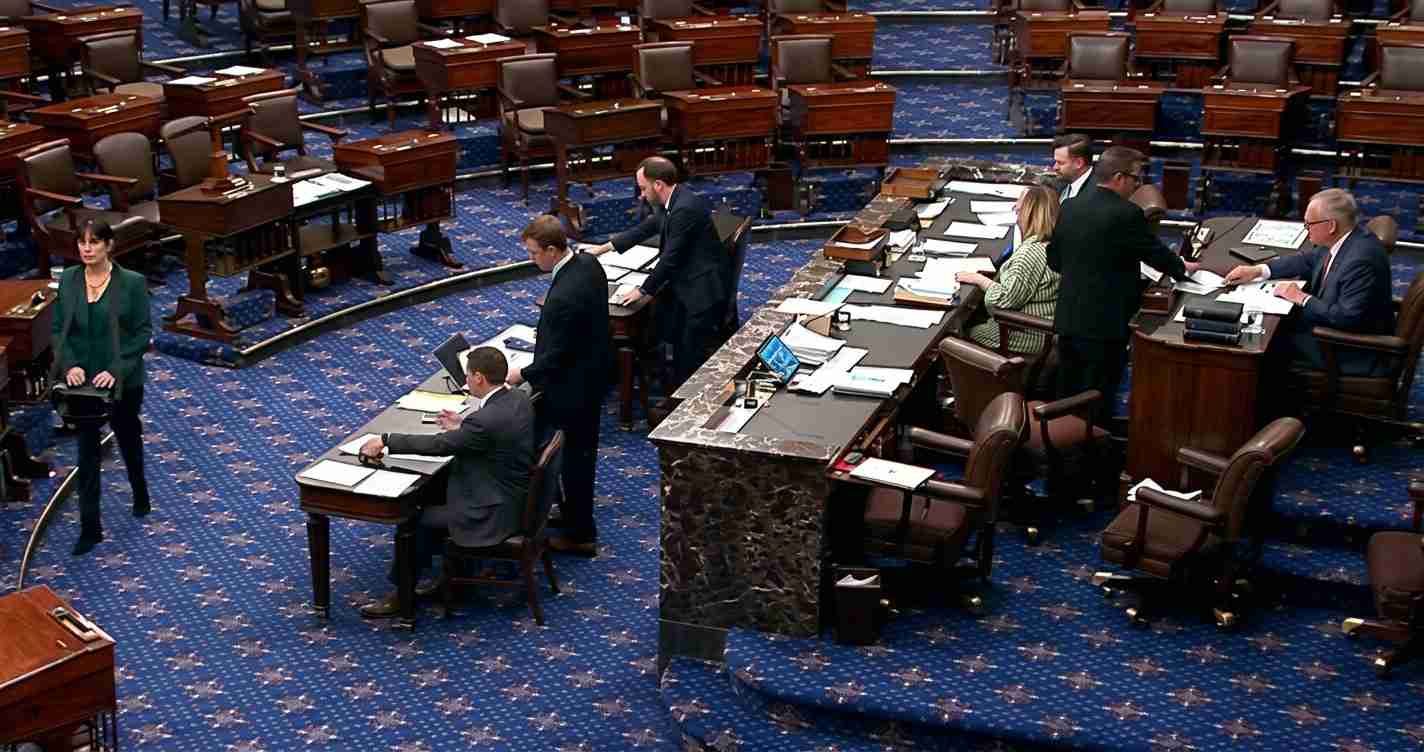
Senate to Withhold Senators’ Pay During Future Shutdowns in Bid to Force “Shared Sacrifice”
The U.S. Senate unanimously approved a resolution to withhold senators’ pay during future government shutdowns, holding earnings in escrow until funding resumes. Led by Sen. John Kennedy, the measure will take effect after the next election under the 27th Amendment.
Key takeaways
- What passed: A resolution directing the secretary of the Senate to withhold senators’ pay during any lapse in appropriations and hold those earnings in escrow until the shutdown ends.
- Who led it: Sen. John Kennedy (R-La.), who framed the move as a way to make senators share the burden federal workers suffered in recent shutdowns.
- Constitutional limit: The change cannot take effect until after the next election because of the 27th Amendment.
- Scope: Applies only to senators, not House members, and withholds pay temporarily during funding lapses rather than changing annual salary.
What passed
The Senate approved a resolution instructing the secretary of the Senate to stop regular salary payments to senators when appropriations lapse, hold the withheld funds in escrow while the government is unfunded, and release those funds once a funding deal reopens the government.
Why senators moved to limit their pay during shutdowns
Supporters argued that repeated shutdowns have been used as a political tool that harms ordinary Americans and federal employees while lawmakers remain insulated. Sen. John Kennedy cited recent painful episodes—a 43-day full government shutdown and a 76-day partial lapse tied to the Department of Homeland Security—during which many federal workers went unpaid.
“We had FBI agents, national park rangers, CDC scientists, our staff here in Congress — nobody was getting paid,” Sen. John Kennedy said on the Senate floor. “We ought to hide our heads in a bag. It’s got to stop.”
How the pay withholding would work
Under the measure, the secretary of the Senate would:
- Stop regular salary payments to senators once a lapse in appropriations begins.
- Hold those withheld funds in escrow while the government remains unfunded.
- Release the funds to senators once Congress reaches a funding deal and the government reopens.
This is a temporary withholding, not a permanent pay cut. Current basic pay for rank-and-file senators is cited at about $174,000 per year, with party leaders earning more than $193,000, figures supporters say make the policy meaningful as a deterrent. See Senate pay information.
Constitutional hurdle: the 27th Amendment
Supporters designed the resolution to comply with the 27th Amendment, which bars laws that change congressional pay from taking effect until after the next House election. That timing means the withholding would not apply to the remainder of the current election cycle and would begin only after the November vote.
Political and policy context
The resolution is one of several responses to recent shutdowns. Alternatives proposed by other senators include measures to protect federal workers or to prevent shutdowns entirely:
- Sen. Ron Johnson has proposed measures, backed by federal labor groups, to ensure federal employees receive pay during shutdowns — effectively shifting costs so essential workers are protected.
- Sen. James Lankford supports plans for short, automatic funding extensions to remove shutdowns as leverage.
Those proposals reflect two broad approaches: make shutdowns more painful for lawmakers or shield the federal workforce. The Senate’s pay-withholding resolution follows the first path.
Why this matters to the public
Supporters say the resolution sends a clear message: shutting the government should carry consequences for those who choose it. Opponents note that the real victims are rank-and-file federal employees, service members, beneficiaries, travelers, and small businesses dependent on federal operations. Recent funding pauses disrupted airport screening, closed national parks, and delayed services, with ripple effects beyond Washington.
What the resolution does not do
- It does not apply to members of the House of Representatives.
- It does not guarantee federal workers will be paid during a shutdown; it only affects senators’ pay withholding.
- It cannot prevent a shutdown immediately because of the 27th Amendment restriction.
- It does not change the underlying appropriations process or force agreement on spending levels.
Roll call and bipartisan support
The resolution advanced earlier by recorded vote with strong bipartisan backing and later passed unanimously by the full Senate. Senators across party lines described the vote as an effort to restore budgeting discipline and reduce shutdown brinkmanship. The text and procedural records are available on Congress.gov and official Senate resources.
Impact on lawmakers and political calculations
The change is partly symbolic and partly practical: by creating a fiscal hit to senators during a lapse, it aims to alter the political calculus that makes shutdowns tolerable. However, the delayed effective date means lawmakers contemplating shutdowns before the next election remain unaffected this cycle. Critics warn that symbolism may not erase underlying partisan incentives that produced multiple shutdowns in one year.
Implications for Utah
Economic impact
Utah’s economy depends in part on reliable federal services. Prolonged shutdowns hit tourism tied to national parks and slow federal processing that supports small businesses. When park staff are furloughed, visitors to Zion, Bryce Canyon, Arches and Canyonlands face closures or reduced services, reducing hotel stays, guided tours and local retail sales. Salt Lake City International Airport also experienced effects when TSA staff faced missed paychecks, risking travel delays.
Federal employees in Utah
Thousands of Utah residents work for federal agencies—from National Park Service rangers to Veterans Affairs and Social Security staff. Those workers and contractors felt financial strain in recent lapses; proponents say the Senate measure aims to make such lapses less likely, which could benefit Utah’s federal workforce and businesses that rely on stable federal operations.
Political consequences in Utah
Utah voters tend conservative and value fiscal responsibility and limited disruption. The pay-withholding measure aligns with those priorities by holding lawmakers accountable for budget standoffs. Utah’s delegation will watch how the policy plays locally: if it reduces shutdowns, supporters may cast it as a win for voters who prioritize stable services.
Practical effects for everyday Utahns
If the resolution deters shutdowns, Utah residents could see fewer canceled services, more reliable federal processing times, and less risk of airport slowdowns during peak travel. If it fails to change behavior, Utahns remain exposed to missed paychecks, delayed permits, and limited park services as in past shutdowns.
Sources and further reading
- National Archives, text and history of the 27th Amendment
- U.S. Senate official site and facts about Senate pay and procedures
- Legislative records and resolution texts on Congress.gov
- Coverage of recent shutdowns and federal worker impacts: reporting from national outlets and congressional press releases (see major outlets and Senate press offices for full context).
Senate floor remarks by Sen. John Kennedy and the official resolution text are available via Senate press releases and the Congressional Record; readers may consult the Senate’s official website and Congress.gov for the exact resolution language and procedural history.