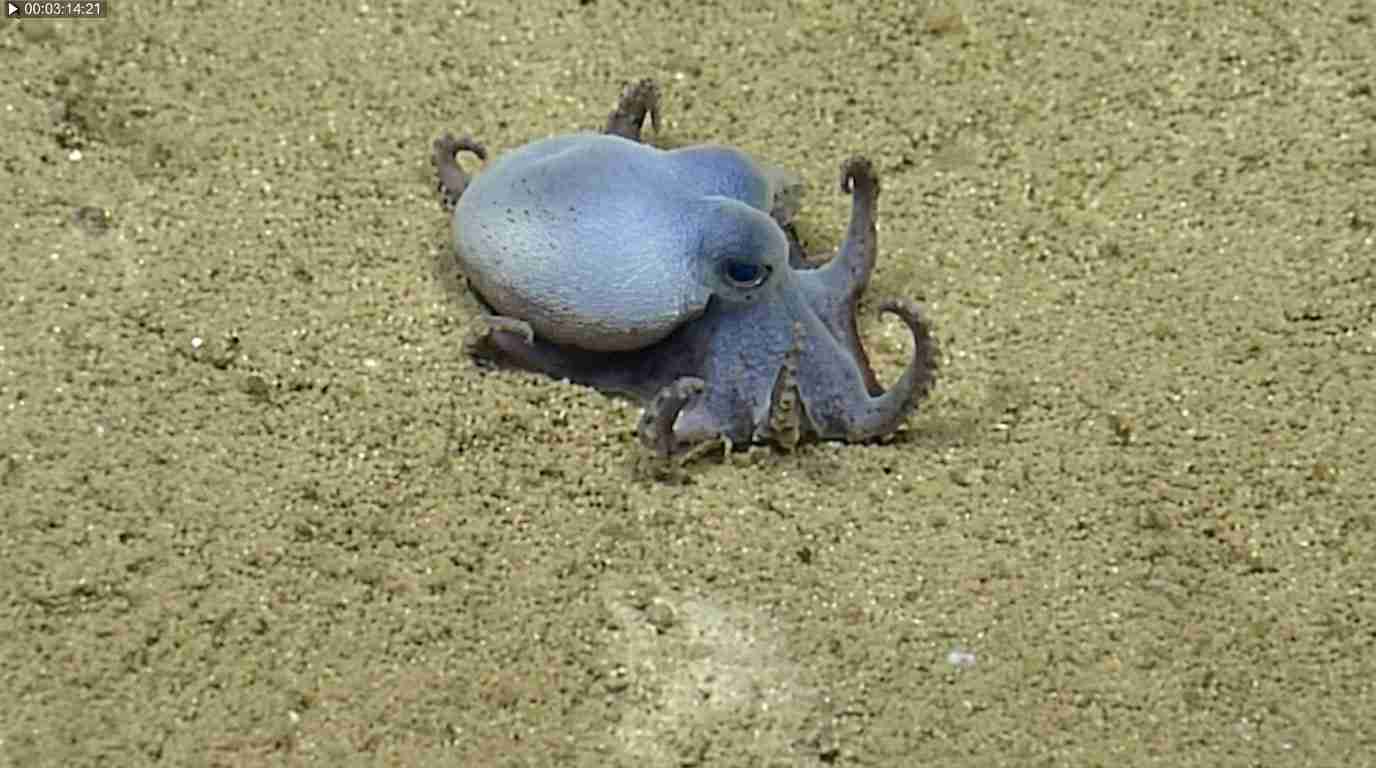
Tiny blue octopus from Galápagos named a new species after museum micro-CT scans reveal hidden anatomy
Researchers have named a new deep-sea octopus Microeledone galapagensis after museum micro-CT scans revealed hidden internal anatomy; dozens of fragile blue specimens collected near the Galápagos in 2015 enabled non-destructive 3D study and formal description.
- New species identified: Microeledone galapagensis, a small blue deep‑sea octopus found near the Galápagos.
- Discovery context: First seen via ROV at ~5,800 feet (1,770 m) during a 2015 expedition; dozens of specimens recovered for study.
- Key method: Non‑destructive micro‑CT scanning at the Field Museum produced detailed 3D anatomy used for species diagnosis.
- Collaborative work: Field collection, Charles Darwin Research Station curation, and museum imaging enabled the formal description.
How the discovery unfolded
During a 2015 deep‑sea survey around the Galápagos, a remotely operated vehicle (ROV) documented and collected dozens of small, blue octopuses from sandy seafloor habitats at roughly 5,800 feet (1,770 meters). Because these deep‑sea animals are extremely fragile, researchers transported specimens to the Charles Darwin Research Station for careful handling and preservation.
When taxonomic matches proved elusive, specialists sent specimens to octopus expert Janet Voight at the Field Museum. There, scientists used micro‑CT — a high‑resolution X‑ray imaging method — to generate three‑dimensional renderings of internal anatomy. These images revealed diagnostic features such as beak structure, musculature and organ layout without physically dissecting the fragile animals.
“Micro‑CT allowed us to examine delicate internal features and preserve the specimens intact,” said researchers involved in the museum study (paraphrased).
Combining ROV footage, preserved external morphology, and micro‑CT datasets produced sufficient evidence to name and describe the species Microeledone galapagensis. The work demonstrates how field robotics and modern imaging can be integrated to document deep‑sea biodiversity while minimizing specimen damage.
Why micro‑CT scanning matters
- Non‑destructive analysis: Micro‑CT permits internal study without slicing fragile specimens, preserving them for future research.
- High detail: Scans resolve tiny anatomical structures — mouthparts, beaks, internal organs and skeletal elements — that are crucial for taxonomy.
- Reproducible records: 3D datasets are archivable and shareable, enabling re‑examination by other scientists worldwide.
These advantages are especially important for deep‑sea cephalopods with soft bodies that often deteriorate during collection. The combined approach — in‑situ ROV observation plus micro‑CT lab analysis — is becoming standard for describing delicate marine life from great depth.
Scientific context and caveats
The Galápagos region is a recognized hotspot for endemic marine life, so new species findings are consistent with expectations. The primary advance in this case is methodological: high‑resolution imaging can confirm novel species while keeping specimens largely intact.
Note: Calling the animal a “tiny blue octopus” is a useful public description but simplifies taxonomic nuance. Formal naming — Microeledone galapagensis — follows detailed anatomical comparison and established nomenclatural conventions backed by museum evidence.
Implications for Utah, United States
Economic impact
- Research and technology spin‑offs: ROV systems and micro‑CT imaging rely on engineering, robotics and precision manufacturing — sectors in which Utah has growing capacity and firms that could supply parts, software or services.
- Education and workforce: The discovery can spur university courses, internships and workforce programs in robotics, imaging and data analysis tied to marine and remote‑sensing technologies.
Political and policy consequences
- Science funding: For audiences prioritizing practical outcomes, this work illustrates how targeted federal research investment supports technological development and tangible discoveries.
- Stewardship: The find underscores debates about funding ocean science and international conservation; Utah policymakers participate in national conversations about research priorities despite the state being landlocked.
Social effects
- Community engagement: New‑species stories capture youth interest and can be used by Utah schools and museums to promote STEM programs tied to robotics and imaging.
- Public confidence in science: Transparent, methodical research workflows — from ROV collection to non‑destructive imaging — help build trust among audiences seeking clear utility from scientific investment.
Cultural relevance
Although the discovery occurred near Ecuador, U.S. institutions such as the Field Museum played central roles. For readers who value national leadership in science, the story highlights how American expertise contributes to global knowledge and inspires conservation‑minded approaches aligned with practical stewardship.
Practical applications for Utah residents
- Career pathways: Coursework in robotics, imaging, and specimen curation can lead to roles supporting scientific expeditions and lab analysis.
- Local businesses: Manufacturers and tech firms making imaging hardware or precision parts may find new markets or research partnerships.
- Outreach and tourism: Utah museums and science centers could develop exhibits on deep‑sea exploration and 3D imaging tied to this discovery to attract families and school groups.
Sources and reporting
This account summarizes news coverage and institutional releases about the discovery. Primary reporting is available from Miami Herald coverage. Institutional context and partner information can be found at the Field Museum and the Charles Darwin Foundation. General science press releases are often published via EurekAlert.
Research notes and further reading
- Miami Herald coverage of the discovery
- Field Museum — imaging specialists and taxonomic expertise
- Charles Darwin Foundation / Charles Darwin Research Station
- EurekAlert — science press releases and announcements
Summary: The naming of Microeledone galapagensis highlights both the rich biodiversity of the Galápagos region and the growing importance of non‑destructive imaging techniques — a methodological advance with implications for researchers, educators, industry and policymakers.