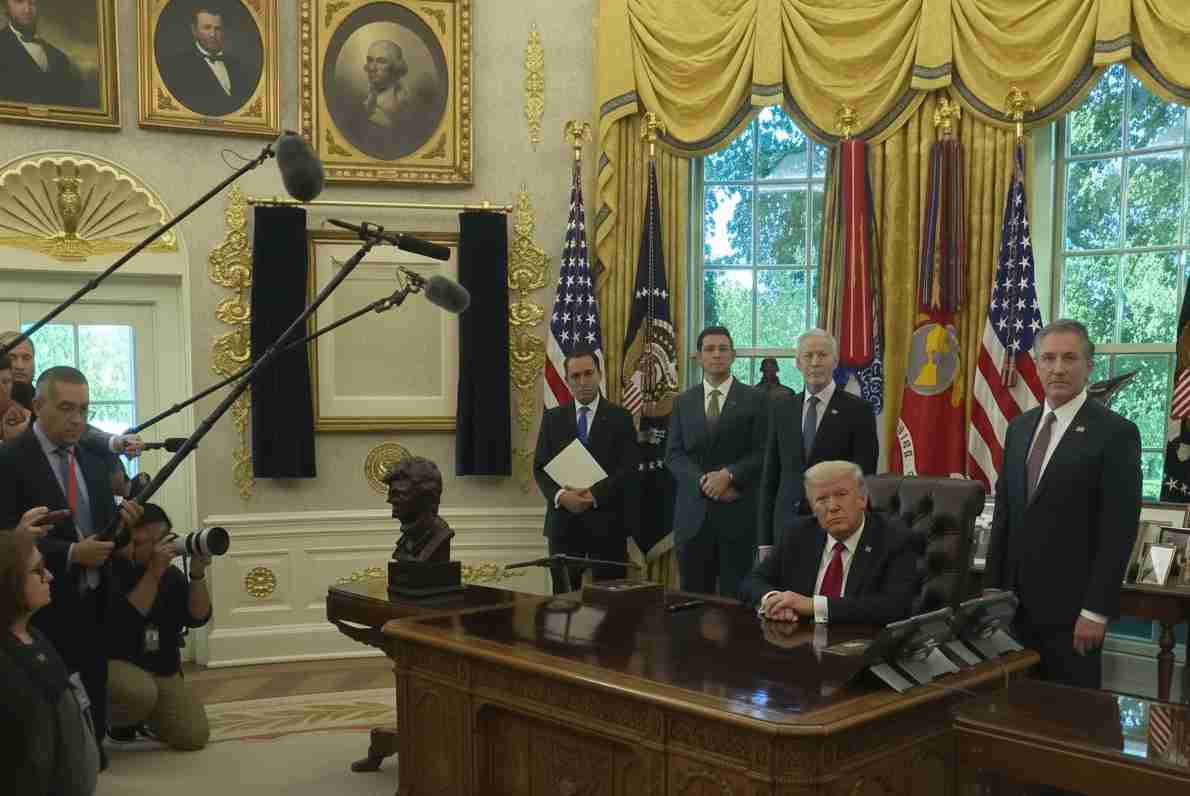
Trump Blames Democrats for Shutdown, Demands Government Reopen “Tonight” as Talks Stall
Lede: Donald Trump blamed congressional Democrats for the Oct. 1, 2025 federal government shutdown, demanded the government reopen “tonight,” and said talks on issues such as Affordable Care Act subsidies should wait until funding is restored and operations resume.
Key takeaways
- Trump publicly blamed Democrats and urged the government be reopened “tonight.” Sources cited include AOL and Times of India.
- The shutdown began Oct. 1, 2025 after Congress failed to pass full appropriations amid disputes over spending, foreign aid, and health-insurance subsidies (see Wikipedia).
- Early estimates showed about 900,000 federal employees affected; negotiations in the Senate produced no quick breakthrough.
Background: how the shutdown started
On Oct. 1, 2025, federal funding lapsed because Congress did not pass full appropriations for fiscal year 2026. Lawmakers clashed over overall spending levels, foreign aid packages and whether to extend subsidies that help low- and middle-income Americans afford health insurance under the Affordable Care Act. The funding lapse triggered a government shutdown, affecting many agencies and services. For a compiled overview, see Wikipedia.
The immediate human cost was large. Early estimates show about 900,000 federal workers were furloughed and many federal programs paused or reduced services, feeding public frustration and applying political pressure in Washington.
Trump’s public push: “They should open our Government tonight!”
In public statements and social posts, former President Trump placed blame on Democrats and urged immediate reopening. On Truth Social he wrote:
“Democrats have SHUT DOWN the United States Government right in the midst of one of the most successful Economies, including a Record Stock Market, that our Country has ever had. This has sadly affected so many programs, services, and other elements of Society that Americans rely on—And it should not have happened.”
He continued to press for immediate action: “they should open our Government tonight!” Republican allies argued Democrats were responsible for blocking a GOP plan to resume funding without agreed expanded health-subsidy language. Reporting on his statements appears at AOL and Times of India.
Trump also signaled a limited willingness to negotiate, saying talks could “lead to very good things,” but he insisted that extension of Affordable Care Act subsidies and similar Democratic priorities be addressed after the government reopens—placing the immediate onus on lawmakers to restore funding.
Senate standoff and narrow votes
The standoff was reflected in narrow Senate votes. Democrats blocked a Republican plan to reopen the government because it lacked extensions of health-insurance subsidies they demanded. Republican leaders said the plan restored operations and that policy could be negotiated afterward.
A few Democratic-aligned senators briefly broke with party leadership to vote for reopening; reports named Senators John Fetterman, Catherine Cortez Masto and Angus King among those who crossed. Even with some cross-over votes, Democratic opposition was sufficient to keep the shutdown in place during the opening days.
Official messaging and controversy
Republican and White House channels quickly cast blame on Democrats. The White House highlighted a “government shutdown clock” attributing the lapse to Democratic votes against the measures brought to the floor.
At the same time, watchdogs and outlets flagged concerns about politicized messaging from federal agencies. Reports indicated some automated out-of-office replies and standard communications were adjusted in ways that appeared designed to assign blame—raising questions about whether career staff were used for partisan messaging and potential Hatch Act violations (see Wikipedia).
Negotiations proceed, no quick fixes
During the first week, Senate discussions produced no bipartisan compromise. Both sides tabled proposals, but disputes over health-policy language and spending levels persisted. House leaders announced an extended recess, leaving the Senate and executive branch to search for a path forward amid growing public pressure.
Economic and social impacts cited by Trump and allies
Trump framed the shutdown as particularly harmful given a strong economy and a rising stock market, arguing that closure would hurt Americans who rely on federal services and would penalize hardworking federal employees who were furloughed or required to work without pay. Republicans used these points to press Democrats to reopen immediately.
Democrats countered that failing to secure health-insurance subsidies would leave vulnerable Americans exposed, and that any reopening that ignored that priority would be inadequate.
Implications for Utah
Economic impact: Utah could experience direct and indirect stress. Federal spending supports projects and workers across the state—from defense contractors to national parks to federal employees. If roughly 900,000 federal workers are furloughed nationally, Utah’s federal workforce and contractors may face pay delays or paused contracts, slowing local spending.
Public services and healthcare: Utahns who rely on federal programs—veterans’ services, Social Security processing or ACA-related subsidies—may face delays or uncertainty. If talks over ACA subsidies stall until after reopening, residents dependent on assistance could see interruptions or changes in coverage terms.
Political consequences: Conservative voters in Utah may echo Trump’s framing that “Democrats have SHUT DOWN the United States Government.” State Republican leaders may amplify calls to reopen immediately while steering negotiations toward conservative spending priorities. Moderate and independent voters will watch for compromise on subsidies and other key issues before assigning blame.
Social and community effects: Prolonged shutdowns strain nonprofits and social services that collaborate with federal agencies or receive grants. Food banks, mental health providers and workforce programs could see delayed federal funding, creating pressure on local governments and charities.
Practical considerations: Utahns should prepare for short-term disruptions—delays in passport processing, slower federal benefit payments and altered national-park operations. Businesses dependent on federal contracts or tourist flows should assess cash flow and contingencies. Residents relying on ACA subsidies should closely follow congressional developments.
What to watch next in Utah
- Statements from Utah’s congressional delegation and how they align with or push back on Trump’s framing.
- Local federal employment notices for updates on furloughs, pay schedules and service availability.
- Health-insurance guidance from HHS and state exchanges regarding subsidy continuity and enrollment rules.
- Short-term economic indicators—consumer spending, contract work and advisories from local chambers and business groups.
Reporting and sources
This article draws on reporting from Times of India, AOL, public posts by political figures and compiled background on the shutdown. Key sources include:
- AOL: “Trump slams Democrats for shutting down government” — reporting on statements and timeline.
- Times of India — reporting on Trump’s willingness to negotiate and ACA subsidy role.
- Wikipedia — compiled overview of the 2025 U.S. federal government shutdown, funding disputes and furlough numbers.
- White House — government shutdown clock and official framing.
Reporting compiled from Times Media Service summaries and public sources; see sources above for details.