Gaza Deadliest Day Since Ceasefire as Israel Launches Wave of Strikes; IDF Releases Controversial Drone Footage Alleging Hamas Truce Violation
Gaza experienced its deadliest day since the March ceasefire on May 15, 2025, when Israel launched extensive airstrikes that Palestinian authorities say killed scores of civilians; Israel said the strikes followed alleged Hamas violations of the truce.
Key takeaways
- May 15, 2025 marked the single deadliest day since the March truce, with at least 143 reported fatalities in Gaza (Gaza war).
- The IDF released drone footage alleging Hamas staged a scene to mislead observers; independent verification of the clip remained pending (Gaza war).
- Israel announced a wider campaign, Operation Gideon’s Chariots, signaling a shift toward a broader offensive posture (Gaza war).
Main coverage
Gaza deadliest day and Israeli airstrikes
May 15, 2025 saw a concentrated wave of Israeli airstrikes across Gaza. Palestinian health authorities reported at least 143 killed that day, with many more wounded and extensive damage to homes and infrastructure. (Source: Gaza war).
“The strikes targeted Hamas military sites and operatives,” Israeli military statements said, framing the action as necessary following alleged ceasefire breaches.
Allegations of truce violation and disputed drone footage
The IDF released a drone video it said showed Hamas operatives burying a body wrapped in white cloth and later staging its discovery in front of a Red Cross team. Israeli officials presented the clip as evidence of manipulation; humanitarian groups and independent observers had not verified the footage at the time of reporting. (Reference: Gaza war).
Context and chain of custody for the footage were highlighted as outstanding issues by neutral agencies, including the International Committee of the Red Cross, which had not publicly confirmed the Israeli account.
Scale and targets of the strikes
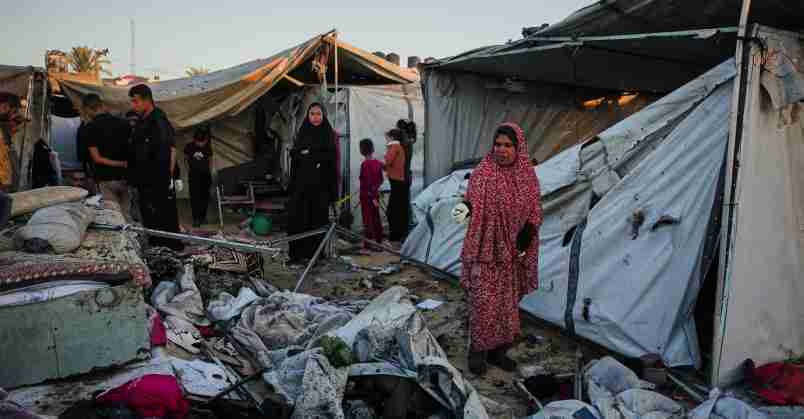
Reports indicate the May 15 strikes hit multiple locations, including dense civilian areas — markets, hospitals, and residential neighborhoods. Subsequent deadly incidents included an airstrike on a school in Gaza City on May 25 that reportedly killed dozens, and heavy casualties at aid distribution sites in late May and June. (Source: Gaza war.)
Israeli account: officials say they targeted Hamas commanders, infrastructure, and capabilities (rockets, mortars, tunnels), and stress efforts are made to limit civilian harm. Palestinian and humanitarian sources counter that civilian deaths remain unacceptably high and accuse Israel of disproportionate force.
Operation Gideon’s Chariots and escalation
In mid-May 2025 Israel announced Operation Gideon’s Chariots, describing it as a campaign to take control of the Gaza Strip. The operation represented a broadening of the military approach and prompted international concern and calls for restraint. (See: Gaza war.)
Humanitarian crisis and aid interruptions
The renewed fighting severely disrupted humanitarian access. Distribution centers and lines for aid became scenes of chaos and, in multiple reported instances, deadly force. Aid workers warned that limited access, damaged infrastructure, and ongoing strikes placed civilians at grave risk and hampered medical and relief responses. (Source: Gaza war.)
Practical note: humanitarian organizations and independent investigators called for safe, unimpeded access for relief and protection of civilians under international law.
International reactions and legal questions
The surge in violence prompted varied international responses: condemnations, appeals for restraint, and reiterations of Israel’s right to self-defense. Humanitarian organizations and legal experts urged independent investigations into possible violations of the laws of armed conflict. (Context: Gaza war.)
Disputed narratives
Two competing narratives emerged: Israel emphasizes attacks on legitimate military targets and cites the drone footage and intelligence as evidence of continued militant operations; Palestinian authorities and humanitarian observers point to the high civilian toll and potential breaches of proportionality. Independent verification of many battlefield claims remained limited.
Sources and limits of reporting
This article draws on open-source compilations and public reporting. Some claims — notably the IDF’s interpretation of the drone footage — are based on official military statements and had not been independently verified at the time of writing. Casualty figures and operational details may change as new information emerges. (Primary compilation: Gaza war.)
Implications for Utah, United States
Although Utah’s economy is not directly tied to Gaza, higher global instability can affect energy prices and markets; Utah businesses and investors should monitor supply-chain and market volatility. Politically, the conflict may reinforce pro-Israel sentiment among many local leaders while also prompting humanitarian appeals from faith and community groups.
- Economic impact: potential market volatility affecting investments and pensions.
- Political consequences: likely reinforcement of security-focused stances alongside calls for humanitarian attention.
- Social and cultural effects: increased community activity — vigils, fundraisers, and public forums — and possible heightened tensions in local discourse.
- Practical steps: Utah leaders can encourage interfaith dialogue, vetted donation drives, and public briefings to support community resilience.
For more detailed background and reporting on the conflict, see the public compilation at Gaza war.
Note: Readers should consider that battlefield information evolves rapidly; this article preserves the original facts and links to source material for verification.