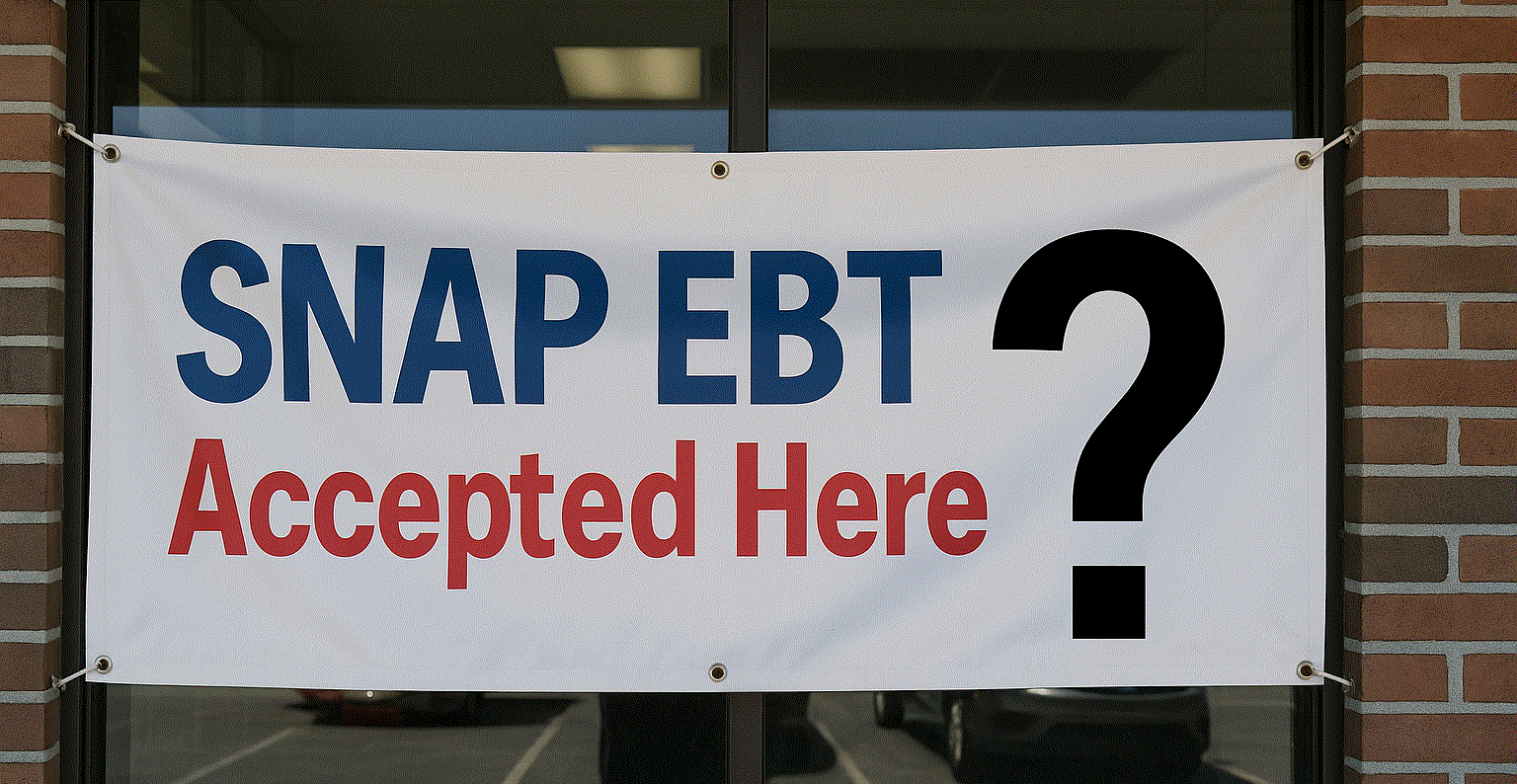
Federal Judges Order SNAP Benefits Continued Amid Shutdown, Citing Harm to Low-Income Households
Federal judges ordered the USDA to keep SNAP benefits flowing during the shutdown, ruling interruptions would cause immediate harm to low-income households, local businesses, and emergency food providers while courts adjudicate statutory and constitutional challenges.
- Two federal judges directed the USDA to continue administering existing SNAP benefits during the funding lapse.
- Emergency rulings emphasized immediate risks to food security, local economies, and state administrative systems.
- Court orders require the agency to use lawful reserves or authorities to bridge funding gaps while litigation proceeds.
Emergency hearings and the court rationale
Federal courts moved quickly after states and advocacy groups sought emergency relief to prevent disruptions to SNAP benefits. At an emergency hearing in Massachusetts, U.S. District Judge Indira Talwani pressed government lawyers on how a pause or reduction in benefits would play out on the ground.
“Families unable to buy food and local grocery businesses losing predictable revenue” — concerns raised in court records and hearing accounts about the immediacy of the asserted harm.
Plaintiffs — a coalition of 25 Democratic state attorneys general and advocacy groups — argued federal law imposes a statutory obligation on the USDA to continue the program and that withholding payments would violate constitutional and statutory protections for entitlement programs. They submitted affidavits and administrative data showing benefits are rapidly spent in local communities and that interruptions would have immediate public-health and economic consequences.
The judges’ orders did not rewrite SNAP law. Instead, they directed the USDA to maintain existing benefit disbursements and to take interim steps, such as drawing on program reserves or reallocating administrative funds authorized by statute, so enrolled households continue receiving benefits.
Parallel rulings in separate courts
In a separate lawsuit in another jurisdiction, a different federal judge issued a comparable order preventing the administration from suspending or materially changing SNAP disbursements while litigation continues. Together, the twin rulings created immediate legal pressure on the USDA to keep benefits flowing despite the lapse in appropriations tied to the shutdown.
Administration options and practical obstacles
SNAP normally relies on annual appropriations and routine USDA reimbursements to states. When appropriations lapse, agencies must rely on existing cash, statutory authorities to continue essential functions, or temporary transfers between accounts. The court orders required the USDA to identify lawful means to bridge any gaps.
Officials faced a narrow set of choices: comply and use program reserves, exercise statutory borrowing or transfer authorities where available, or seek rapid congressional action. Administration spokespeople have warned about the legal and budgetary risks of spending without clear appropriations, but the courts emphasized the immediate humanitarian impact of cutting assistance.
Why judges intervened: food security and local economies
Judges relied on factual demonstrations of harm: SNAP benefits reach low-income households quickly and serve as a direct lifeline. Courts heard testimony and declarations indicating that interrupting payments would worsen hunger, increase strain on emergency food providers, and reduce consumer spending at grocery stores and farmers markets that depend on SNAP dollars.
Courts weighed separation-of-powers concerns against acute harm and found the balance favored temporary judicial relief to prevent immediate damage while the legal questions are resolved.
Policy context: post-shutdown SNAP changes and ongoing reforms
Separate from the shutdown litigation, Congress and federal agencies are updating SNAP rules under new legislation, including the One Big Beautiful Bill Act of 2025 (OBBB), which affects eligibility, benefit calculations (such as the Thrifty Food Plan), and work requirements for certain adults. These policy changes are being implemented by the USDA and will shape the program going forward, but they are distinct from the immediate court orders addressing benefit continuity.
For background and implementation details see USDA Food and Nutrition Service, SNAP program information and USDA Food and Nutrition Service, OBBB implementation and SNAP updates.
What this means for states and nonprofits
State agencies that administer SNAP were prominent plaintiffs and amici. They argued a sudden stop in payments would force emergency planning, risk administrative chaos, and strain state social services. The court orders provided temporary clarity: federal benefit payments should continue, allowing states to maintain issuance schedules and client outreach.
Nonprofit food banks and local retailers welcomed the rulings as a short-term safeguard. SNAP spending acts as immediate stimulus for grocery stores and farmers markets; in many communities, especially rural and low-income urban areas, SNAP purchases support jobs and business revenue.
Legal and political fallout
The rulings put the administration in a difficult position: comply and use funding workarounds during a politically charged shutdown, or risk contempt by defying court orders. The litigation also raises pressure on Congress, which holds the authority to end the shutdown and restore regular appropriations.
Implications for Utah
Economic impact: Continued federal SNAP payments mean grocery stores, small businesses, and farmers markets across Utah will keep receiving consumer spending from beneficiaries. In rural counties, SNAP purchases can be a meaningful share of weekly sales.
Political consequences: Utah’s lawmakers must balance fiscal views with humanitarian and political costs of permitting food assistance lapses. The orders illustrate how judicial oversight can force action while budget standoffs persist.
Social effects: Keeping benefits in place reduces pressure on food banks, church pantries, and community programs and helps prevent spikes in food insecurity among families, seniors, and disabled Utahns.
Cultural relevance: Judicially enforced continuity complements local charitable efforts and preserves federal baseline support valued by many Utah communities.
Practical applications for residents and state officials
- Recipients: Utah families receiving SNAP should expect issuance to continue while courts consider the cases and should monitor official notices from the Utah Department of Workforce Services.
- State officials & nonprofits: Continue coordination with federal partners and maintain contingency plans if litigation outcomes or congressional action change funding.
- Lawmakers: May face pressure to resolve appropriations quickly to remove legal and operational uncertainty.
Sources and further reading
- USDA Food and Nutrition Service, SNAP program information
- USDA Food and Nutrition Service, OBBB implementation and SNAP updates
Reporting based on court filings, emergency hearing records, and statements from state plaintiffs and federal agencies.