Austin police charge into crowd at anti-ICE protest; pepper balls, bike units used, multiple detained
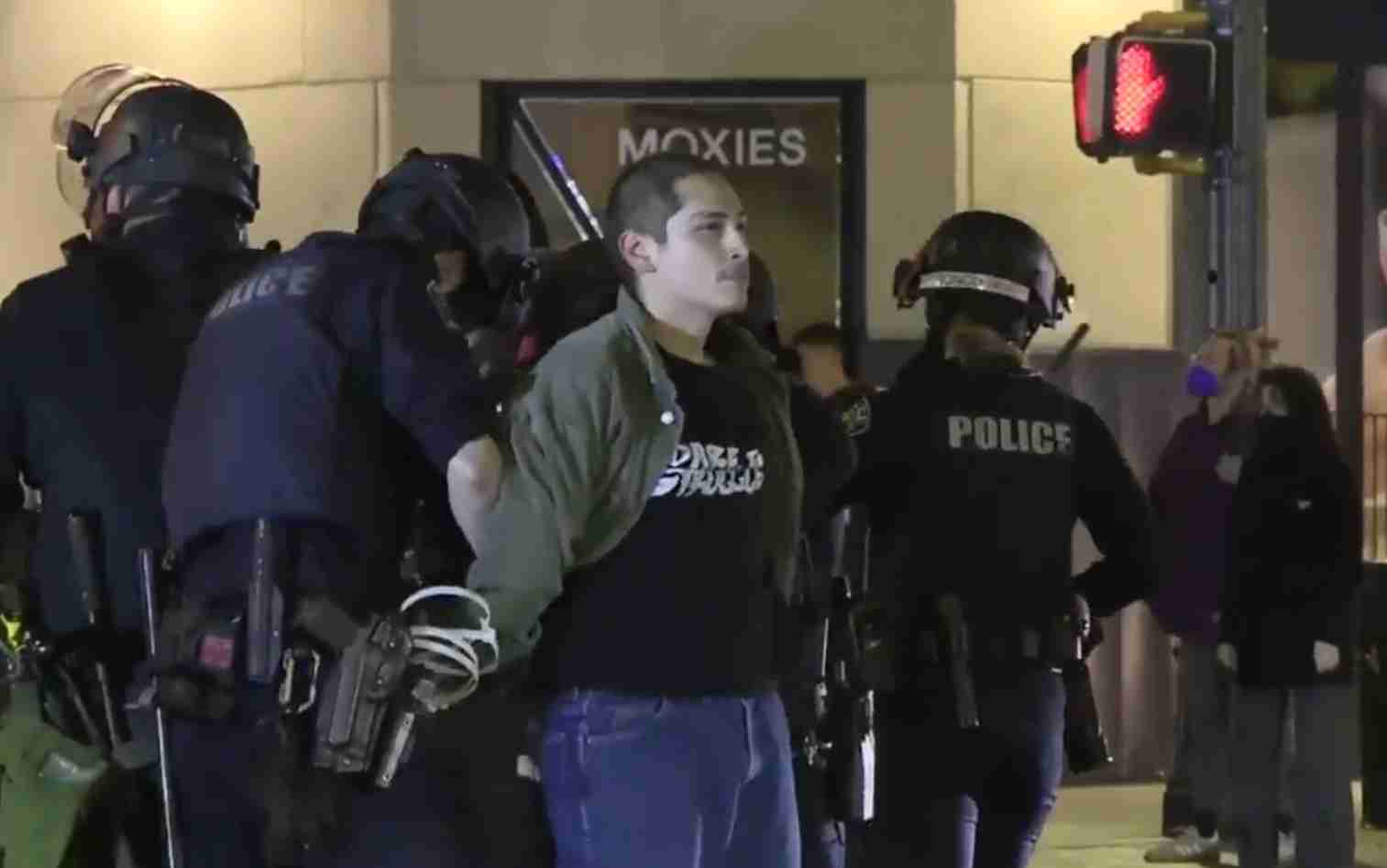
Austin police used pepper balls and bicycle units to disperse an “End ICE Terror” march downtown Saturday, leading to multiple detentions and arrests after protesters blocked traffic near the J.J. Pickle Federal Building, activists and officials said.
Key takeaways
- Police tactics: Witnesses and video show Texas DPS and APD using pepper balls and an APD bike charge to clear streets and detain demonstrators.
- Arrests and detentions: Organizers reported at least seven arrests; APD confirmed at least five near the federal building and said counts would be clarified later (CBS Austin, KUT).
- Political response: Gov. Greg Abbott publicly backed DPS actions and contrasted the response with events in Minnesota, prompting debate over law enforcement approaches.
What happened
Protesters gathered at the J.J. Pickle Federal Building on Saturday evening as part of a national “End ICE Terror” day of action following the fatal shooting of Renee Nicole Good by an ICE officer in Minneapolis, according to local reporting (CBS Austin, KUT).
Organizers said more than 100 people joined the downtown march, which moved through streets and blocked traffic at several intersections, including S. Congress Ave. and E. 6th St. Video and witnesses showed the crowd obstructing traffic for about 10 minutes when police on bicycles moved into the group, pushing back protesters and detaining several people (News4SanAntonio, Fox San Antonio, Fox News).
Police response and tactics
State and local law enforcement were on scene throughout the evening, with officers from the Texas Department of Public Safety (DPS) and the Austin Police Department (APD) deployed to manage the demonstrations (Fox San Antonio, KUT).
Witnesses and local media reported DPS firing multiple rounds described as pepper balls — nonlethal chemical rounds intended to disperse crowds — near the federal building. Video shows APD officers later pushing into the crowd on bicycles at Congress and E. 6th to clear the roadway and make detentions (News4SanAntonio, Fox San Antonio, Fox News).
Questions remain about which agency fired the pepper balls and which made particular arrests. APD told KUT it was unclear whether some nonlethal rounds and arrests were carried out by APD or DPS and that more precise arrest counts would be available later.
Arrests and protesters’ accounts
Organizers and witnesses described the response as aggressive. The activist group Dare to Struggle Austin said more than 100 people took part in the downtown action and accused officers of using excessive force, including a “bike charge” and chemical munitions (CBS Austin).
Organizers reported at least seven arrests over the course of demonstrations that day, while APD reported at least five arrests outside the J.J. Pickle Federal Building to KUT. Some protesters said one person was detained after the march ended while walking to their car; organizers demanded the release of arrested protesters and urged charges be dropped (CBS Austin).
Officials’ statements
State leaders defended law-enforcement actions. Gov. Greg Abbott posted a reaction to video of the detentions and nonlethal rounds, saying “Texas is not Minnesota” and that the Texas Department of Public Safety was not tolerating defiant protesters. In a fuller statement covered by media, Abbott linked the Minneapolis incident to national rhetoric and emphasized support for law enforcement and public safety (CBS Austin, Fox San Antonio).
“We support and respect the public’s First Amendment right to peacefully assemble and express their views,” wrote Lt. Chris Olivarez of DPS on X, adding that “violence, threats to the public or law enforcement, obstruction of roadways, and damage to property will not be tolerated.”
Context: protests across Austin and the nation
Saturday’s downtown march followed an earlier “ICE Out of ATX” rally at Austin City Hall that drew hundreds and was described as peaceful (Fox7 Austin, Fox San Antonio). KUT reported the weekend marked the third straight day of anti-ICE demonstrations in Austin after the Minneapolis shooting (KUT).
Organizers tied local protests to national outrage over the killing of Renee Nicole Good and called for murder charges against ICE officer Jonathan Ross and for ICE to leave Austin (CBS Austin).
Reporting and evidence
Video of officers in riot gear and on bikes pushing back demonstrators and making detentions was shared by local outlets and national cable, and local reporting indicates ambiguity about which agency carried out specific tactics. APD said it would provide further details on arrests (Fox San Antonio, Fox News, KUT).
Implications for Utah
Economic impact: Large, visible protests and forceful police responses in a major Texas city can affect regional business and travel patterns — especially for Utahns who do business in or travel through Austin. Downtown closures and heightened enforcement can disrupt commerce and events, potentially increasing costs for security or causing lost sales for nearby small businesses.
Political consequences: For conservative Utah readers, the incident underscores the state-versus-local law-and-order debate. Gov. Abbott’s quick backing of DPS will resonate with Utah conservatives who prioritize support for law enforcement and robust public-safety measures.
Social and cultural effects: The protest and police response highlight tensions between public safety and free speech. Utah communities that host gatherings on immigration or law-enforcement topics may face similar choices about permitting, policing, and public messaging.
Practical applications: Utah officials and community organizers should review local protest-response plans and coordinate between municipal police and state law-enforcement partners. Event organizers should ensure clear routes and communication with authorities to reduce the chance of roadway obstructions that can trigger enforcement action.
Practical applications for residents
Residents and travelers should monitor local news and official social channels for route closures and safety updates when traveling to cities experiencing unrest. Event organizers should plan clear routes, obtain permits, and maintain open lines with police to reduce escalation risks (News4SanAntonio, Fox San Antonio).
Reporting notes and sources
This article is based on coverage and video by local and national outlets, statements from Texas officials, and reporting by community outlets. Sources include News4SanAntonio, Fox San Antonio, Fox News, CBS Austin, KUT, and Fox7 Austin.
Authorities have said they will provide additional details on arrests and the deployment of nonlethal munitions; APD indicated it would clarify which agency carried out specific actions as more information becomes available (KUT).