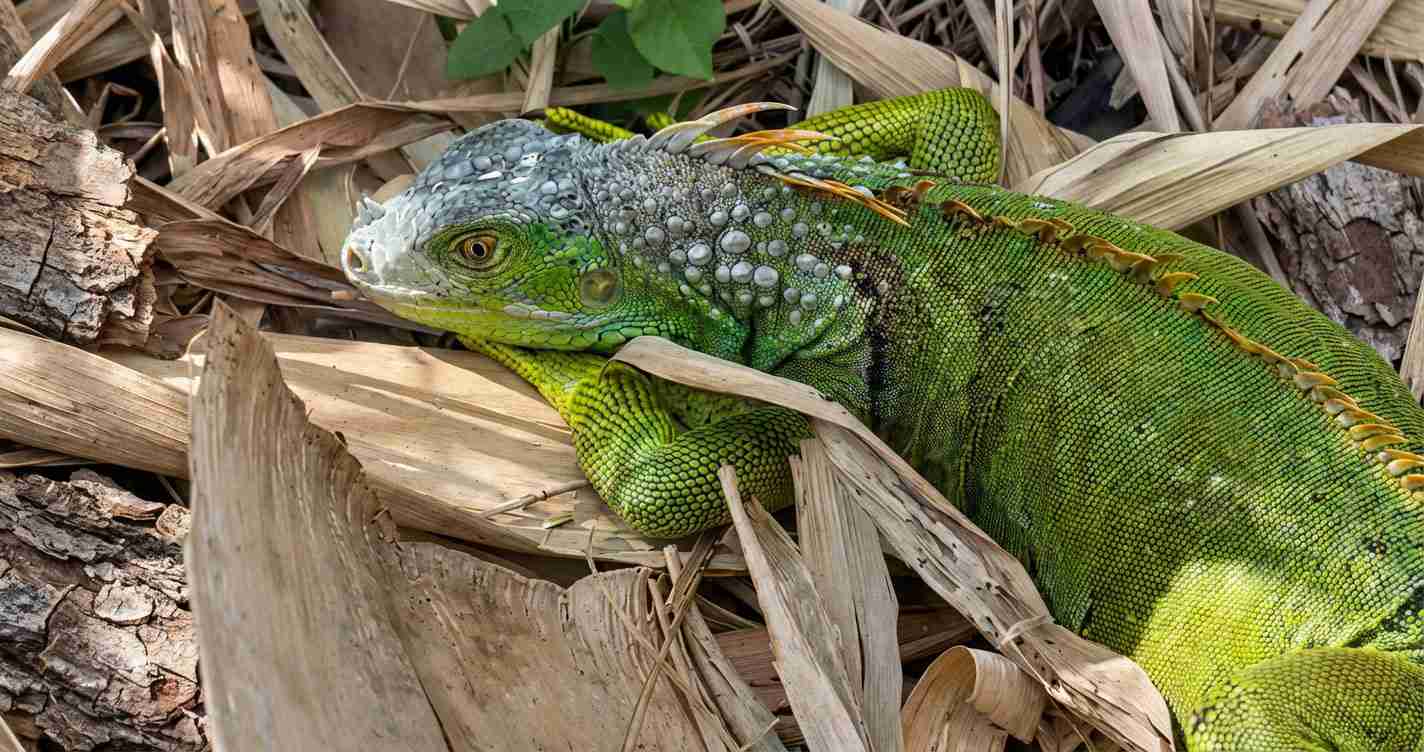
Florida collects 5,195 invasive green iguanas in two days after record cold snap; state credits residents and emergency order
In early February 2026 the Florida Fish and Wildlife Conservation Commission said residents and partners collected 5,195 cold‑stunned green iguanas in two days, using a temporary Executive Order that permitted permit‑exempt removal and deliveries to FWC sites.
- Total collected: 5,195 live, cold‑stunned green iguanas were turned in at four FWC offices on Feb. 1–2, 2026.
- Primary locations: Sunrise (3,882), Tequesta (1,075), Marathon (215) and Fort Myers (23).
- Emergency order: Executive Order 26-03 temporarily exempted permit requirements for cold‑stunned animals and allowed direct delivery to designated FWC sites.
- Disposition: Some iguanas went to permitted entities; others were humanely euthanized by trained FWC staff when relocation was unsuitable.
Main content
The collection effort in brief
The Florida Fish and Wildlife Conservation Commission reported that 5,195 live, cold‑stunned green iguanas were delivered to four collection points during the two‑day, permit‑exempt window. The official FWC tally is documented in the FWC news release, “Green iguanas removed”.
How the cold snap created a rare removal opportunity
Green iguanas are tropical reptiles that become cold‑stunned at roughly 45°F or lower, rendering them slow and immobile. A period of record‑low temperatures in late January and early February left large numbers of iguanas sluggish on lawns, canals and public rights‑of‑way, creating a brief, safe window for collection under the emergency order (Executive Order 26-03).
What the emergency order allowed and why officials acted
Governor‑issued Executive Order 26‑03 temporarily suspended permitting requirements only for live, cold‑stunned green iguanas. The exemption applied only to animals on private property (or where the person had permission) and only when delivered directly to designated FWC offices during the Feb. 1–2 window. Officials said the limited scope reduced legal risk for residents while enabling quick removal of many nonnative reptiles.
Numbers and logistics: how 5,195 were collected in 48 hours
FWC reports show the full breakdown by location:
- Sunrise: 3,882 (about 13 miles west of Fort Lauderdale)
- Tequesta: 1,075 (roughly 24 miles north of West Palm Beach)
- Marathon: 215 (Florida Keys)
- Fort Myers: 23 (Gulf Coast)
At a Feb. 4 commission meeting, FWC Executive Director Roger Young praised the coordinated response and public participation:
“The removal of over 5,000 of these nonnative lizards in such a short time span was only possible thanks to the coordinated efforts of many staff members in multiple FWC divisions and offices, our partners, and… the many residents that took the time to collect and turn in cold‑stunned iguanas from their properties.”
What happened to the animals
According to the FWC, some captured iguanas were transferred to permitted entities for lawful possession or export, while others deemed unfit for relocation or unsuitable for distribution were humanely euthanized by trained staff. Reporting on the effort — including Popular Science on euthanasia and handling — noted euthanasia was performed to prevent suffering and to comply with public health and wildlife laws.
Why Florida treats green iguanas as a problem
Green iguanas are not native to Florida. They dig burrows that can undermine seawalls, levees and sidewalks, consume ornamental and native plants, and can displace native wildlife. Repairs to infrastructure and private property create costs for owners and local governments. For these reasons, Florida lists green iguanas as a prohibited species and restricts possession and release under state rules (FWC background).
Media coverage and public reaction
State and national outlets covered the totals and the policy response. For example, Fox News reported the removal totals and collection sites. Local television showed residents turning in animals; public reaction ranged from relief to debate over animal welfare and government authority. FWC releases provided the official numbers and logistics.
Legal and policy context
The two‑day exemption was narrowly tailored and temporary: it applied only to cold‑stunned animals and only to delivery to FWC offices. Outside the exemption window, standard permitting and possession rules resumed. Florida law permits landowners to control nuisance wildlife on property they own or control, including humane killing of green iguanas when allowed; broader removals or transfers require permits and compliance with handling rules (Executive Order 26-03).
Investigative notes and data caveats
- The official FWC tally for the two‑day event is 5,195 iguanas — animals turned in to the four specified offices during the permit‑exempt period (FWC news release).
- Some social posts and media accounts suggested higher statewide totals tied to the cold snap; however, those figures were not included in the FWC two‑day collection count.
- The EO and FWC guidance applied only to cold‑stunned animals and were time‑limited; unauthorized possession or sale after Feb. 2 could prompt enforcement.
Implications for Utah
Economic and infrastructure lessons: Utah communities can learn that invasive species create localized infrastructure risks: in Florida, iguana burrows damage seawalls and levees; in Utah, invasive plants, insects or burrowing animals could threaten irrigation canals, roads and bridges. The Florida episode shows that temporary, narrowly tailored orders can mobilize public assistance while limiting legal uncertainty.
Property rights and local action: Florida’s EO empowered landowners to act quickly on their property during an emergency. Utah policymakers might consider contingency rules that allow rapid, temporary action by property owners with safeguards to prevent abuse.
Volunteer mobilization and readiness: The operation relied on resident participation and partner coordination. Utah counties and cities could prepare pre‑approved partner lists, clear drop‑off procedures and scheduled collection windows to leverage volunteers while ensuring humane, legal handling.
Legal guardrails and funding: Any contingency authority should include clear definitions of qualifying emergencies, possession limits, humane‑handling protocols, and modest contingency funds or mutual‑aid agreements to cover rapid response costs.