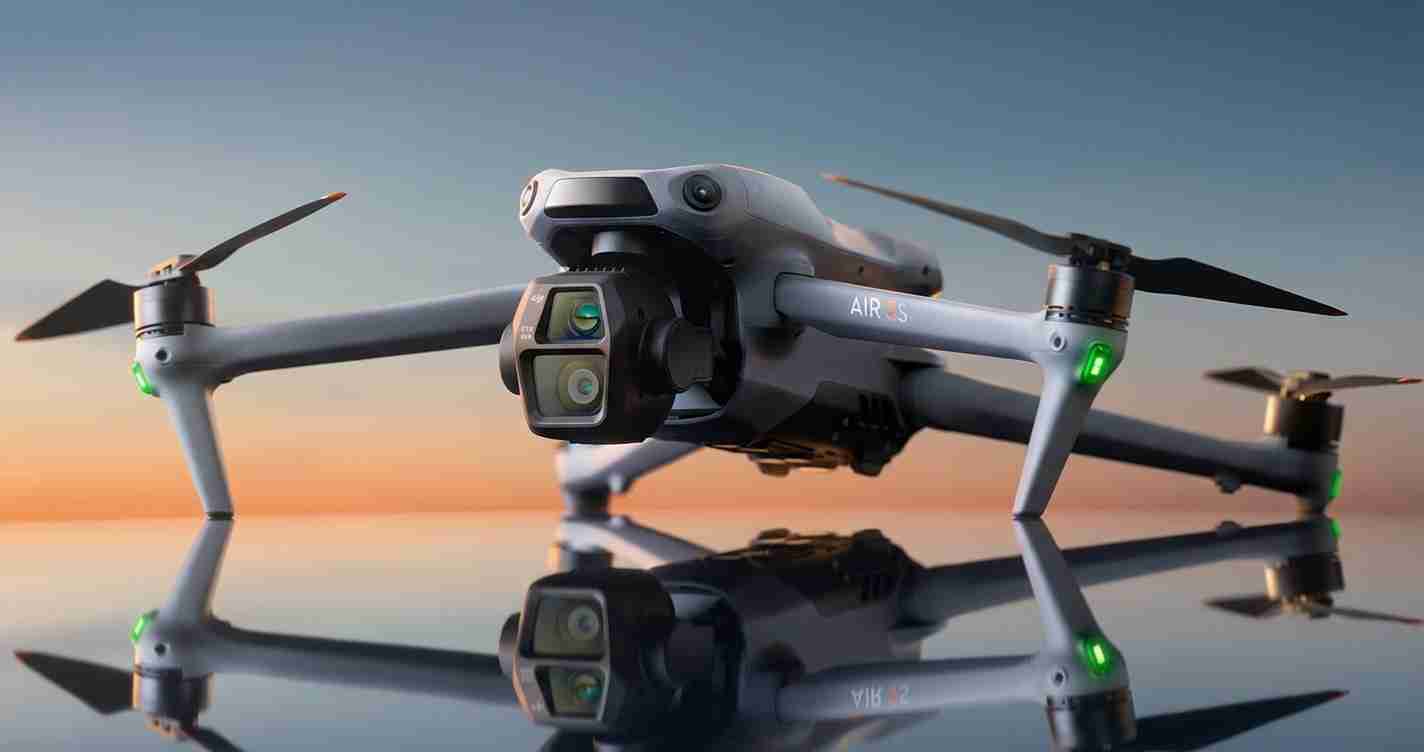
FCC bans DJI drones, citing national security risks in sweeping move that halts new U.S. sales
On Dec. 22, 2025, the FCC issued a declaratory ruling placing DJI drones and certain radio modules on its Covered List, banning new U.S. equipment authorizations amid national security concerns over data flows and ties to Chinese military.
Key takeaways
- FCC action: The FCC issued FCC 25-164, placing DJI drones and select radio frequency modules on its Covered List, halting approvals for new equipment authorizations.
- National security rationale: The commission found an “unacceptable risk to national security” tied to data transmission to servers in China and links to Chinese military-affiliated firms.
- Scope and penalties: New DJI imports and certifications are blocked; violators face enforcement up to $252,000 per violation.
- Market impact: The ban may cut DJI U.S. sales by an estimated $1 billion+ annually and spur demand for domestic alternatives like Skydio.
Key information
What happened: The FCC issued a declaratory ruling (FCC 25-164) on Dec. 22, 2025, placing DJI drones and certain radio frequency modules on its “Covered List,” stopping approval of new equipment authorizations for those products. Source: FCC press release.
Why it matters: The commission said DJI products present an “unacceptable risk to national security”, citing evidence that data collected by drones can be transmitted to servers in China and that hostile actors have used drones for surveillance and attacks. Source: FCC Order (DA 25-164) and supporting materials.
Scope: The ban affects new DJI drone sales and imports requiring FCC certification. Existing drones already in the U.S. are not retroactively prohibited, though enforcement and certification rules could affect future repairs and replacements. Source: FCC Order.
Penalties: Importers and sellers who violate the new rule could face enforcement actions, including fines up to $252,000 per violation. Source: FCC press materials.
What the FCC found
In its formal order, the FCC said intelligence assessments and cybersecurity reports showed an unacceptable risk tied to Chinese-made drones, particularly those from Shenzhen DJI Technology Co., Ltd. The Order cites concerns that drone telemetry and flight logs can be sent to servers in China, potentially allowing foreign access to critical geolocation and imagery data.
The FCC referenced assessments from U.S. intelligence and security agencies, including public findings by the Defense Department and National Intelligence Council about links between certain Chinese firms and the People’s Liberation Army. The commission also pointed to prior Commerce Department actions that added DJI to a restricted list in 2024 and government cybersecurity advisories from the Cybersecurity and Infrastructure Security Agency.
“Criminals, terrorists, and hostile foreign actors have intensified their weaponization of these technologies, creating new and serious threats to our homeland.” — FCC press release
That language frames the ruling as a defense measure against evolving threats such as smuggling, battlefield surveillance, and attacks on critical infrastructure.
DJI response and company claims
DJI issued a statement saying it was “profoundly disappointed” and criticized the lack of transparency behind the FCC’s decision. The company said no public information explains what evidence led to inclusion on the Covered List, stressed prior audits and steps on data localization, and pledged to challenge the ruling in court. Source: DJI statement.
Industry and stakeholder reaction
U.S. drone makers and investors reacted quickly. Skydio welcomed the move as overdue and said it expected faster adoption of domestic alternatives. Public safety organizations warned of possible shortfalls in equipment for firefighters and search-and-rescue that have relied on DJI platforms. Civil liberties groups urged release of detailed evidence, warning against broad actions without public proof. Coverage and commentary: TechCrunch, Reuters, Wall Street Journal, New York Times.
Economic and market effects
DJI holds an estimated 70–80% share of the U.S. consumer and enterprise drone market. Analysts estimate the ban could cut DJI U.S. sales by $1 billion or more annually and create opportunities for domestic suppliers. U.S. firms such as Skydio have seen increased interest and investment as organizations seek trusted, domestically based alternatives. Market watchers also note potential short-term shortages and price increases for specialized models used in agriculture, surveying and public safety. Sources: Bloomberg; Yahoo Finance.
Legal and regulatory outlook
DJI signaled it will sue, pointing to due-process concerns and seeking to force the FCC to disclose the evidence behind its decision. The company plans litigation in D.C. federal courts. The FCC’s ruling draws on open-source reporting, agency assessments and classified inputs; that mix may shape litigation and Congressional oversight. Other agencies, including Commerce and Homeland Security, may pursue complementary steps. Sources: FCC docket and filings; Commerce BIS.
How this ties to wider national security concerns
The FCC framed this action as part of a broader push to secure American airspace and data from foreign influence. U.S. intelligence and defense reports cited examples where drones have been repurposed by state and non-state actors for reconnaissance and attacks. The agency also stressed risks tied to radio-frequency modules and software that rely on foreign servers, which can be channels for data exfiltration or remote manipulation. Sources: Defense Department; State Department; CISA.
Implications for Utah
Economic impact
Agriculture and business: Utah farmers and commercial operators use drones for crop monitoring, surveying and inspections. A ban on new DJI imports could force operators to shift to domestic models that may cost more in the short term. Companies and farms should plan for higher procurement costs but may benefit from federal incentive programs aimed at buying trusted American-made equipment. Local suppliers and service firms could see rising demand. Sources: USDA; local reporting: The Salt Lake Tribune.
Public safety and emergency response
Fire and rescue departments: Utah’s fire services and emergency managers have used DJI platforms for wildfire mapping and search operations. Agencies will need to assess service lifespans, spare parts, and software support. The state and counties may consider pooled procurement or grants to replace aging DJI units with approved domestic alternatives. Sources: NFPA; Utah Department of Emergency Management.
Law enforcement and border security
State and local policing: Utah law enforcement uses drones for crash reconstruction, tactical planning and search missions. The ban could require agencies to fast-track certification for domestic drones and confirm data-handling practices meet state privacy policies. Near the U.S.-Mexico border, federal and state cooperation on drone deployments will be critical as agencies seek trusted platforms to help detect smuggling and cross-border criminal activity. Sources: Department of Homeland Security.
Economic opportunity for Utah firms
Technology sector: The move creates an opening for Utah-based or U.S. drone and component manufacturers to expand. Utah’s aerospace and tech ecosystem can benefit from federal and private procurement shifts toward trusted suppliers. State economic development teams may find new investment chances in supply chains for sensors, software and radio-frequency modules. Source: Utah Governor’s Office of Economic Opportunity.
Practical steps for residents and organizations
- Private users: Owners of existing DJI drones can continue to fly them but should check software updates and vendor support options. Those needing new equipment should review the Covered List and procurement guidance from the FCC and advisories from CISA before buying.
- Public agencies: Inventory current DJI assets, identify mission-critical units, and plan replacements or maintenance to bridge gaps. Seek federal grant programs aimed at replacing foreign-made equipment with trusted alternatives. Sources: FCC; Grants.gov.
Sources and further reading
Primary and additional sources cited in this report include: FCC press release and order; FCC docket and filings; DJI statement; Department of Defense; Commerce Bureau of Industry and Security; CISA; Reuters; Wall Street Journal; New York Times; TechCrunch; Bloomberg; U.S. House Homeland Security Committee; Grants and federal funding.
Reporting: Times Media Service — Washington