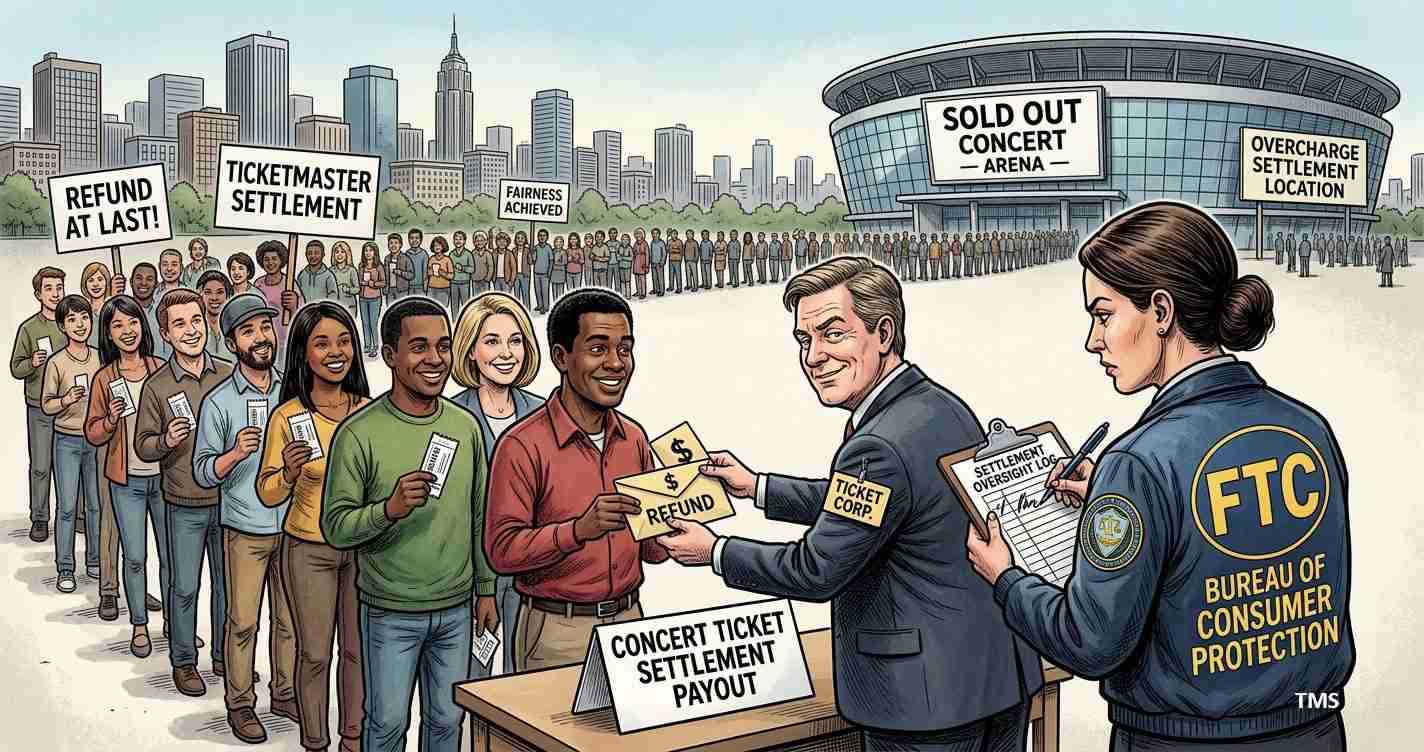
FTC’s New Fees Rule Demands Upfront Price Disclosure for Live Event Tickets — StubHub Settlement Claims Not Confirmed
The Federal Trade Commission finalized a Fees Rule effective May 12, 2025, requiring sellers to display the total price for live-event tickets and short-term lodging up front to stop hidden fees; claims of a StubHub settlement remain unverified.
- Rule requires total price disclosure — sellers must show all mandatory, calculable fees at the first price display (FTC FAQ).
- Effective date and scope — finalized Dec. 17, 2024, published Jan. 10, 2025, effective May 12, 2025 (Federal Register).
- Enforcement and remedies — FTC can seek civil penalties and consumer redress for violations; reports of a specific StubHub $10M settlement were not found in public records reviewed for this report (FTC press release).
- Local impact — Utah venues and sellers should update displays and checkout flows to comply and avoid enforcement risk.
What the Fees Rule requires
The rule demands transparent, prominent disclosure of the total price at the first price display. Sellers — including primary sellers, secondary markets and resellers — must show the total price prominently for a ticket or short-term lodging listing. That total must include all known and calculable mandatory fees. Itemized fees may be shown, but the total price must appear more prominently than any breakdown. Taxes and shipping can be presented separately only when they truly cannot be calculated in advance (FTC FAQ; InsideClassActions analysis).
Enforcement context and process
The rulemaking began in November 2022 following public comments. The FTC said it received thousands of responses and focused the rule on live-event tickets and short-term lodging; the agency also published compliance guidance and an FAQ to help businesses adapt. Companies get a 120-day window from publication to update pricing displays and interfaces before the effective date (Federal Register).
The FTC may pursue civil penalties and consumer redress for violations and has said it will enforce the rule across online platforms, resellers and brick-and-mortar sellers. Industry groups warn the rule will require updates to ticketing websites, apps and backend pricing systems (Brushfire summary).
Claims about a StubHub settlement: what’s confirmed and what isn’t
Online messaging has alleged that the FTC filed a complaint and proposed settlement in the U.S. District Court for the Southern District of New York concerning ticket listings on StubHub between May 12–14, 2025, requiring a $10 million consumer redress program. Those reports attribute statements to FTC Bureau of Consumer Protection leadership and to a StubHub spokesperson about refunds to affected buyers.
“Upfront price disclosure is essential for a free and competitive marketplace,” the messaging reportedly quoted a senior FTC official.
But: a review of public FTC releases, federal court dockets and news coverage did not locate records confirming a complaint or settlement with those specifics as of this report. The FTC’s public materials explain the Fees Rule and enforcement approach but do not list a StubHub court settlement matching the May 12–14, 2025 timeframe or a $10 million redress figure. Readers should treat reports of a specific StubHub settlement as unverified until official filings or agency releases are published (FTC press release; FTC FAQ).
What businesses should know now
- Audit price displays: Sellers must verify that the total price is shown at first display and is more prominent than any itemized fees.
- Update systems: Websites, apps, point-of-sale displays and backend pricing flows may need technical changes within the 120‑day compliance window.
- Keep documentation: Maintain records of fee calculations and refund policies to demonstrate compliance if challenged.
- Guidance and examples are available from the FTC to help businesses comply (FTC FAQ).
Implications for Utah
Economic impact
Utah’s busy live-event calendar — concerts, college sports, regional theaters and festivals — means consumers may benefit from clearer upfront pricing that helps compare options and avoid surprise checkout fees. Local venues and promoters should expect short-term compliance costs to update websites and point-of-sale systems.
Political consequences
For constituents who prioritize lower regulation and business flexibility, the rule may raise concerns about added burdens on small promoters and independent resellers. State and local officials could face pressure to offer outreach or technical assistance to help smaller sellers comply.
Social effects
Clearer pricing can improve trust between consumers and local entertainment providers; Utah families budgeting for events will benefit from knowing final costs up front. Smaller arts organizations may need to adjust how service and convenience fees are presented to patrons.
Cultural relevance and practical applications
From Utah Jazz tickets to weekend festival hotel stays, the rule will affect everyday purchases. Sellers should test checkout flows now; consumers should verify totals before buying and keep receipts if they suspect violations. Business groups may host workshops to ease compliance costs.
Sources and further reading
- FTC — Rule on Unfair or Deceptive Fees: Frequently Asked Questions
- FTC press release on final Fees Rule
- Federal Register — Trade Regulation Rule on Unfair or Deceptive Fees
- InsideClassActions — coverage of Fees Rule
- Foley & Lardner LLP — analysis of FTC’s final “junk fees” rule
- Brushfire — summary of rule implications
Reporting note: Reviewers searched public FTC releases, federal court dockets and news databases for a StubHub complaint or settlement matching the May 12–14, 2025 timeframe and a $10 million redress figure but did not find confirmation in the sources above.