Hamas Hands Over Partial Remains of Three Israeli Soldiers; Officials Say None Are Among Remaining Hostages
Hamas returned the partial remains of three Israeli soldiers — identified as Capt. Omer Neutra, Staff Sgt. Oz Daniel and Col. Assaf Hamami — to Israel under a U.S.-brokered ceasefire; officials said none matched the eight civilian hostages believed held in Gaza.
- Three soldiers identified: Capt. Omer Neutra, Staff Sgt. Oz Daniel and Col. Assaf Hamami were named by Israeli officials as the partial remains returned Friday night; ABC7 Chicago.
- Not among civilian hostages: Israeli authorities said the remains did not belong to any of the eight civilian hostages still believed to be held in Gaza; ABC7 Chicago.
- Exchange framework: The handover was part of a U.S.-brokered ceasefire deal that trades the remains of 15 Palestinians for each Israeli body returned; ABC7 Chicago.
What was handed over and how officials identified the remains
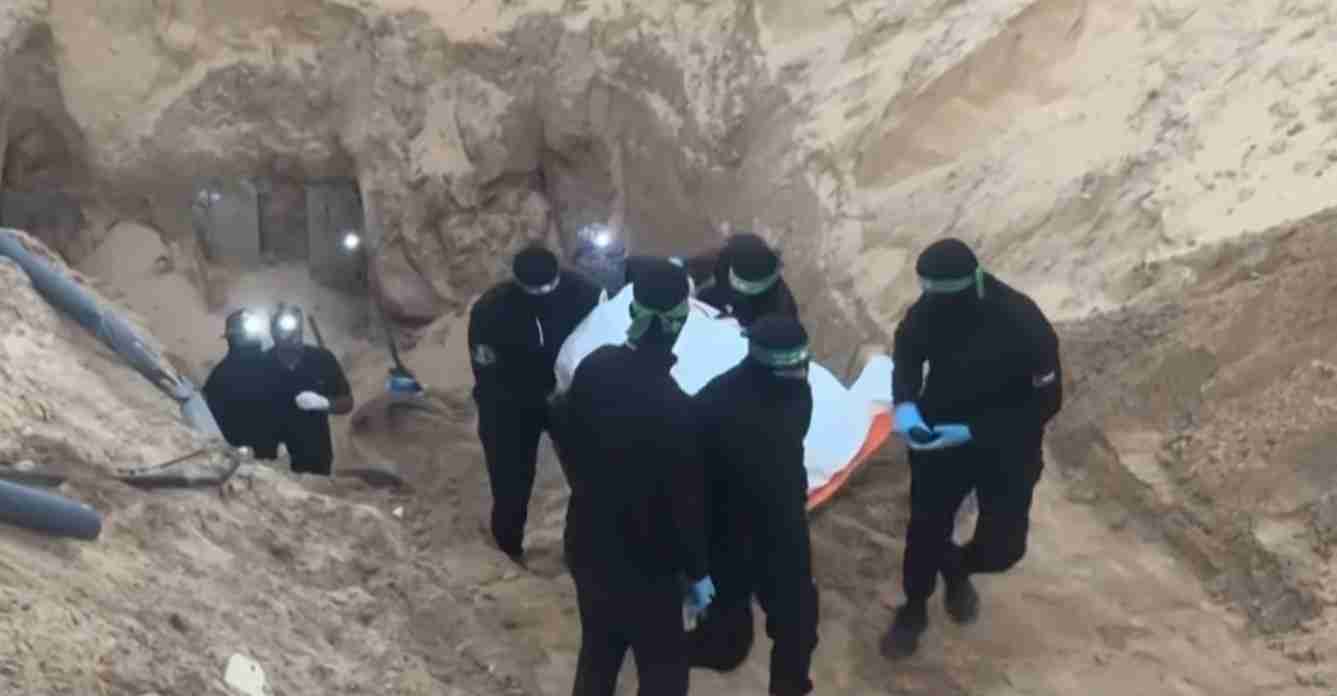
Israeli authorities said the partial remains received late Friday were those of three military personnel killed during the Oct. 7 assault: Capt. Omer Neutra, Staff Sgt. Oz Daniel and Col. Assaf Hamami. The military emphasized that the returned remains were not those of any civilian hostages still listed as missing in Gaza. Reporting and official statements are summarized by ABC7 Chicago.
“The remains were found in a tunnel in southern Gaza,” Hamas told reporters, according to coverage by ABC7 Chicago.
Israeli identification relies on military and civilian forensic teams. Challenges include damaged remains and limited DNA testing capacity in Gaza, which can slow and complicate confirmation. Families sometimes face the painful choice of accepting preliminary IDs or attempting recognition from photographs posted publicly.
How the Gaza ceasefire deal structures exchanges
The handover followed terms of a U.S.-brokered ceasefire framework: for each Israeli body returned, Israel transfers the remains of 15 Palestinians. The exchanges are designed to reduce immediate tensions and create space for broader ceasefire-related discussions, including proposals for an international stabilization force and expanded humanitarian access. Full coverage is available from ABC7 Chicago.
Since the truce began on Oct. 10: Gaza militants have returned the remains of 20 Israelis, while Israel has returned roughly 270 Palestinian bodies. Gaza authorities say they have identified only 78 of those Palestinian bodies so far, highlighting the asymmetry and scale of the humanitarian toll.
Forensic and identification challenges
Forensic teams work under strained conditions: insufficient DNA kits, limited laboratory capacity, and many partial or heavily damaged remains. These limitations affect how quickly and reliably officials can match remains to missing persons. Israeli authorities have urged faster identification progress because accurate IDs are vital for burials, closure, and legal next-of-kin matters.
Practical consequence: Some families resort to online photographs or preliminary identifications that later require confirmation, a process that prolongs grief and legal uncertainty.
Status of hostages and returned remains
Israeli officials say eight civilian hostages remain believed to be held by Hamas in Gaza. The exchange process has produced both the release of live captives and the return of remains. In several cases, returned remains were identified as soldiers who died on Oct. 7 rather than as civilians taken hostage — a distinction that matters deeply to families and the public. Coverage and official summaries are reported by ABC7 Chicago.
Political and military implications inside Israel
The handovers occur amid intense domestic scrutiny. Recent political developments — including the resignation and arrest of former military legal chief Maj. Gen. Yifat Tomer-Yerushalmi — have raised broader questions about military oversight and decision-making. Families and the public are pressing for both the return of the living and dignified handling of the dead. Officials say they will continue to press for live releases where possible, using the U.S.-brokered deal as the primary channel in the near term.
Humanitarian and operational issues on the ground
Humanitarian groups link the exchange process to wider relief efforts. The ceasefire provisions aim to open corridors for aid, reconstruction planning, and international observers. However, widespread destruction and the number of unidentified bodies slow progress. Hamas cites the devastation as a barrier to recovery of remains, while Israeli officials hold Hamas responsible for civilian safety and the whereabouts of captives.
Implications for Utah, United States
Economic: Utah likely faces no direct financial hit from this specific exchange, but any regional escalation can affect energy markets, national security budgets and defense-related businesses connected to the state.
Political: Utah’s political landscape, which broadly supports Israel, may emphasize security-focused responses and continued U.S. diplomatic pressure for live releases and accountability.
Social and cultural: Military families, veterans, faith communities and local organizations may hold vigils or events in response. The naming of Capt. Omer Neutra — an American-Israeli — is likely to resonate with Utah communities with ties to Israel.
Practical: Utahns with military family connections, or those in defense industries, should monitor developments. Local lawmakers may issue statements or host forums to explain U.S. policy and constituent impacts.
Source note and coverage context
This report is based on official Israeli statements and reporting summarized by Times Media Service from ABC7 Chicago. Readers should expect continued, slow-moving exchanges under the Gaza ceasefire deal and further statements from Israeli and U.S. officials as identification and diplomatic efforts proceed.
Key source: ABC7 Chicago — full report