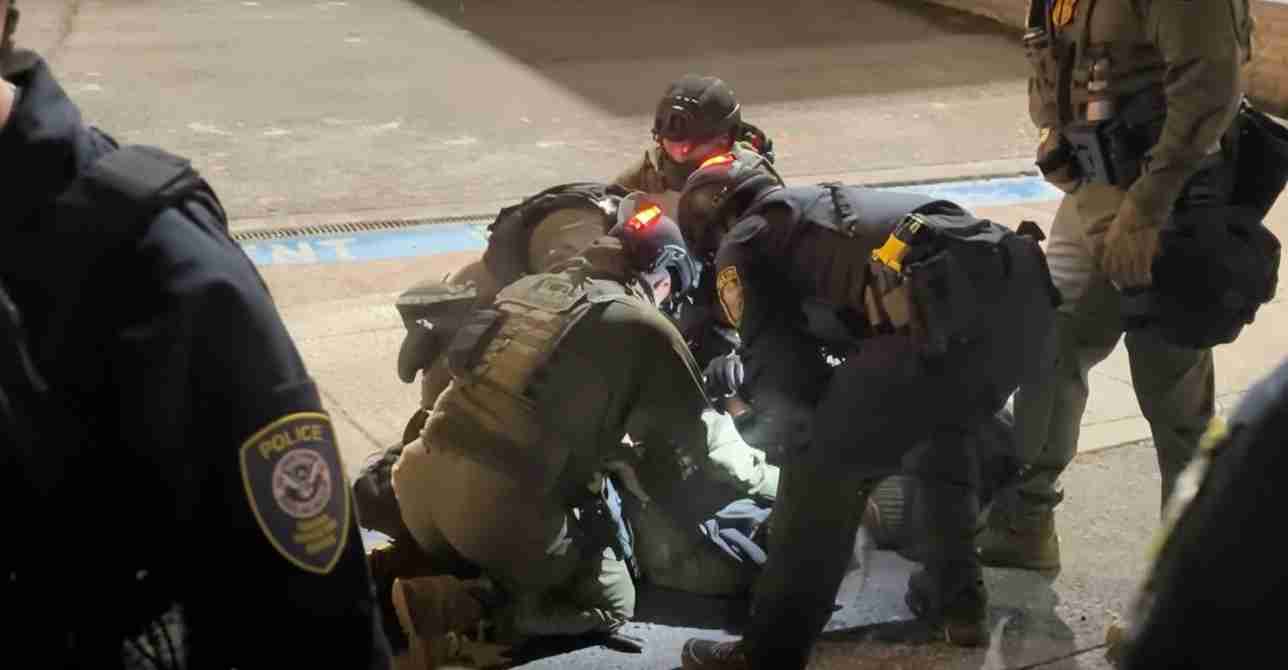
Federal judge blocks Trump’s National Guard deployment to Portland, citing constitutional limits
A federal judge in Oregon issued an emergency restraining order blocking President Trump’s effort to federalize National Guard troops for Portland, finding the deployments unlawful under 10 U.S.C. §12406 and the Tenth Amendment, and prompting a DOJ appeal.
- Emergency order: U.S. District Judge Karin Immergut issued a restraining order barring federalized National Guard units from entering Oregon, finding the deployments unlawful and unconstitutional — see Fox News and Axios.
- Scope: The order covers federalized units from California, Texas, or any other state the administration sought to send to Portland — reporting by Fox News and ABC7.
- Legal basis: Judge Immergut relied on 10 U.S.C. §12406 and the Tenth Amendment, finding no statutory conditions or state consent justified federalization — see OPB and Fox News.
Main content
Background: how the dispute began
Small-scale protests in Portland triggered a confrontation between state and federal officials. Oregon leaders said local unrest did not make ordinary law enforcement impracticable, while the federal government moved to deploy National Guard units — first seeking Oregon’s Guard, then attempting to federalize units from California and Texas when Oregon objected. For reporting, see ABC7 and OPB.
“State officials said the protests did not rise to the level that would make ordinary law enforcement efforts impracticable.”
Judge Karin Immergut ruling
What the court did: Judge Immergut first enjoined the federal government from deploying Oregon’s own National Guard to Portland. When the administration then attempted to bring in federally mobilized units from California and Texas, she widened the order to bar any federalized guard units from entering Oregon, describing the federalization as “unlawful and unconstitutional.” Coverage: Fox News and Axios.
Why: Judge Immergut found the government had not shown that local law enforcement was unable to enforce the law by ordinary judicial means, nor that Oregon’s governor had requested federal assistance — two gaps that, in her view, meant statutory conditions under 10 U.S.C. §12406 were not met.
Text of 10 U.S.C. §12406
Judge Immergut relied on the statute’s language. The statute authorizes federalization only when:
- “the unlawful obstruction, combination, or assemblage, or rebellion against the authority of the United States, makes it impracticable to enforce the laws … by the ordinary course of judicial proceedings”;
- or the President judges that a State is suffering such insurrection or domestic violence and the State’s legislature or governor requests assistance;
- or when the President is unable, with regular forces, to execute the laws of the United States.
Judge’s view: The statute is narrow and usually contemplates state cooperation; she concluded those extreme conditions were not shown here. See reporting at Fox News and Axios.
Legal arguments and reactions
DOJ: The Department of Justice argued the President has authority to federalize Guard units to restore order during domestic unrest and requested a stay while it appealed — a request Judge Immergut denied, saying the government had not shown new facts justifying a departure from the statutory scheme.
Political reactions: Governor Gavin Newsom called the ruling a win for the rule of law and state authority (Axios). President Trump argued deployments were needed to protect people and property, while local officials disputed the scale of unrest the administration cited (Fox News; ABC7).
Why the statute matters
10 U.S.C. §12406 is a narrow tool intended for extreme circumstances — insurrection or domestic violence so severe that ordinary law enforcement cannot function. It generally requires some form of state input (legislature or governor) unless the state’s machinery is so disrupted that a request is impossible. The ruling highlights the constitutional tension between federal power and state sovereignty under the Tenth Amendment.
Next steps: appeal and wider legal stakes
Appeal: The Department of Justice has said it will appeal the emergency restraining order to the federal appellate courts; any higher-court ruling could set precedent on when Presidents may federalize Guard units across state lines (Fox News; Axios).
Possible outcomes:
- If an appellate court lifts the order, the administration could again move to federalize and transport units.
- If the decision is upheld, it would reinforce limits on federal authority and affirm state control of militias in many domestic situations.
Implications for Utah
Economic impact:
- Budgets: A legal limit on federalized deployments suggests Utah should plan to fund its own responses rather than expect rapid arrival of federal Guard forces.
- Contracts and logistics: Interstate mutual aid and transport planning may need revision if federal deployments become harder to authorize.
Political consequences:
- The ruling reinforces governors’ control over state Guards, a message likely to resonate with Utah’s emphasis on state sovereignty.
- State politicians may push for clearer state laws or mutual-aid agreements governing interstate assistance.
Social and cultural effects:
- Residents should expect state-led responses to unrest absent a clear statutory trigger for federalization.
- For conservative audiences, the decision underscores the Tenth Amendment and local governance.
Practical recommendations for Utah residents and officials:
- Expect coordination led by the governor and state agencies rather than federalized Guard units unless the law’s strict conditions are met.
- Review mutual aid agreements and contingency plans; run tabletop exercises that do not rely on rapid federalized Guard assistance.
- Follow official state briefings for accurate updates on public safety and civil liberties concerns.