Pacemaker Data Narrows Timeline in Nancy Guthrie Disappearance but Can’t Pinpoint Location
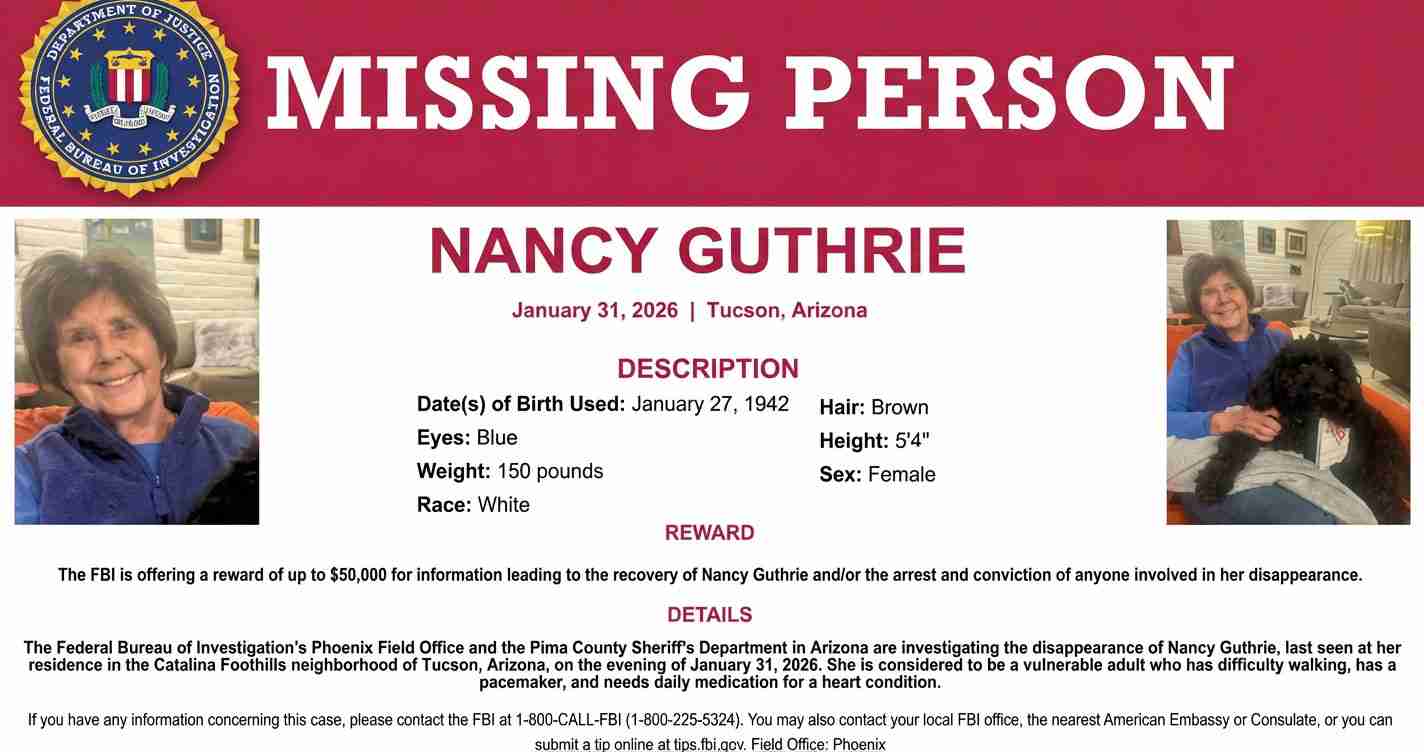
Nancy Guthrie, mother of ‘Today’ co-host Savannah Guthrie, disappeared from her Tucson home on February 1, 2026. Pacemaker data narrowed the timeline of her presumed abduction but did not provide location information for investigators worldwide.
Key takeaways
- Pacemaker data stopped reporting at 2:28 a.m., giving investigators a tighter window for when monitoring ceased. (Source)
- Device limits: pacemakers do not include GPS; disconnection only ends remote alerts, not the device’s internal pacing. (Source)
- Corroborating sensors: doorbell camera outage and motion detection help map activity around the house but cannot replace location evidence. (Source, Source)
- Investigative leads: ransom demands and a person of interest emerged; the FBI and local authorities continue pursuing tips. (Source)
Main story and analysis
Overview: Law enforcement in Tucson has used a combination of surveillance footage, device telemetry and physical evidence to construct a minute-by-minute sequence of early-February activity around Nancy Guthrie’s home. The pacemaker’s remote-monitoring disconnection is a critical timestamp but not a locator. (Source, Source)
How pacemakers work and what their data can show
Pacemakers are implanted devices that sense the heart’s rhythm and deliver tiny electrical pulses when needed to prevent dangerously slow heart rates. Many modern units relay physiological data to clinics via a phone app or home hub; that stream can include pacing events, arrhythmias and alerts for severe cardiac events. (Source)
A clinical perspective: Amy Kleinhans, lead nurse practitioner and device-clinic manager, explained that an active connection permits outside monitoring and alerts; if the connection drops the pacemaker continues to function internally but stops sending remote notifications. (Source)
What the Guthrie pacemaker data revealed
Investigators report the pacemaker app on Guthrie’s phone disconnected at 2:28 a.m. on Feb. 1 (timeline shared by Pima County). That event occurred roughly 41 minutes after the home’s doorbell camera lost connection at 1:47 a.m. and about 16 minutes after motion was recorded at 2:12 a.m. — producing a narrow window when someone may have accessed the property or moved Ms. Guthrie. (Source, Source)
“The 41-minute window is pivotal,” said cybersecurity expert Morgan Wright, noting investigators will examine any pre-disconnect heart-rate readings for signs of assault, struggle or acute distress.
Blood later recovered on Guthrie’s porch — confirmed by authorities as hers — supports concerns about a violent event outside the home, according to investigators. Officials have not publicly detailed the interior findings. (Source)
Limits of pacemaker data for locating someone
A key technical limit: implanted pacemakers do not include GPS. They log physiological metrics — heart rhythm, pacing occurrences and diagnostics — but cannot reveal physical location. Bluetooth-linked monitoring depends on short ranges (roughly 30–100 feet depending on obstacles), so an app or hub disconnection indicates when monitoring stopped, not where the patient was located. (Source)
Investigators often combine device timestamps with camera footage, access logs and witness statements to narrow possible locations for an event; in this case the sequence of a doorbell outage, motion alert and pacemaker disconnection helps map activity around Guthrie’s residence but cannot replace direct location evidence. (Source, Source)
Past cases: value and limits of device records
Previous investigations have used pacemaker logs to refine timelines. For example, device records in a New Mexico case helped determine an estimated time of death many days before a body was discovered — demonstrating the data’s temporal strength but also its inability to provide location information. (Source)
Investigators’ timeline and actions taken
- Evening of Feb. 1: Guthrie dined with family and returned home about 9:45 p.m.; garage closed ~5 minutes later. (Source)
- 1:47 a.m. Feb. 2: Doorbell camera disconnects; investigators later recovered some backend footage despite no active subscription. (Source)
- 2:12 a.m.: Motion detected outside the home. (Source)
- 2:28 a.m.: Pacemaker app disconnected from Guthrie’s phone; police say the phone was left behind, explaining the loss of remote monitoring. (Source, Source)
- Morning Feb. 2: Family reports missed virtual church call; 911 call at 12:03 p.m.; deputies find blood on porch and treat case as possible abduction. (Source)
Ransom notes, person of interest and other leads
Days after Guthrie vanished, ransom demands requesting millions in Bitcoin were circulated via media outlets; deadlines passed and investigators have not authenticated the demands. A small $152 Bitcoin transfer to one ransom wallet was reported but not linked to the crime. The FBI and local authorities remain involved and have offered a reward. (Source)
A delivery driver, Carlos Palazuelos, was detained during a traffic stop, and investigators searched his vehicle and home; he was later released without charges and denies involvement. New doorbell footage shows a gloved figure blocking the camera with plants while carrying a backpack; authorities continue to vet leads and follow tips. (Source)
Forensic value vs. privacy and technical limits
Pacemaker logs are time-stamped records of cardiac events and can be powerful for narrowing timelines or showing whether a patient experienced cardiac distress during an incident. However, legal protections surround medical device data; investigators must follow appropriate legal channels to obtain and interpret records. Device gaps occur when phones or hubs are left behind or turned off, limiting remote visibility. (Source)
Implications for Utah
Public safety and elder care: Utah communities with many older residents should consider redundant safety systems — monitored pendants, neighbor check-ins and clear caregiver plans — alongside app- and hub-based monitoring. (Source)
Law enforcement coordination: The Guthrie case shows the need for state and local agencies to coordinate with federal partners and device clinics to obtain and interpret technical medical-device data correctly. (Source)
Privacy and process: Utah residents should understand that medical-device data is protected and typically requires legal steps to access; families and investigators must work within privacy laws when devices hold potentially critical forensic information. (Source)
Reporting and source notes
This article draws on the Pima County Sheriff’s Department timeline, reporting by Times Media Service partners and expert commentary from local outlets and investigator interviews. See the katv report and the investigative video for source material and timelines referenced in this story.
Note: All original facts, information and source URLs are preserved and linked above for reference.