Netflix-Warner Bros. merger draws sharp Trump administration scrutiny as Hollywood’s biggest deal faces regulatory test
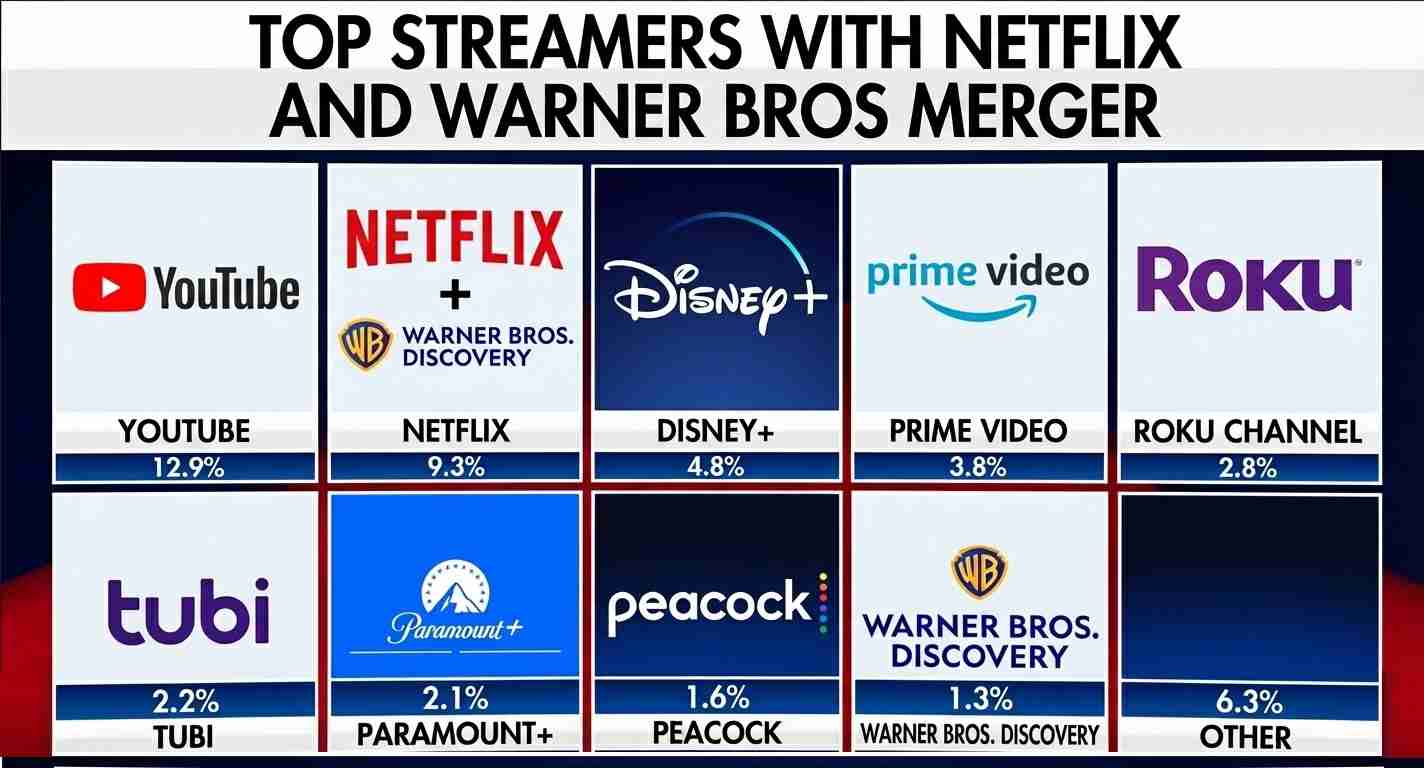
Netflix announced a landmark $82.7 billion bid for Warner Bros. Discovery on Dec. 5, 2025, combining studios and streaming assets — a deal now facing intense regulatory scrutiny from the Trump administration over potential market concentration.
Key takeaways
- Deal value: Netflix agreed to acquire Warner’s studio and streaming assets for an enterprise value of $82.7 billion with a per-share offer of $27.75 (see The Condia report; New Indian Express coverage).
- Scope: Transaction would include HBO/HBO Max, Warner Bros. studio slate, DC Studios and major franchises such as Game of Thrones and Harry Potter (The Condia report).
- Structure & timeline: Warner plans to spin off cable networks into Discovery Global; the studios and streaming arm would be acquired by Netflix with a target close in Q3 2026 (New Indian Express coverage).
- Regulatory risk: The Trump administration’s review centers on market concentration, vertical integration and potential harm to consumers and competitors—Netflix agreed to a breakup fee anticipating challenges (Illustrated Daily News piece).
Deal details and structure
What’s included: The proposed acquisition would transfer Warner’s premium programming and studio operations to Netflix, including HBO, HBO Max, Warner Bros. studio slate and DC Studios. The companies announced the price equates to $27.75 per share and an enterprise value of $82.7 billion when debt is included (The Condia report; New Indian Express coverage).
Spin-off: Warner Bros. Discovery plans to spin off cable networks like CNN, TNT and Discovery into a separate entity called Discovery Global, leaving Netflix to acquire the studios and streaming assets (The Condia report; UrbanHollywood411 report).
Trump administration scrutiny and political context
Regulators are expected to take a close look at market concentration and vertical integration. Industry reporting suggests the Trump administration is skeptical and may favor alternative bidders in the broader political context, including the Ellison family’s recent Paramount Global purchase (UrbanHollywood411 report; Illustrated Daily News piece).
Regulatory focus: Officials will assess whether a merged Netflix-Warner would harm consumers, independent producers and rival distributors by concentrating streaming distribution and premium content under one owner.
Industry reaction and union concerns
Producers and unions responded quickly. The Producers Guild of America emphasized the need to protect workers and theatrical distribution channels. Unions fear that a dominant streamer-owner could alter release windows, production booking, and compensation structures (New Indian Express coverage).
Netflix has pledged to honor Warner’s theatrical release agreements — a key reassurance for theaters and filmmakers — but analysts warn the acquisition’s costs could prompt subscription price increases or packaging changes that affect consumers and local cinemas (New Indian Express coverage; The Condia report).
Strategic stakes: content, franchises and market power
Scale and leverage: If approved, the merger would create one of the world’s largest entertainment companies, combining Netflix originals like Stranger Things with HBO hits such as Game of Thrones and legacy Warner franchises. That control would grant Netflix expanded leverage over licensing, merchandising and theatrical windows (The Condia report; Illustrated Daily News piece).
Analyst view: Observers say the combined scale could reshape financing, distribution and cultural influence — raising concerns about a single company’s control over multiple audience pathways and high-profile intellectual property.
Regulatory hurdles and breakup fees
The transaction faces review by U.S. and international antitrust authorities, who will evaluate both horizontal concentration and vertical integration risks. Notably, Netflix agreed to a substantial breakup fee, signaling both parties expect regulatory scrutiny and are preparing for possible financial fallout if the deal is blocked (Illustrated Daily News piece).
Cost pressure and consumers
Industry commentary anticipates the acquisition’s price tag may ripple into subscription pricing, new tiers, or altered content bundles. For viewers, that could mean higher monthly bills or different packaging; for advertisers and partners, a more powerful negotiating counterparty (The Condia report).
Implications for Utah
Economic impact: Utah’s film and media sector could experience both pressure and opportunity. Local crews, production companies and post facilities tied to Warner or HBO projects may see hiring shifts as decisions centralize under Netflix.
Film production and incentives: As a state that hosts location shoots and offers tax incentives, Utah may need to compete with targeted incentives or highlight local talent and locations to retain big-studio productions under a centralized greenlight process.
Theaters and Sundance: Utah cinemas, including independent houses serving Park City’s Sundance Film Festival, could be affected if theatrical windows change or if a dominant streamer adjusts festival title distribution strategies.
Jobs and unions: Guild and union concerns—especially from the Producers Guild—map directly to Utah-based crew and union members. Centralized contracts or altered theatrical commitments could change local hourly work patterns.
Political/regulatory angle: Utah’s conservative audience may welcome federal scrutiny. Local leaders who value competition may support a rigorous review to protect consumers, small businesses, and independent creators.
Practical effects: Residents might face higher streaming bills, altered bundles, or licensing complexity for schools and cultural institutions. Conversely, if Netflix expands production locations, Utah could gain new projects and jobs.
Sources and reporting
This article draws on company announcements and industry reporting compiled by Times Media Service and referenced outlets, including: The Condia report; New Indian Express coverage; UrbanHollywood411 report; and Illustrated Daily News piece.
Reporting note: This article uses company announcements and industry reporting compiled by Times Media Service and referenced outlets listed above.