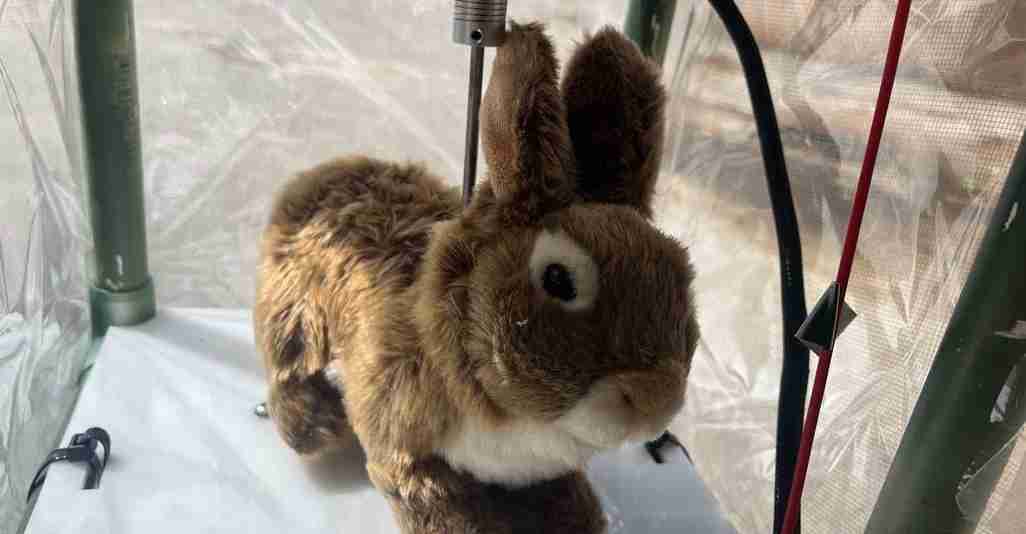
Florida Deploys Solar-Powered “Robot Rabbits” in Everglades to Lure and Trap Invasive Burmese Pythons
Florida and the South Florida Water Management District have deployed solar-powered, remote-controlled “robot rabbits” in Everglades National Park to lure and trap invasive Burmese pythons, aiming to curb severe declines in native wildlife and restore ecological balance.
Key takeaways
- Agency partnership: The South Florida Water Management District and the University of Florida developed solar-powered decoys that mimic marsh rabbits to attract pythons.
- Early scale and results: About 120 robot rabbits were deployed by late 2025, with monitored zones showing increased python captures (see video report).
- Targeted detection: Robots use motion, heat pads, scent cues and cameras to send live alerts so removal teams can respond quickly under the Python Elimination Program.
- Public engagement: The effort complements volunteer events like the Florida Python Challenge and ties into broader outreach and transparency efforts.
Background and the ecological problem
Burmese pythons are nonnative to Florida and became established through pet releases and escapes over decades. Once reproducing in the wild, these snakes have spread throughout South Florida and now prey heavily on small animals in the Everglades.
Studies and monitoring show catastrophic declines: some small mammal species have dropped by as much as 95% in parts of the park, and many bird populations have also fallen. These losses ripple through the food web, affecting predators such as Florida panthers, bobcats and raptors and altering ecosystem function.
“Some small mammal species have dropped by as much as 95% in parts of the park.”
Why it matters: Reduced prey affects native predators, hunting and tourism, and the long-term productivity of public and private lands. Officials emphasize that rapid, targeted control is urgent to protect biodiversity and local economies.
Robot rabbit technology: how the decoys work
The decoys were developed through a partnership between the SFWMD and University of Florida researchers led by Dr. Chris Dutton and Professor Bob McCleery.
Design features include
- Motion that imitates marsh rabbit movement.
- Heat pads and controlled thermal output to match the warmth pythons seek.
- Chemical cues and scent profiles resembling real rabbits.
- Solar panels to recharge systems in the field.
- Cameras and wireless links that stream live video and send alerts when a python approaches (SFWMD).
When a robot detects a snake, it sends alerts and live video so trained agents can move in to capture and, when required by protocol, humanely euthanize the python under the state’s Python Elimination Program. The system leverages python hunting instincts and thermal cues to make removals more targeted and efficient.
Operational strategy and partnerships
The initiative blends research, state agency deployment and contractor field teams. The SFWMD manages and funds parts of the program while the University of Florida supplies engineering and wildlife expertise.
The Python Elimination Program compensates authorized agents to remove pythons and collect data, and public programs such as the Florida Python Challenge mobilize volunteers and recreational hunters to expand detection efforts.
Early results, limits and ongoing evaluation
By late 2025, roughly 120 robot rabbits were in targeted habitats. Early indicators show higher detection and capture rates within monitored zones (video report), but officials caution that long-term ecological recovery will take substantial time and effort.
Practical challenges remain: robots require maintenance, responsive staff, and depend on solar charging that can be limited by weather or canopy cover. Scaling the system to cover the vast Everglades and adjacent private lands will demand additional funding, partnerships and evaluation of cost-effectiveness.
Why this matters: policy, property and public safety
For readers focused on property rights and fiscal prudence, the program offers a technology-forward, targeted way to protect private property, hunting resources and tourism assets. Officials say smart, focused removals can reduce broad, expensive searches and limit future taxpayer burdens.
Controlling invasive predators is key to preserving the Everglades’ productivity for recreation and agriculture. The robot rabbits illustrate how state agencies and universities can invest in innovation to protect natural resources and livelihoods.
Coverage, transparency and accountability
The SFWMD and partners publish program details and outreach materials, while media reporting and video coverage offer public insight into deployments and initial results (AP video, CBS Chicago video).
Researchers plan to share findings to help other states and agencies confronting invasive species, while continuing to test additional decoy types and improved sensors to expand the system’s reach.
Sources and reporting
This article draws on official releases and reporting from the South Florida Water Management District, the SFWMD Python Elimination Program, the University of Florida, coverage by the Palm Beach Post, and national media videos from the AP and CBS Chicago.
Implications for Utah
While Utah does not face Burmese pythons, Florida’s experience offers lessons for state policymakers on early detection, rapid response and tech-enabled surveillance for invasive threats affecting water systems, recreation and ranching.
Economic and conservation lessons
Invasive species—whether aquatic mussels, plant pests or nonnative fish—can impose heavy costs. Utah leaders can study Florida’s mix of agency action, university research and private partnerships to design cost-effective responses.
Technology transfer and innovation
Targeted, tech-driven tools like remote sensors and decoys may be adaptable to local pests. Utah agencies could pilot remote-sensing or decoy technologies for invasive rodents or aquatic sensors for zebra mussels, leveraging public-private partnerships and university collaborations.
Policy and funding considerations
Florida’s approach highlights budgeting for research and rapid response before invasions grow costly. Programs that pay licensed agents for measurable results, similar to Florida’s model, can direct funds where outcomes are clear.
Public engagement and private land
Volunteer challenges and well-run public events can expand search capacity while respecting private property. Any Utah program should include clear rules, training and liability protections to safeguard landowners and participants.
Operational caveats
Not every tool transfers directly. Utah’s climate and terrain differ from the Everglades, and solar-powered, heat-signature decoys may perform best in warm, open marshes. Pilots and careful cost-benefit analyses are recommended before wider deployment.