Treasury Moves to Block Tax Benefits for Undocumented Immigrants, Aiming to Reserve Refunds for U.S. Citizens
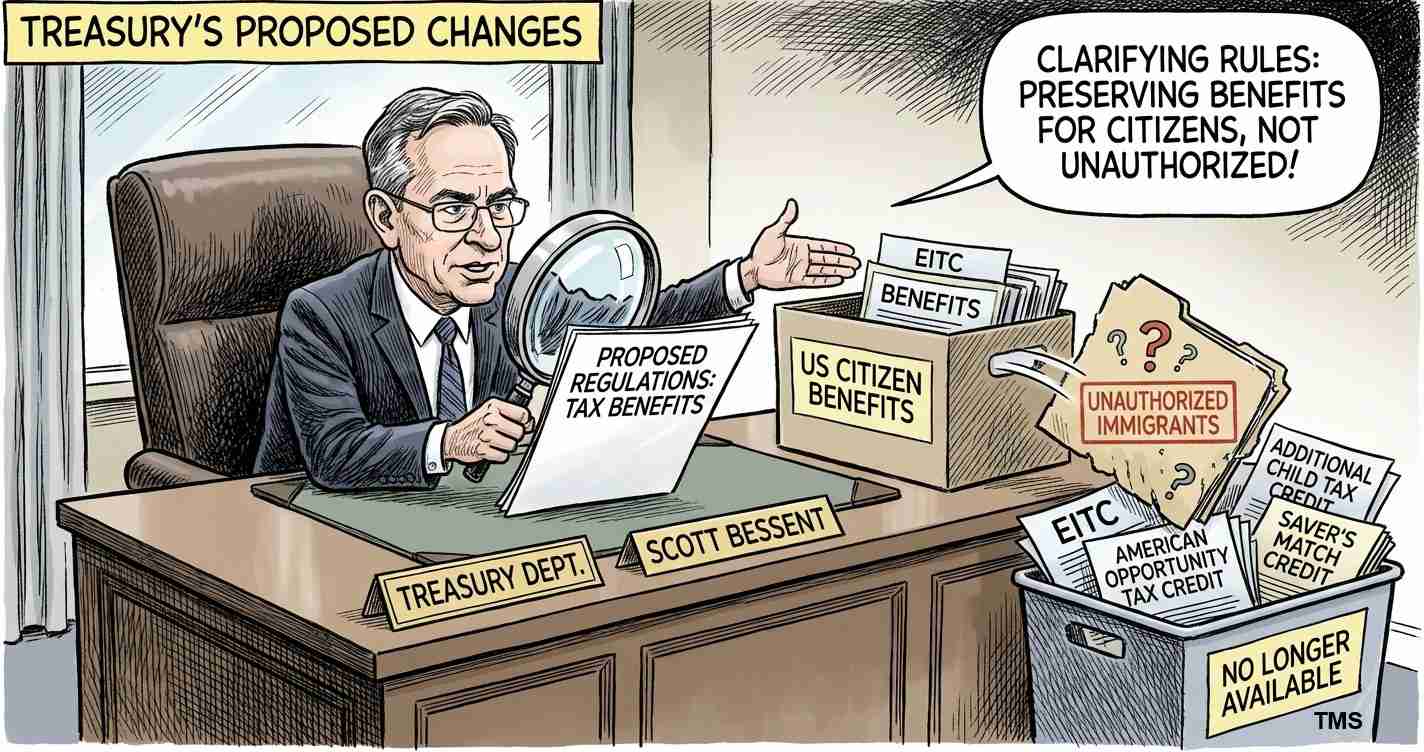
Treasury Secretary Scott Bessent announced Nov. 28, 2025, that the Treasury will propose rules treating refundable tax-credit refunds as federal public benefits, which would make undocumented immigrants ineligible for refunds such as the EITC and ACTC.
- Regulatory change: Treasury will issue proposed regulations to bar refunded portions of certain tax credits to non‑qualified aliens — according to Fox Business.
- Credits affected: The change targets refundable portions of the EITC, ACTC, the refundable portion of the American Opportunity Tax Credit and the Saver’s Match (per ABC News).
- Legal basis & timeline: Treasury cites a Justice Department OLC reinterpretation and expects final rules to apply beginning in the 2026 tax year (Fox Business).
Overview of the policy change
Treasury Secretary Scott Bessent described the initiative as a measure to “cut off federal benefits to illegal aliens and preserve them for U.S. Citizens.” Treasury’s Office of Tax Policy and the IRS are preparing proposed regulations for public notice to clarify that the refundable portions of certain tax credits constitute federal public benefits and therefore would be unavailable to unauthorized or other non‑qualified aliens. The department says the proposal is intended to align tax administration with the Justice Department’s Office of Legal Counsel reading of the statute.
Which federal tax credits are affected
The proposed rules focus on refundable portions of these federal tax credits:
- Earned Income Tax Credit (EITC)
- Additional Child Tax Credit (ACTC)
- American Opportunity Tax Credit (refundable portion)
- Saver’s Match Credit (refundable retirement match)
Under current rules, those credits can produce refunds when credits exceed tax liability. The Treasury proposal would treat those refunds as benefits that require a filer to be a “qualified individual”, a status typically tied to lawful presence in the U.S. The department says this will make undocumented immigrants ineligible for refunded portions of these credits (ABC News).
Implementation timeline and legal basis
Treasury officials told reporters the final regulations are expected to apply beginning in the 2026 tax year, allowing time for the required notice-and-comment process under the Administrative Procedure Act (Fox Business).
The move relies on a recent reinterpretation by the Justice Department’s Office of Legal Counsel (OLC), which concluded that refunded portions of the listed tax credits fall within the statutory definition of “federal public benefits.” Under that interpretation, agencies may deny such benefits to non‑qualified aliens. Treasury says it is acting on that guidance to align tax rules with OLC’s reading of the law.
Financial system enforcement
Alongside tax-rule changes, the Treasury’s Financial Crimes Enforcement Network issued an alert on Nov. 28 urging banks and money services businesses to file suspicious activity reports for transfers of $2,000 or more that may involve unlawful employment income or other illicit activity tied to unauthorized migrants (Fox Business).
Bessent warned that those who are in the country illegally “have no place in our financial system” and said the government will work with financial institutions to stop exploitation.
The Treasury emphasizes enforcement aims to stop flows tied to criminal activity and protect the integrity of U.S. financial markets.
Context within the Trump administration’s immigration policy
The announcement is part of a broader, administration‑wide push on immigration enforcement and restrictions. Officials have signaled tougher measures across agencies; recent statements about pausing migration from certain countries after a violent incident near the White House have intensified focus on immigration policy. Treasury’s move connects tax policy with immigration enforcement, with supporters saying it ties refunds to lawful presence while opponents worry it shifts immigration checks into tax administration (Fox Business).
Criticism and practical concerns
Civil rights groups, immigrant advocates and some tax experts argue the change could force the IRS into immigration‑enforcement roles. Critics warn that large‑scale verification of immigration status could add cost, delay tax processing, and deter eligible taxpayers from filing returns.
Concerns include potential expansion of a “deportation dragnet” if tax‑related data are shared with immigration authorities, and complications for mixed‑status households where U.S. citizen children have historically received refundable credits. Treasury officials counter that the goal is to preserve taxpayer dollars and enforce existing benefit limits.
Implications for Utah
Economic impact
Utah’s growing immigrant population contributes to local workforce and economy. If refunds are reduced or filings become more complex, some Utah families could see lower refunds in 2026 and beyond, potentially reducing local consumer spending and affecting sectors that rely on immigrant labor, such as construction, hospitality and agriculture.
Local tax preparers and community organizations may face heavier workloads, needing to verify eligibility and assist mixed‑status families with guidance, appeals or amended returns. This could increase demand for tax services and nonprofit legal aid within the state.
Political consequences
For Utah’s conservative audience, the policy aligns with priorities around rule of law and fiscal stewardship. State leaders favoring stricter immigration controls may welcome the move as protecting taxpayer funds for citizens. Conversely, the business community may monitor potential unintended effects on the labor pool and workforce stability.
Social effects
Many Utah families are mixed‑status; restricting refundable credits may reduce refunds that help pay for food, housing and education for U.S. citizen children in those households. Nonprofits and faith‑based groups may see rising demand for services and tax assistance.
There is also a risk some immigrant families will avoid banks or stop filing taxes to avoid scrutiny, pushing more people toward unbanked, cash‑only behavior — a trend that could undermine efforts to integrate immigrants into mainstream financial services.
Cultural relevance
Utah’s conservative voters often support orderly immigration and legal processes; this action is likely to resonate with those views. At the same time, communities emphasizing charity and family support may press for safeguards to protect U.S. citizen children and legal residents from unintended harm.
Practical applications for residents
- Tax filers: Monitor IRS guidance in 2026. Tax preparers will need to confirm clients’ status and document eligibility; mixed‑status families should seek help from trusted tax professionals or community groups.
- Employers: Prepare for possible shifts in worker behavior and more employee inquiries about tax filing and refunds.
- Banks and financial services: Review FinCEN guidance and be ready to detect and report suspicious activity tied to unlawful employment income or illicit transfers (Fox Business).