Trump, Mamdani Find Common Ground on Housing and Costs in Oval Office Meeting — A Rare Bipartisan Push for Affordability
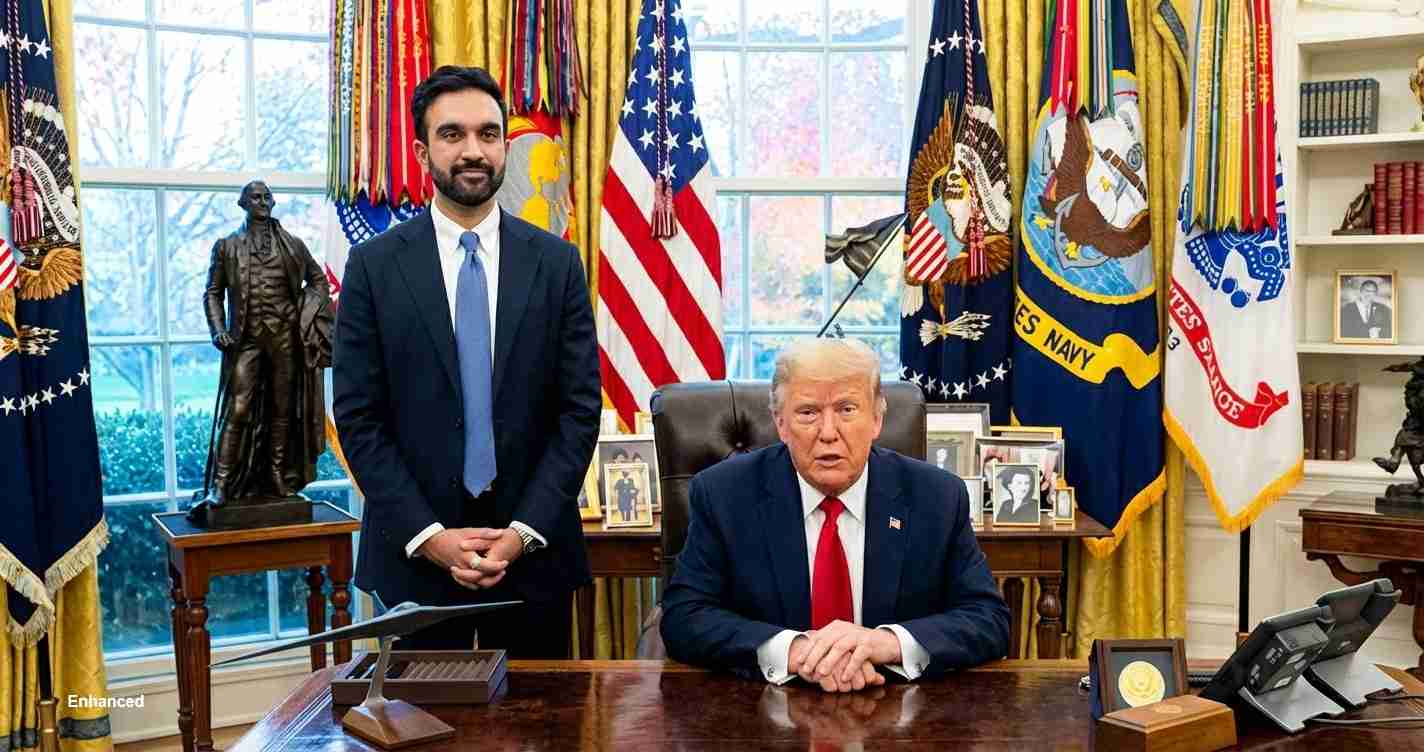
President Donald Trump and New York City Mayor-elect Zohran Mamdani met in the Oval Office, pledging pragmatic, bipartisan action to address New York’s housing crisis and reduce everyday costs for residents in an unexpected outreach.
Key takeaways
- First in-person meeting: Their Oval Office session followed public criticism but prioritized cooperation on urgent city issues, per Hindustan Times.
- Shared priorities: Both leaders emphasized housing affordability and lowering the cost of living for New Yorkers, reinforced by Mamdani’s public remarks (Mamdani remarks on video).
- Practical focus: Discussions centered on expanding supply, easing costs, coordinating federal support and balancing public safety with affordability goals.
- Local implications: Utah leaders and residents may watch for federal actions and adapt supply-focused reforms locally to address their housing pressures.
Background: From public sparring to a working meeting
The Oval Office meeting came after a period of sharp public rhetoric. President Trump has labeled Mamdani a “communist” and publicly criticized his platform, highlighting stark ideological differences. Yet both sides agreed to set aside those disputes to focus on problems affecting millions of New Yorkers, according to reporting by Hindustan Times.
Mamdani’s outreach was arranged as part of the traditional contact a mayor-elect makes with federal leadership. He emphasized that city and federal cooperation is necessary to solve large-scale problems and framed his move as practical and voter-focused. In his public remarks he said he will work “on any agenda that benefits New Yorkers” and urged being “relentless” in pursuing solutions (Mamdani remarks on video).
What they agreed on: Housing and the cost of living
Both leaders identified housing affordability as a core issue. New York’s long-running housing crunch has driven higher rents and prices; Trump and Mamdani discussed policy steps aimed at reducing costs for residents and expanding economic security while being mindful of city budgets and taxpayer burdens. Public accounts described the session as pragmatic — a working meeting to explore shared policy goals (Hindustan Times; Mamdani remarks on video).
“We will try all avenues and all meetings that can make life more affordable for the city’s 8.5 million residents,” Mamdani said, stressing cross-aisle pragmatism and voter focus in his outreach.
Issues on the table: practical levers and political realities
Officials outlined several areas for possible cooperation that aim to produce tangible relief rather than sweeping new entitlements:
- Boost housing supply and preserve existing affordable units through incentives or regulatory changes.
- Reduce household costs — from utilities to transit — via targeted relief or programs.
- Balance safety with affordability so reforms don’t undermine neighborhood stability.
- Coordinate federal support for programs assisting low- and middle-income residents.
Bipartisan cooperation NYC: What this moment suggests
The meeting signals a strategic posture as much as a policy collaboration. For Mamdani, the outreach shows a mayor-elect willing to cross partisan lines to deliver affordability. For Trump, cooperation is an opportunity to showcase problem-solving on a major urban issue. Observers described the meeting as pragmatic rather than cordial — a test of whether pragmatic governance can outpace partisan posturing (Hindustan Times).
Questions to watch: accountability, specifics, and follow-through
Key follow-ups will determine whether this meeting yields measurable outcomes: what federal actions are proposed, whether the White House backs changes to housing financing or zoning, and whether either side commits to timelines and performance metrics. Reporters and citizens will look for concrete proposals that survive political pressure from both bases (Mamdani remarks on video).
Source material and transparency
Accounts of the meeting rest on news reporting and Mamdani’s public remarks. For context and direct quotes, see:
Implications for Utah
Economic impact
Though Utah differs from New York, the focus on increasing housing supply and cutting regulatory barriers is directly relevant. Utah cities facing growth pressures may adopt streamlined permitting or incentives if federal programs or incentives arise from these talks. Any federal shift in funding or regulatory focus could influence Utah’s budget priorities and competitive access to grants.
Political consequences
The Oval Office meeting models cross-aisle pragmatism that may resonate with Utah’s conservative electorate, which often prioritizes practical results. Local politicians can point to federal-state-city cooperation as evidence that practical governance can deliver savings without expanding long-term entitlement commitments.
Social effects
Federal measures that reduce urban housing costs could shift migration patterns. Utah has been a destination for families and businesses priced out of coastal cities; any significant change in New York could affect local school enrollment, housing demand and public services.
Cultural relevance
Utah’s values of responsibility, local control and fiscal prudence align with a narrative of practical cooperation on affordability. Civic leaders here may use this moment to advance local dialogues about zoning, density and the state’s role in housing markets.
Practical applications for Utah residents
- Watch for federal programs: Policymakers and developers should track grants, tax incentives or regulatory changes that could support local projects.
- Pursue local reforms: Streamlined approvals, workforce-housing incentives and public-private partnerships can increase supply regardless of federal action.
- Demand transparency: Conservative voters should insist on clear timelines, costs and measurable outcomes before endorsing new programs.
Sources
Reporting in this article cites Hindustan Times coverage of the meeting and public remarks by Mayor-elect Zohran Mamdani (Mamdani remarks on meeting with Trump (video)).