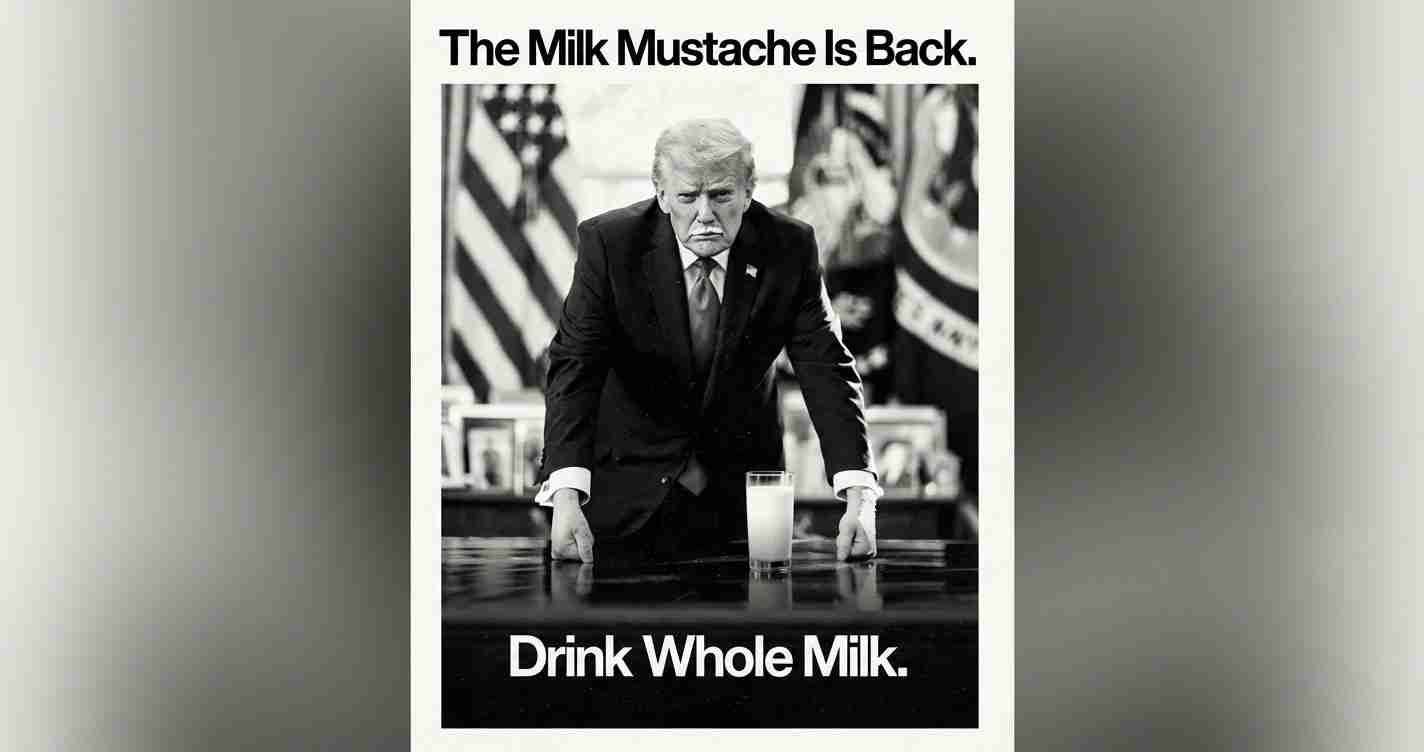
Trump signs Whole Milk for Healthy Kids Act, returning whole and 2% milk to school lunch lines
President Donald Trump signed the Whole Milk for Healthy Kids Act of 2025 on January 14, 2026, allowing schools in the National School Lunch Program to offer whole and 2% milk alongside lower-fat and alternative options.
Key takeaways
- Law change: The Whole Milk for Healthy Kids Act of 2025 (S. 222) permits whole and 2% milk in the National School Lunch Program and restores broader milk choices.
- Additional provisions: Easier access to nutritionally equivalent plant-based milks and required allergy training for school food staff.
- Implementation: USDA issued immediate guidance, launched rulemaking and a public “Drink Whole Milk” campaign to support rollout.
What the law does and why it matters
The Whole Milk for Healthy Kids Act reverses Obama-era restrictions stemming from the Healthy, Hunger-Free Kids Act of 2010 that largely limited school milk to fat-free and 1% low-fat options. The new law explicitly permits full-fat whole milk and 2% reduced-fat milk to be offered alongside fat-free and low-fat choices, giving districts and families more flexibility.
Supporters say the change aligns with the Dietary Guidelines for Americans, 2025–2030 and reflects updated federal nutrition guidance that reintroduced full-fat dairy as part of healthy eating patterns.
Key provisions in detail
- Whole and 2% milk permitted: The law adds whole (full-fat) milk and 2% reduced-fat milk to permitted NSLP milk options, allowing schools to expand offerings beyond fat-free and low-fat varieties. (See implementation guidance from the USDA.)
- Plant-based alternatives: Students may receive nutritionally equivalent plant-based milks without a physician’s note; parents or guardians may request alternatives for non-medical reasons and schools no longer must seek state approval for such requests.
- Allergy protections and training: The bill incorporates the Protecting Children with Food Allergies Act, requiring school food service staff to receive training to prevent, recognize and respond to food allergy emergencies.
Why it matters: Proponents say the changes restore variety, respect family choice, support dairy farmers and align federal nutrition policy with current guidelines.
Signing ceremony and rollout
President Trump signed S. 222 on January 14, 2026, in the Oval Office with cabinet and administration officials present. Attendees included USDA Secretary Brooke L. Rollins, HHS Secretary Robert F. Kennedy Jr., and USDA National Nutrition Advisor Dr. Ben Carson, along with dairy farmers, parents and members of Congress.
USDA issued immediate implementation guidance and announced plans to propose rulemaking to align Child Nutrition Programs with the new law. The agency also said it will rewrite program regulations to match the Dietary Guidelines for Americans, 2025–2030 and launched a public-facing “Drink Whole Milk” campaign to encourage uptake in cafeterias.
Reactions from stakeholders
- Dairy industry: Leaders hailed the law. Dairy Farmers of America President Dennis Rodenbaugh called it a “win for children’s health and America’s dairy farm families.” The National Milk Producers Federation highlighted dairy’s nutrition benefits.
- Farm groups and rural leaders: The American Farm Bureau Federation and state farm organizations, including the Utah Farm Bureau, praised the change for supporting farmers and local markets.
- Lawmakers: Republican leaders on education and agriculture praised the bill; Sen. John Boozman (R-Ark.) called it a milestone for children’s health while Rep. Tim Walberg (R-Mich.) criticized earlier obesity-based restrictions.
- Plant-based and allergy advocates: Some groups welcomed easier access to milk alternatives as reflecting family choice and helping lactose-intolerant students. Allergy advocates noted the new training requirements are an important safety measure.
“This law gives families and school nutrition programs more flexibility and helps ensure students with allergies or dietary preferences are better protected,” said supporters and USDA officials.
How schools will adapt
Local school districts will decide how to introduce whole or 2% milk into menus. USDA and the Food and Nutrition Service are offering resources and guidance to help districts change procurement, meal planning and food-safety protocols. Some districts may offer multiple milk choices at each meal; others may phase in options over time.
Practical considerations include contract adjustments, supply availability, refrigeration and staff training. Smaller or rural districts may face higher short-term costs, while districts sourcing locally could see smoother transitions.
Implications for Utah
Economic impact: Utah, a significant dairy state, could see increased demand for locally produced milk, benefiting family-run farms and regional processors. State dairy groups and the Utah Farm Bureau have praised the change.
School nutrition operations: Districts in Utah will need to review procurement, meal standards and budgets. USDA and FNS implementation resources will be key for district nutrition directors planning transitions.
Political and social effects: The change aligns with local-control and parental-choice priorities in Utah politics and may be highlighted by lawmakers as supporting both children’s nutrition and local agriculture. Families will choose between whole, reduced-fat, fat-free or plant-based options according to preference.
Practical applications for Utah families
- Watch for communication from local school nutrition departments about milk options, pricing and any opt-in/opt-out procedures.
- Parents who prefer plant-based alternatives should be able to request them without a doctor’s note under the new law.
- Schools will provide allergy training to staff to better protect students with food allergies.
What reporters could not confirm
Some online posts linked the change to a so-called “flipped food pyramid” or a Make America Healthy Again movement. Reporting and official releases focus on the Dietary Guidelines and formal USDA policy changes; no reliable sources confirmed a formal flipped food pyramid or an organized Make America Healthy Again campaign tied to the signing.
Sources and further reading
- USDA press release: Whole milk back — President signs Whole Milk for Healthy Kids Act
- White House signing statement: Congressional Bill S. 222 signed into law
- FoodBev coverage: President Trump signs Whole Milk for Healthy Kids Act into law
- DTN/Progressive Farmer: President Trump signs Whole Milk Act
- Oklahoma Farm Report: Whole milk is back
- ABC News wire: Trump signs law returning milk to school lunches
- Utah Farm Bureau: President Trump signs Whole Milk for Healthy Kids Act
- FNS implementation resources: Whole Milk for Healthy Kids Act implementation
- House Education & Workforce: Commentary on nutrition and obesity policy
For district officials: review USDA and FNS guidance and consult local procurement teams to plan safe, cost-effective implementation of expanded milk options.