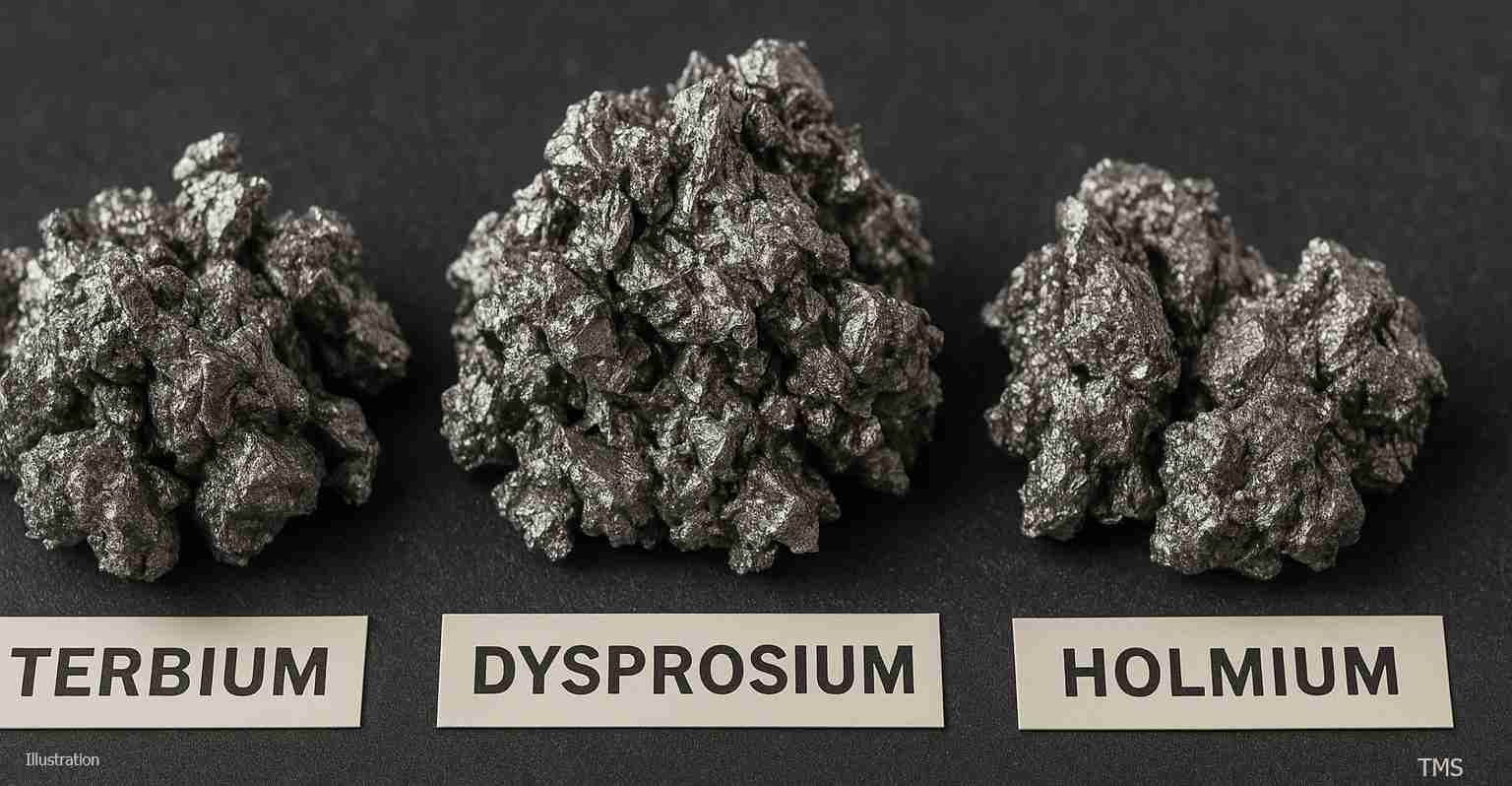
Trump outmaneuvers China in the rare earths fight: How the U.S. pushed back on Beijing’s supply-chain chokehold
During his presidency, Donald Trump launched a multi-pronged campaign to weaken China’s near-monopoly on rare earths—using diplomacy, trade threats and partnerships—to secure U.S. access to minerals critical for advanced technology and national defense, manufacturing and supply chains.
- Strategic pressure worked short-term: Threats of tariffs and coordinated diplomacy won a temporary resumption of exports from China (CSIS analysis).
- China retains structural dominance: Roughly 60–70% of mining and ~90% of refining remain in China (YouTube explainer; ABC News).
- Domestic rebuilding will take years: Permitting, capital and technical barriers mean U.S. refining and magnet-making capacity lags despite policy pushes.
- Local stakes are high: States like Utah could gain jobs and investment, but must balance growth with environmental safeguards.
Trump’s strategy and negotiations
President Trump treated rare earth minerals as both an economic issue and a national security priority. The administration advanced a three-pronged approach: diplomacy, trade pressure, and alliances to seed new supply lines.
The White House pursued memorandums of understanding and frameworks across the Asia-Pacific to diversify sources. Talks and agreements involved Japan, Cambodia, Malaysia, Vietnam, Thailand and Australia to encourage mining, processing and trade channels outside China’s control (ABC3340).
Officials publicly threatened steep tariffs—sometimes floated as high as 100%—on Chinese imports to deter export curbs. Those threats were later eased after diplomacy produced a temporary resumption of exports, reflecting a mix of pressure and negotiation (ABC News; ABC3340).
Result: After about two months of tightened controls, a deal allowed China to resume some rare earth exports — a tactical win, but not a structural solution.
China’s dominance and leverage
China’s control is deep and vertical: it holds an estimated 60–70% of global mining and about 90% of refining capacity, plus leading magnet production. That combination — mines, refineries, chemical know-how and waste management — enables Beijing to use export policy as geopolitical leverage (YouTube; ABC News).
Why this matters: Many industries and defense systems — from missiles and sensors to EV motors and wind turbines — require materials that must be processed to high specifications. Stockpiles can buy time, but sustained limits would quickly strain manufacturers and military suppliers.
Diplomatic and economic fallout
Beijing’s export limits were widely seen as a form of economic coercion aimed at influencing U.S. policy. The Trump administration framed its response as protecting American jobs, technology and national security, publicly criticizing China and warning of accountability.
Diplomacy nonetheless played a role: high-level talks and coordinated pressure secured a partial rollback of controls. Treasury and trade officials later confirmed that tariff threats were softened after talks produced a temporary deferral of the most damaging export limits (ABC3340).
Strategic implications for industry and defense
Rare earths are essential to modern military systems and critical industries: missiles, guidance systems, semiconductors, wind turbines, electric vehicles, and precision electronics. Losing reliable access would damage U.S. defense production and the broader technology sector (ABC3340; YouTube).
Trump’s approach illustrated a durable playbook: trade leverage + allied coordination + domestic capacity-building. Experts caution, however, that building mines, refineries and magnet plants requires large, patient investment and faces permitting and environmental hurdles.
Implications for Utah
Economic impact
Utah’s geology includes rare earth deposits and other critical minerals. A national push to develop domestic rare earths could draw investment to mining and processing, creating jobs in extraction, transport and local services. But downstream refining and processing facilities remain scarce, requiring Utah to compete for higher-value plants (YouTube; ABC3340).
Political consequences
For Utah’s conservative electorate and officials, Trump’s stance reinforces themes of national strength and self-reliance. State leaders may support permitting reforms and incentives to accelerate responsible development and attract federal and private investment connected to critical minerals (ABC3340).
Social effects
Rural Utah counties could gain jobs and contracting opportunities, benefiting local economies. Communities will demand robust environmental safeguards and plans for lasting benefits — balancing job creation with stewardship will shape public support.
Cultural relevance
Utah’s cultural emphasis on self-reliance and defense aligns with policy goals to reduce foreign dependence. Messaging that links mineral development to national security and local prosperity is likely to resonate with many Utah voters (ABC News).
Practical applications for residents
- Job opportunities: Mining regions could see new employment and contractor work; local businesses may benefit.
- Energy & tech stability: Domestic production can stabilize supplies for clean-energy tech and consumer goods used by Utah families.
- Policy engagement: Residents can urge streamlined permitting and workforce training so Utah competes for investment.
Sources and further reading
For deeper context and original reporting, see:
- ABC3340: “Access to rare earth minerals looms over Trump-Xi meeting”
- YouTube explainer on rare earths and supply chains
- ABC News: “U.S.-China rare earth minerals fight explained”
- CSIS analysis: “Trump strikes deal to restore rare earths access”
This reporting examines the Trump-era push to counter China’s dominance in rare earths, the diplomatic and trade steps taken, and what those moves mean for states like Utah that may benefit from expanded domestic production and a focus on critical-minerals national security.