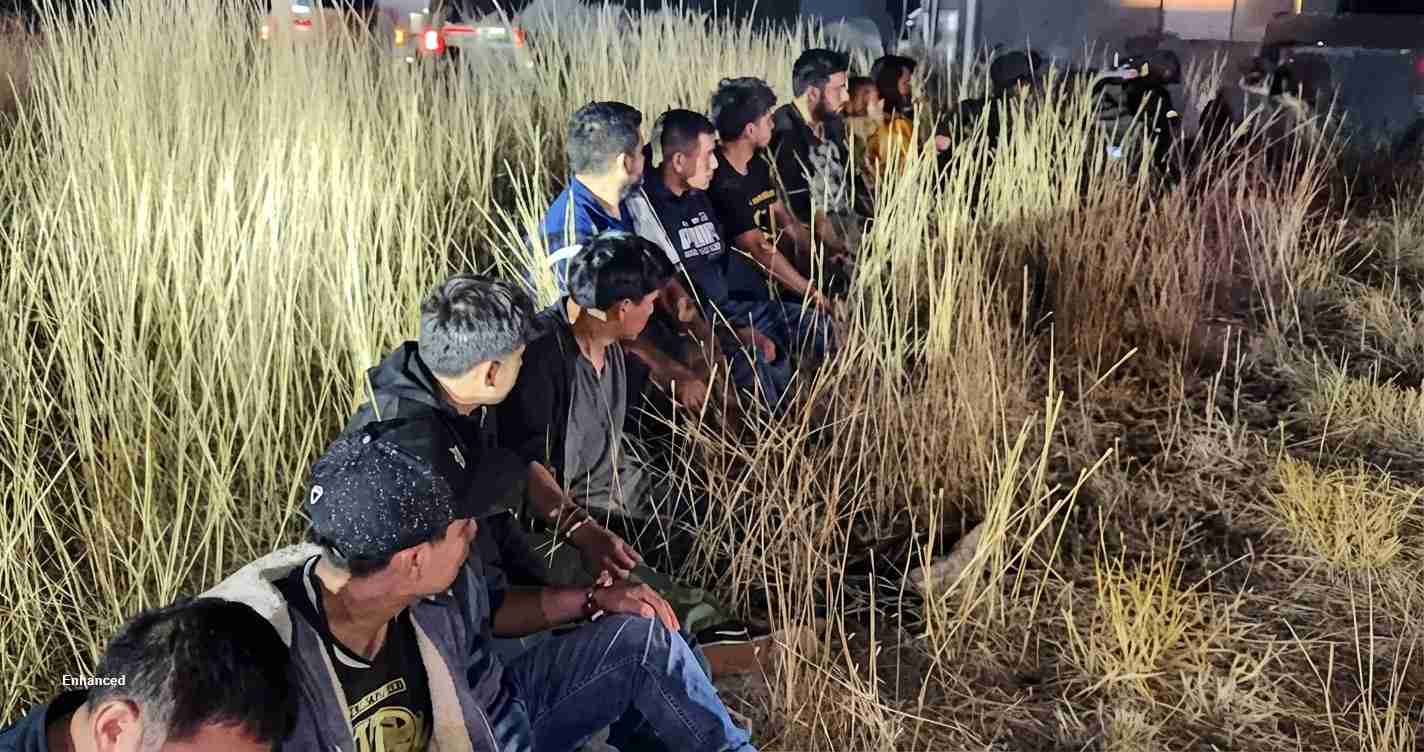
Video shows 23 migrants hidden inside truck cab during Texas traffic stop; driver arrested in suspected human smuggling case
A routine La Salle County traffic stop in Texas revealed 23 undocumented migrants hidden inside a truck cab; law enforcement video shows officers pulling people from cramped spaces. The driver, a Texas man, was arrested on suspected human‑smuggling charges.
- 23 people found concealed in a truck cab during a La Salle County traffic stop.
- Nationalities reported: Guatemala, Honduras, El Salvador, Mexico and Nicaragua.
- Driver arrested: Texas man faces suspected human‑smuggling charges; migrants placed in Border Patrol custody.
- Evidence: Law enforcement video shows officers opening the cab and counting those concealed inside.
Traffic stop, discovery and video
What began as a routine traffic stop in La Salle County escalated when officers became suspicious and searched a truck. Law enforcement-released video captures the tense moments officers opened the cab and 23 people — many packed into tight, poorly ventilated spaces — were pulled out or emerged.
The migrants told officers they had traveled from several Central American countries and Mexico. Such concealment in sleeper cabs, false panels or storage voids is a recurring pattern across Texas and poses severe life‑threatening risks if ventilation is poor or temperatures rise.
“Officers opened the cab and began counting individuals as they were removed; first responders checked for medical distress and basic needs,” law enforcement said in agency releases.
For broader agency background and similar case statements see the U.S. Customs and Border Protection newsroom and CBP Southwest Border migration resources.
Who were the migrants and what happened to them
Border Patrol assumed custody of the 23 migrants after first responders provided medical checks and basic needs. The group included nationals from Guatemala, Honduras, El Salvador, Mexico and Nicaragua. While in custody, migrants are typically screened, photographed and fingerprinted as authorities determine immigration histories and law‑based processing.
Border Patrol processing protocols and Southwest Border operations are described in CBP materials; see the U.S. Customs and Border Protection newsroom and CBP Southwest Border migration resources.
Arrest, likely charges and law enforcement response
The vehicle’s driver, a Texas man, was arrested at the scene. Authorities anticipate criminal charges related to human smuggling, including offenses under federal law such as 8 U.S.C. § 1324, which addresses transporting undocumented noncitizens and can carry significant prison terms and enhanced penalties if aggravating facts exist.
State and local agencies often coordinate with Homeland Security Investigations (HSI) and the U.S. Attorney’s Office for potential federal prosecution. For regional federal prosecution information see the U.S. Department of Justice, U.S. Attorney’s Office for the Southern District of Texas.
Legal and humanitarian context
Smugglers frequently charge thousands per person and pack vehicles to maximize profit while ignoring safety. These conditions can become fatal if a vehicle is sealed, involved in a crash, or during heat exposure. Federal and state agencies use video of such stops to highlight risks and deter smuggling operations.
Past tragedies in enclosed commercial vehicles — including high‑casualty events in Texas — have prompted increased patrols, checkpoints and public messaging. Agencies such as DHS and CBP publish news and safety statements; see DHS news and the CBP newsroom for examples.
What officials say
Local law enforcement described the stop as routine, noting that standard safety checks and officer attention to suspicious behavior led to the discovery. Border Patrol confirmed custody for processing. Investigators observed vehicle modifications and concealment methods consistent with smuggling coordination, and stressed that driver arrests can reveal broader networks.
Regional law enforcement trends
Texas remains a primary corridor for smuggling, with recurring discoveries of migrants concealed in commercial vehicles. Local traffic enforcement — routine stops for violations or safety checks — continues to be an effective point of interruption. Coordination among local police, state DPS, Border Patrol and federal investigators is central to tracing smuggling networks.
Implications for Utah
Economic impact: While the stop occurred in Texas, downstream migrant flows can affect labor markets and social services in states like Utah.
Political consequences: The incident may reinforce calls for stronger border security among Utah’s conservative electorate and officials, and be cited in debates over enforcement resources and policy.
Social effects: Community organizations, faith-based groups and service providers in Utah may see increased demand for legal and humanitarian support.
Cultural relevance: The image of migrants concealed in hazardous conditions resonates with voters focused on enforcement, while aid groups emphasize the human cost and push for combined enforcement and humanitarian responses.
Practical applications:
- Lawmakers should monitor federal prosecution outcomes to assess deterrence.
- Local law enforcement should review coordination protocols with Border Patrol and HSI for information‑sharing.
- Employers and community groups can coordinate with legal aid and social services to prepare for potential migrant movement.
- Public messaging should warn about the dangers of smuggling and discourage facilitation.
Sources for reporting and background
- U.S. Customs and Border Protection newsroom
- CBP Southwest Border migration resources
- U.S. Department of Homeland Security news
- Texas Department of Public Safety
- U.S. Department of Justice, U.S. Attorney’s Office for the Southern District of Texas
- Homeland Security Investigations (HSI)
Reporting note: This article is based on law enforcement accounts, agency patterns, and law enforcement‑released video. Times Media Service will update the report as federal or local prosecutors release further details and formal charges.