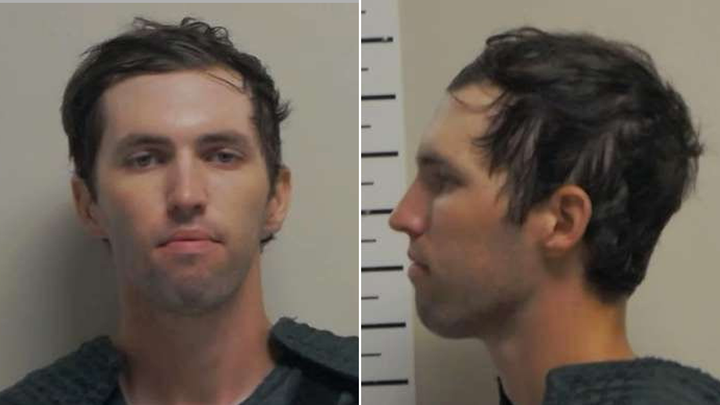
Accused Assassination Suspect Tyler Robinson Makes First In‑Person Court Appearance in Provo as Media Pushes to Unseal Proceedings
Tyler Robinson, accused of assassinating conservative activist Charlie Kirk, made his first in‑person court appearance Dec. 11, 2025, in Provo, Utah; prosecutors announced they will seek the death penalty amid disputes over media access and sealing.
Key takeaways
- Defendant: Tyler James Robinson, 22, charged with aggravated murder and related counts; prosecutors say they will seek the death penalty (KUER; Wikipedia).
- Evidence cited: Investigators point to DNA on a towel and screwdriver, messages about hiding a rifle and a scope, engraved bullets, and Discord communications tying Robinson to the rooftop shot (Wikipedia).
- Media fight: A media coalition and Charlie Kirk’s widow are pressing to unseal records and expand access while defense and prosecutors litigate sealing and protective orders (KUER; courtroom video coverage).
Main content
First in‑person appearance: what happened Thursday
Dec. 11, 2025 — Provo, Utah. Robinson appeared in the Fourth District Court in Provo for his first in‑person court appearance. Prior pretrial appearances were conducted remotely — one by video and one by audio — which drew criticism from observers concerned about transparency (KUER; courtroom video coverage).
Courtroom observers described Robinson as wearing a button‑up shirt and tie, remaining handcuffed, and appearing calm and mostly still during the brief hearing. He did not address the court or make a statement (KUER).
Charges and death‑penalty bid
Robinson faces an aggravated murder charge and related counts including felony discharge of a firearm causing serious injury, obstruction of justice, witness tampering, and committing a violent offense in the presence of a child. Prosecutors announced they will seek the death penalty and cited alleged political motivation and the presence of children as aggravating factors (KUER; Wikipedia).
Because Utah’s capital prosecutions require extra procedural steps, the case will move through an extended pretrial process that includes detailed motion practice on evidence, mental health evaluations, specialized jury selection rules, and disputes over sealing and protective orders. The prosecution’s public statements about motive raise complex free‑speech and evidentiary questions that are likely to be litigated before trial (KUER; Wikipedia).
Investigators’ account and evidence summary
Authorities say Charlie Kirk was shot on Sept. 10, 2025, while speaking at Utah Valley University. Investigators allege the shooter fired from a rooftop roughly 142 yards away. A two‑day manhunt followed, and Robinson surrendered to police on Sept. 11 after his parents recognized him in law‑enforcement images and arranged his surrender through a retired detective in their LDS congregation (courtroom video coverage; Wikipedia).
Physical and digital evidence described by investigators includes DNA reportedly matching Robinson on a towel wrapped around the suspected rifle and on a screwdriver found at the rooftop firing position; messages about retrieving and hiding a rifle; notes referring to a scope and engraved bullets; and Discord messages in which Robinson allegedly discussed or implied responsibility. The state says it will present this mix of evidence in pretrial hearings and at trial if the case proceeds (Wikipedia).
Motive allegations and legal framing
Prosecutors have publicly framed the killing as politically motivated, pointing to Robinson’s reported concerns about gay and trans rights, a break with his family’s conservative practices, and a close relationship with a transgender roommate as part of their narrative of radicalization. Those assertions form part of the state’s case for aggravated murder and the death‑penalty aggravators (Wikipedia).
The defense has not conceded the motive allegations. Robinson remains presumed innocent, and pretrial motions will determine what evidence about motive, digital messages, and expert testimony is admissible. Expect contested hearings on radicalization, mental health evaluations, and whether political views can be considered an aggravating factor at sentencing (KUER; Wikipedia).
Media access fight: sealed records, public interest, and the widow’s concern
The case has drawn national attention, and local outlets plus a media coalition have pressed the court to unseal filings and expand access. They argue that the assassination of a prominent political figure and a potential death‑penalty prosecution are matters of intense public interest that demand maximum transparency consistent with safety and legal rules (KUER; courtroom video coverage).
“Charlie Kirk’s widow has publicly urged greater openness, saying secrecy troubles her and the public deserves to see how justice is done.”
State, defense, and press are litigating the balance between legitimate secrecy for witness safety, juror protection, or privacy and the public’s right to observe proceedings. Those disputes will shape what records and hearings are available as the case moves forward (KUER; courtroom video coverage).
Status after the Dec. 11 hearing
After the in‑person hearing Robinson remains in custody as the case proceeds through Utah’s capital‑case procedures. Prosecutors continue to press for the death penalty and will move forward with motion practice and pretrial evidence disputes. Media coalition motions over sealing and access remain pending and will be resolved by the court in coming weeks and months (KUER; Wikipedia; courtroom video coverage).
Implications for Utah
Political impact: The murder of Charlie Kirk has become a flashpoint in national debates about political violence, free speech, and partisan rhetoric. For Utah’s leaders and voters, the case raises questions about protecting public figures and balancing robust debate with safety (KUER; Wikipedia).
Legal and procedural effects: The case will test Utah’s capital‑case rules and the courts’ willingness to unseal records. Rulings here could set precedents for future high‑profile prosecutions and media access disputes (KUER).
Social and community concerns: The suspect’s reported background and media fights over secrecy highlight social tensions on campuses and in neighborhoods. Community leaders and faith groups may face pressure to address political anger, mental health, and youth radicalization (Wikipedia).
Public safety and campus security: Utah Valley University and other venues are likely to reassess rooftop access, event security, and emergency response planning after an apparent long‑range rooftop shot (Wikipedia).
Practical effects: Expect more media presence at local courthouses, tougher public‑event screening, and ongoing debate over the line between transparent justice and necessary confidentiality in capital cases (KUER).