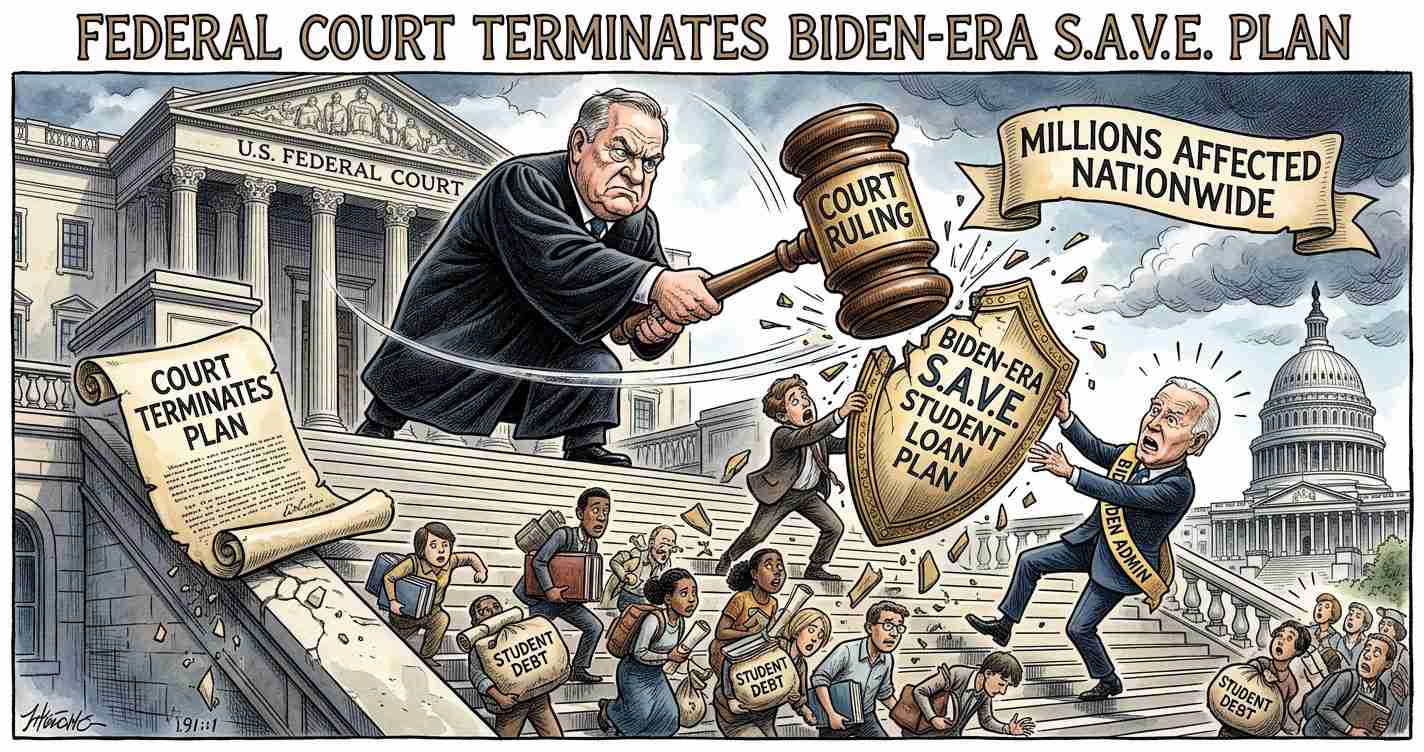
8th Circuit ends SAVE plan, forcing more than 7 million borrowers to seek student loan repayment options
The U.S. Court of Appeals for the 8th Circuit on March 9, 2026, ended the SAVE plan, forcing over 7 million federal student loan borrowers into alternative repayment options while the Education Department prepares guidance.
- Immediate end to SAVE: The appeals court approved a settlement that halts most SAVE operations and rescinds many SAVE rules, reversing a lower court dismissal.
- More than 7 million impacted: As of late 2025 over 7 million borrowers remained enrolled in SAVE and are now placed in forbearance until they choose another plan or ED issues direction.
- Limited selection window: No new enrollments; current SAVE borrowers will be moved to other plans after a short selection period outlined in the settlement.
- Resources and guidance: The Department of Education says it will notify borrowers via servicers; independent analyses and timelines are available from multiple sources.
What the court decision did and why it matters
The 8th Circuit overturned U.S. District Judge John Ross’s February dismissal of a Republican-led legal challenge and approved a negotiated settlement that ends most SAVE operations immediately. Plaintiffs argued the administration exceeded statutory authority in creating SAVE’s rules; the appeals court’s approval rescinds many of the regulations that made SAVE the most generous repayment plan in U.S. history. See the Business Insider explainer on the 8th Circuit ruling and the Student Loan Planner timeline and analysis.
How SAVE worked: Undergraduate borrowers could pay as little as 5% of discretionary income and graduates up to 10%; the plan subsidized 100% of unpaid monthly interest so balances did not grow. Advocates praised the lower monthly bills and preserved forgiveness progress; critics called the plan an agency overreach and poor use of taxpayer-backed loan rules. The court’s decision accelerates the end of that policy now rather than through slower rulemaking.
Settlement terms and what the Education Department will do
- No new SAVE enrollments and no approvals of pending SAVE applications, per the settlement proposed by ED on Dec. 9, 2025. See Student Loan Planner.
- Current borrowers moved after a limited selection period: Borrowers will have a short window to choose replacement plans; timing and details are still unclear. See Business Insider.
- Rescission of SAVE-related regulations: ED rescinded many rules that streamlined income-driven plan access and left negotiated rulemaking without a timetable. See TICAS overview.
- Notification requirement: ED must notify Missouri’s attorney general 30 days before forgiving monthly sums over $10 billion under certain settlement conditions. Details in the TICAS summary.
Department of Education: ED says it will send direct outreach and “clear guidance” to borrowers through servicers in the coming weeks; borrower advocates say current guidance lacks firm deadlines and details.
What borrowers must consider now: student loan repayment options
Borrowers who were on SAVE must pick another plan quickly or remain in forbearance — which pauses payments and halts progress toward forgiveness — until they act or ED issues further direction. Key alternatives include:
- Income-Based Repayment (IBR): Typically sets payments at roughly 10%–15% of discretionary income for a 20– to 25‑year term; available now and may be closest to SAVE for many former enrollees. (See Student Loan Planner.)
- Repayment Assistance Plan (RAP): Created under last year’s OBBBA and effective July 1, 2026, RAP sets payments on a sliding scale of 1%–10% of AGI and requires 30 years of payments; intended to replace some income-driven plans. (See TCNJ Financial Aid summary and Student Loan Planner.)
- Public Service Loan Forgiveness (PSLF): Borrowers pursuing PSLF should verify employer and servicer records and file Employment Certification forms now; months in SAVE forbearance may not count unless ED recredits that time. (Guidance: Student Loan Planner.)
Practical next steps: Contact your loan servicer immediately, compare IBR and RAP features, submit required PSLF paperwork if applicable, and keep meticulous records of income, employer certifications, and all ED communications.
Statutory context: OBBBA and the sunset of old plans
Congress passed the One Big Beautiful Bill Act (OBBBA) in 2025, mandating the eventual sunsetting of several income-driven repayment programs — including SAVE, Income-Contingent Repayment (ICR), and Pay As You Earn (PAYE) — by July 2028. The 8th Circuit’s ruling accelerates the timetable for SAVE by ending it in March 2026 instead of a phased rulemaking process that could have extended into 2027. For a timeline, consult Student Loan Planner and analysis from TICAS.
Why advocates and critics warn of confusion
Borrower advocates warn abrupt changes and limited communication windows can trigger missed deadlines and lost forgiveness progress. Nearly half of borrowers face payment–forgiveness tradeoffs when selecting a new plan. Critics argue ending SAVE without clear alternatives will harm low- and middle-income borrowers who relied on the interest subsidy. Supporters counter the ruling enforces statutory limits on agency power and protects taxpayers from executive overreach. (See reporting at Business Insider and Student Loan Planner.)
Reporting and resources
Officials at the Department of Education say borrower outreach will come through servicers and public notices. Independent resources and counseling services include:
- Student Loan Planner: timeline and analysis
- Business Insider explainer on the 8th Circuit ruling
- The College Investor coverage
- Third Way / TICAS overview of Department of Education actions
- TCNJ Financial Aid summary of 2026 loan changes including RAP
Implications for Utah
Economic impact: Utah borrowers are among the more than 7 million affected. Households may face higher monthly payments moving from SAVE’s interest-subsidized structure to IBR or to RAP after July 1, 2026, impacting budgets already stretched by mortgages, child care, and tuition. Local financial aid offices and colleges should expect increased demand for counseling.
Political consequences: The ruling aligns with the Republican legal challenge that argued SAVE exceeded statutory authority. For conservative voters and Utah officials, this may be framed as a win for the rule of law and limits on executive power.
Social and cultural effects: Public servants should verify records and file Employment Certification forms now; months on SAVE in forbearance may not count toward PSLF unless ED recredits credit. Culturally, the end of SAVE raises fairness questions for borrowers who adapted life plans around the program, while some view the ruling as enforcing accountability for policymaking.
Practical applications for Utah borrowers
- Contact your loan servicer immediately and ask what enrollment windows apply; keep written records of all communications. (See Student Loan Planner.)
- File Employment Certification forms if you work in qualifying public service; save pay stubs and employer verification to protect PSLF credit. (Guidance: Student Loan Planner.)
- Compare IBR and RAP (RAP available July 1, 2026) and decide if a higher payment now preserves PSLF progress. (See TCNJ and Student Loan Planner.)
- Watch for ED and servicer notices and be ready to act within any selection window the settlement allows. (See Business Insider.)
Preserve records: With SAVE officially ended and federal guidance still arriving, swift action and careful recordkeeping are essential.