Thousands clash with police at Mexico’s National Palace in Mexico City cartel protest over mayor’s killing
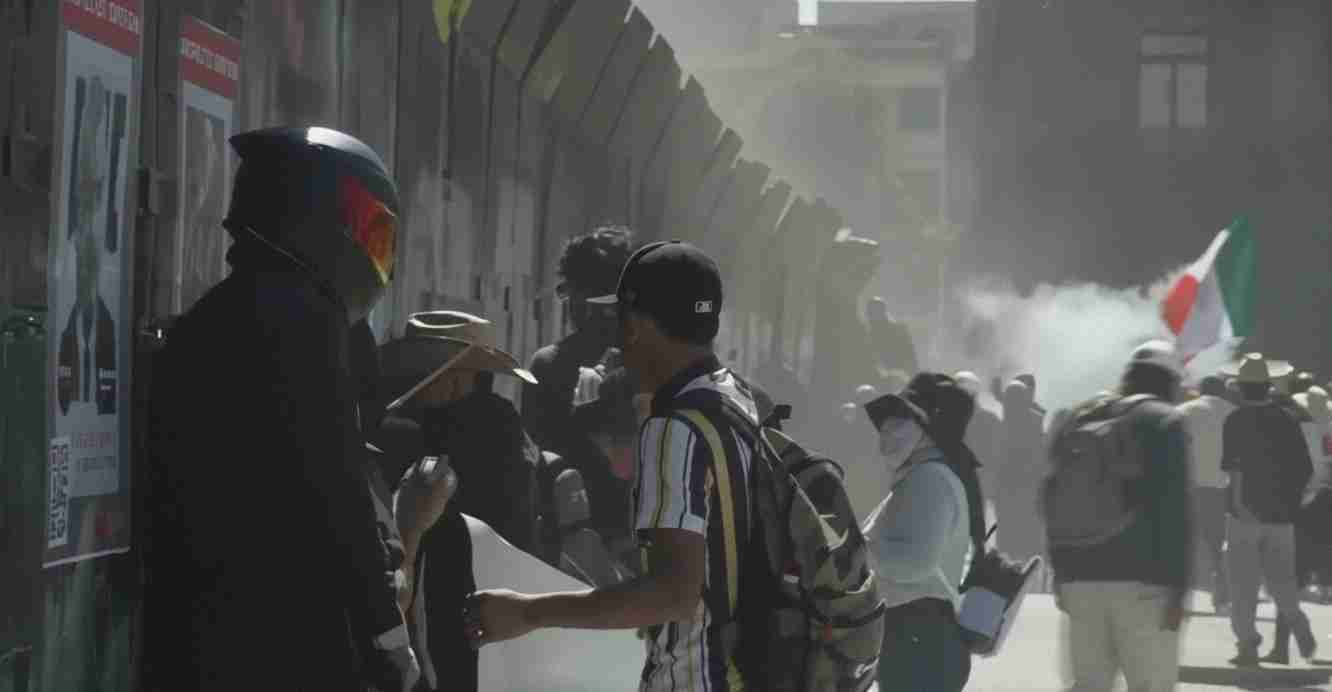
Thousands of protesters converged on Mexico City’s National Palace on November 15, 2025, breaching barriers and clashing with police in a Gen Z-led demonstration sparked by the assassination of Mayor Carlos Manzo and rising cartel violence.
Key takeaways
- Large breach: Demonstrators toppled metal barriers and pushed toward the National Palace, prompting a heavy police response.
- Triggering event: The Nov. 1 killing of Uruapan Mayor Carlos Manzo galvanized nationwide anger and became a rallying symbol.
- Gen Z presence: Youth-led groups used social media, straw hats and pop-culture flags to organize and signal solidarity.
- Government pushback: President Claudia Sheinbaum called the protests “inorganic” and alleged outside influence while authorities used tear gas and shields.
- Wider impact: The clashes highlight anxieties over cartel reach and may affect cross-border security and political messaging.
What happened at the National Palace
On Saturday, crowds gathered outside the National Palace in the heart of Mexico City. Videos and eyewitness reports show large groups pushing against a metal perimeter. Protesters toppled sections of the barrier and clashed with police, who responded with tear gas canisters and fire extinguishers to drive the crowds back. Sources reporting these scenes include Fox News and TimesNow.
Officials and reporters described protesters throwing bottles and other projectiles while security officers used shields and direct force to defend the palace. Chants aimed at the government and specific references to the slain mayor were common among demonstrators. A widely heard chant—
“This is how you should have protected Carlos Manzo”
—captured the crowd’s anger at perceived government failures.
Who was Carlos Manzo, and why did his killing spark protests?
Carlos Manzo was the mayor of Uruapan in Michoacán, known for publicly opposing cartel influence. His murder on Nov. 1, 2025, after taking an anti-cartel stance, resonated nationally and became a symbol of the risk faced by local officials. Protesters carried banners saying “We are all Carlos Manzo” and wore straw hats reminiscent of the mayor’s signature look as a sign of solidarity. Coverage linking his killing to the mass mobilization appeared on Tag24 and The Straits Times.
Organizers, symbols and the “Gen Z” footprint
The demonstration showed features of modern youth activism. Organizers leveraged social media to mobilize demonstrators, and young people led much of the visible presence. Symbols such as straw hats and the One Piece pirate flag—adopted at protests worldwide—appeared frequently, creating a stark contrast between pop-culture imagery and the serious message of the march. Visual and on-the-ground reporting noted these elements; see Times of India.
Police response and on-scene tactics
Security forces used tear gas grenades, fire extinguishers and shields in attempts to repel protesters. Officials reported projectiles thrown by demonstrators and the toppling of metal barriers around the National Palace. Eye-witness videos and accounts were cited by outlets including Tag24 and Times of India.
Government response and the charge of outside influence
President Claudia Sheinbaum, who assumed office in 2024, dismissed the demonstrations as “inorganic” and “paid for”, suggesting foreign promotion of the movement. That framing shifts the conversation from policy to alleged manipulation even as authorities used force to defend the executive seat. Coverage of the government stance was reported by Tag24 and The Straits Times.
Diverse opposition and mixed messaging
Not all critics of the government joined Saturday’s action. Carlos Manzo’s widow publicly distanced herself and the mayor’s movement from the demonstrations, underscoring fractures among dissenting voices and raising questions about movement leadership and legitimacy. This nuance was highlighted in reporting by Tag24.
Wider implications for Mexican governance and public safety
Analysts and international outlets noted the demonstrations reflect deeper anxiety about cartel reach and public faith in government security measures. The protests show how violent attacks on local officials can catalyze nationwide unrest and erode trust in institutions. Observers argued the high-profile breach will increase pressure on federal authorities to demonstrate effective anti-cartel operations while balancing civil order. See coverage by AOL and Indian Express.
Implications for Utah
Public safety and border policy resonance: Conservative readers in Utah who prioritize law and order may see these events as evidence of cartel violence’ wider effects, including threats to supply chains and transnational criminal networks. Reporting on these concerns can be found at Fox News and AOL.
Political accountability and conservative values: The protests underscore demands for effective security and protection of local leaders — themes that resonate with Utah conservatives who favor strong law enforcement and deterrent policies. See reporting by Tag24.
Humanitarian and migration considerations: Escalating violence can prompt migration flows and renewed calls for coordination on border security and humanitarian response; related analysis appears in the Indian Express.
Civic engagement and youth movements: The Gen Z character of the protests — from social media coordination to symbolic imagery — may interest Utah conservatives tracking how youth-driven narratives can reshape political organizing. See the Times of India report for visual context.